The great Stoic philosopher Epictetus stressed the importance of humility to the learning process: “It's impossible to learn that which you think you already know.”
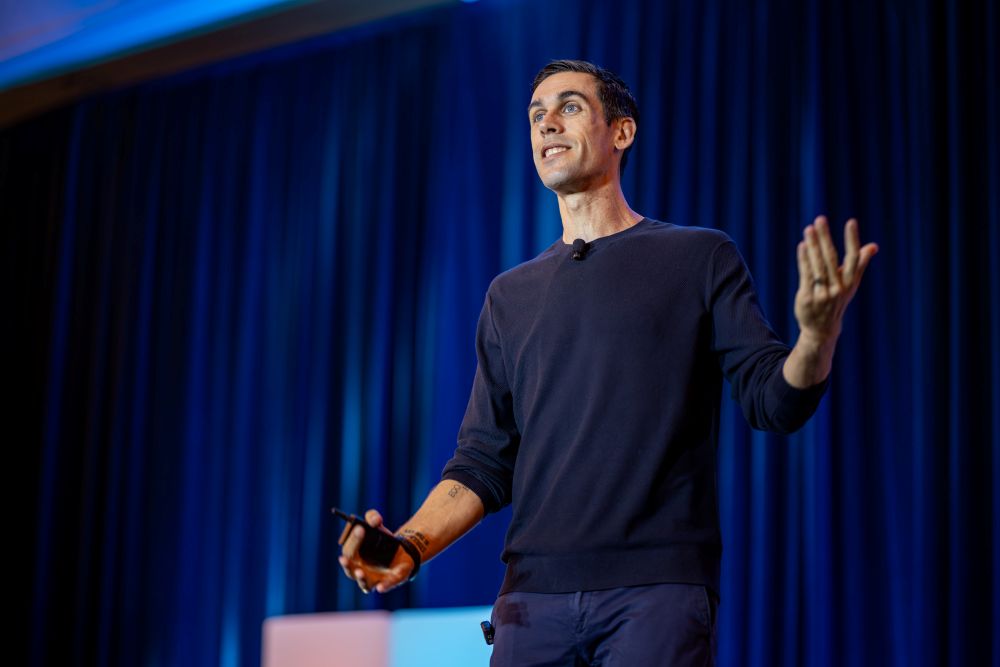
Or, as author Ryan Holiday, whose best-selling books have helped popularize the value of Stoicism in modern life, pointed out when he visited Tampa this week, paraphrasing Epictetus: “If you’re a know-it-all, it’s a self-fulfilling prophecy.”
As many of my friends and colleagues know, I have long been an advocate of Stoicism and still treasure memories of my college days walking past Brown University’s statue of Marcus Aurelius and studying Stoic and other ancient Greek and Roman philosophies. For the past three years, I have given a copy of Holiday’s excellent primer on Stoicism, The Obstacle Is the Way, to each of our incoming medical students. My interest also prompted my friend and colleague John Couris, president and CEO of Tampa General Hospital, to become a fan of Holiday’s work and ultimately bring him to Tampa.
Getting to meet one of my favorite authors this week was an unexpected side benefit of the strong partnership we have forged between USF Health and Tampa General.
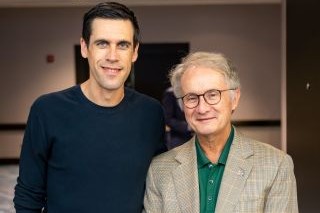
Ryan Holiday and Dr. Charles J. Lockwood
During Holiday’s talk, I was struck by his remarks about one of the often-overlooked dangers of egotism: it limits our ability to learn. As Holiday has written elsewhere, Ego Is the Enemy. Excessive confidence in what we think we know can blind us to what we still need to understand. Holiday reminded us that Socrates was called the wisest man in Athens because he alone was willing to admit that he knew nothing.
That message resonated deeply with me because I repeatedly stress to our medical students that to become exceptional physicians, especially in this era of breathtaking technological transformation, they must become lifelong learners. I often tell them that medical knowledge expands at a pace no single individual can fully keep up with. A 2020 study estimated that medical knowledge was doubling approximately every 73 days, and that pace has likely accelerated even further. Yet the underlying challenge is hardly new. Nearly 2,000 years ago Marcus Aurelius emphasized the same truth: wisdom begins by recognizing the limits of one’s knowledge.
I also tell our students (and their faculty) that they need to acquire knowledge with us, but even more importantly, they need to learn how to learn, because education does not stop when they graduate from medical school. In many ways, it begins there. Again, Marcus Aurelius understood the importance of and continued to practice lifelong learning all his adult life.
Stoicism provides a remarkably “modern” framework for this challenge. It is often misunderstood as a philosophy of emotional detachment or quiet endurance — think Mr. Spock. In contrast, Stoicism is a philosophy of disciplined engagement with life. It teaches us to distinguish what is within our control from what is not; to view obstacles not as excuses for retreat but as opportunities for growth; and to focus our energies on actions rather than outcomes. Amor fati is a Latin phrase meaning “love of fate.” Stoics go beyond merely accepting what happens. They embrace all events, good and bad, as necessary parts of life and as opportunities for growth.
The Stoics described three disciplines: of perception, of action, and of will. The discipline of perception teaches us to see reality clearly without distortion from ego, fear, or wishful thinking. The discipline of action reminds us to act with purpose and integrity. The discipline of will teaches us resilience in confronting setbacks and adversity.
These three lessons are particularly relevant in medicine. Learning occurs at the point of discomfort, not at the point of comfort. Difficult challenges require creativity, adaptation, and perseverance. Students who are willing to wrestle with uncertainty and complexity develop not only knowledge but also resilience and grit, the very qualities that sustain physicians throughout demanding careers. At the USF Health Morsani College of Medicine, we counsel our students on the importance of these broad Stoic principles. We recognize that true fulfillment and success come not from avoiding challenges, but from confronting and mastering them.
This principle extends beyond medicine and into broader educational philosophy. In recent years, some schools have attempted to minimize competition, stress and discomfort by reducing traditional grading systems, eschewing merit-based admissions, eliminating honor societies or creating educational environments designed to smooth every obstacle from students’ paths. While such efforts are well intentioned, they risk confusing protection with preparation, and paradoxically promoting rather than preventing stress, anxiety and depression.
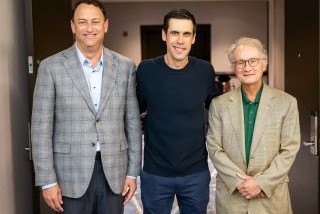
John Couris, Ryan Holiday and Dr. Charles J. Lockwood
Jonathan Haidt and Greg Lukianoff explored this issue in The Coddling of the American Mind, another of my favorite books, arguing that a culture increasingly focused on shielding young people from adversity may inadvertently weaken the very psychological capacities they need to thrive. Their point was not that students should be subjected to unnecessary hardship; rather, growth depends on encountering manageable challenges and learning how to overcome them. Muscles do not strengthen without resistance, and character rarely develops without struggle.
We know that some medical schools have pursued approaches that de-emphasized traditional measures of achievement and rigor. But outcomes matter. Declines in licensing examination performance and increasing concerns about learner preparedness have prompted many medical schools to reassess these strategies. Even elite universities, such as Harvard and Yale, are rethinking their coddling and grading strategies. Excellence and wellbeing are not opposing goals; they are inextricably linked. High expectations paired with strong support and mentorship is the best formula for success and happiness.
Holiday echoed this Stoic principle during his visit, noting that adversity itself can become a competitive advantage. The danger of “snowplow parenting,” and of institutions that seek to remove every obstacle from life’s path, is that they may inadvertently deprive individuals of opportunities to develop the very capabilities they will eventually need to be successful in life.
"One of the reasons that we seek out adversity, we seek out difficulty, we should seek out environments that are unfamiliar and uncomfortable, is that we're trying to get better at precisely that thing," he said. "That's the meta-skill that we're trying to learn."
Ultimately, he observed that physicians who have themselves been tested by challenge are often better prepared to care for patients.
"As a patient, I don't want to be this doctor's most difficult case," he said. "I want them to have been through stuff, right? I want them to have dealt with trickier things before."
His comments also struck me because they have implications extending beyond medicine and education into one of the defining technologies of our time: artificial intelligence.
In a recent episode of his podcast The Daily Stoic, Holiday addressed the importance of Stoic principles in harnessing the potential of AI, which is dramatically expanding our ability to access clinical information and accelerate diagnoses. Effective use of AI requires Stoic habits of mind. Developing good prompts demands intellectual discipline and clarity of thought. Evaluating AI-generated responses requires humility — the willingness to ask: Could this be wrong? What evidence supports it? What might be missing? Identifying AI-generated hallucinations requires the Stoic discipline of perception: seeing reality as it is rather than as we wish it to be. Resisting the temptation to accept an easy answer uncritically requires discipline of action.
AI does not eliminate the need for wisdom; if anything, it increases it. Those who benefit most from these technologies will not necessarily be those who rely on them most heavily, but those who approach them with curiosity, skepticism, humility and judgment.
Perhaps that is why Stoicism, despite being more than two millennia old, feels more relevant than ever today. Technologies changes, human nature does not. Today’s challenges remain the same as they were for Epictetus, Seneca and Marcus Aurelius: to remain humble enough to recognize what we do not know, disciplined enough to continue learning, and resilient enough to embrace the obstacles that ultimately make us stronger.
-- Photos courtesy of Daniel Wallace, Tampa General Hospital