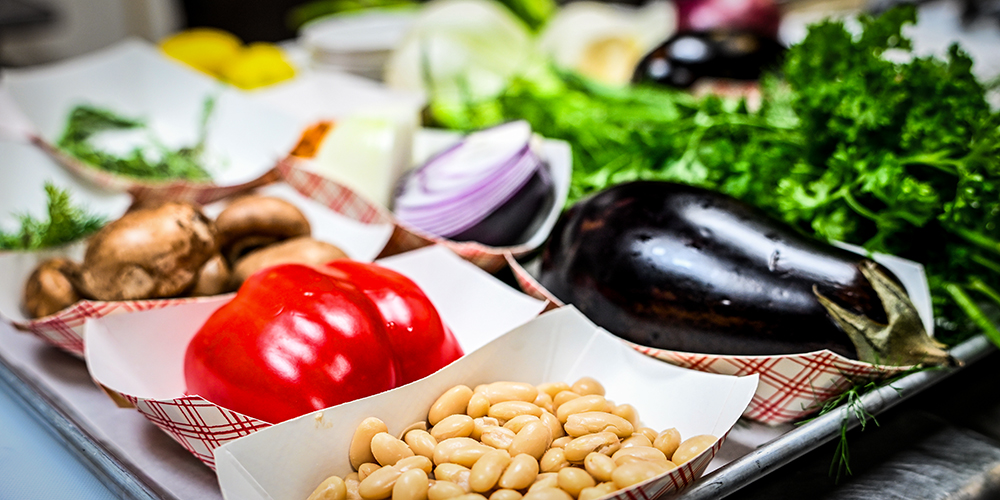
Physicians routinely care for patients with conditions closely connected to what they eat, from diabetes and heart disease to obesity and other chronic illnesses. Yet historically, nutrition has occupied a relatively small place in medical education.
For more than a decade, faculty and students at the USF Health Morsani College of Medicine have worked to change that, integrating nutrition into medical learning and creating one of the nation’s first dedicated concentrations for exploring nutrition research.
Beginning this academic year, the college is taking its most significant step yet. The Morsani College of Medicine has more than doubled the required nutrition instruction across its four-year MD curriculum, increasing from 36 to 76 instructional hours.
The expansion is designed to solidify nutrition education as an essential part of how future physicians learn to prevent disease and care for patients, while providing more opportunities to apply nutritional science to clinical decision-making.
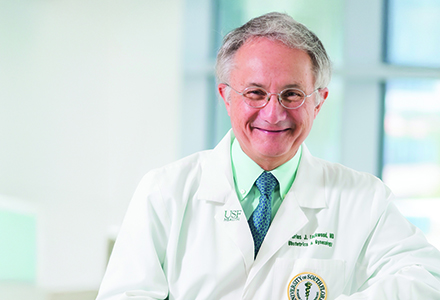
Dr. Charles Lockwood, executive vice president of USF Health and dean of the Morsani College of Medicine
“Few interventions rival proper nutrition in its ability to influence long-term health,” said Charles J. Lockwood, MD, MHCM, executive vice president of USF Health and dean of the Morsani College of Medicine. “We recognize that physicians need to help Americans eat more healthfully, and we view nutrition as foundational knowledge for modern physicians.”
The connection between nutrition and health has long been understood by medical and health professionals. Dietary patterns have a strong influence on metabolic and cardiovascular health, immune function, chronic disease risk and overall well-being. Physicians across specialties encounter patients managing conditions where nutrition plays a significant role, from diabetes and obesity to heart disease, food allergies and nutritional deficiencies.
Yet nutrition has historically received limited attention in medical education nationally, leaving many physicians without the training or tools to holistically guide patients toward better outcomes.
Noting this incongruity, the Morsani College of Medicine launched efforts to strengthen nutrition education years ago. Nutrition was already woven into part of the medical school curriculum when, in 2016, the college launched its Nutrition Research and Health Scholarly Concentration — one of the first programs nationally to create a dedicated forum for medical students to explore nutrition research as part of their medical training.
With that foundation in place, this year’s expansion will bring substantially more of that nutrition emphasis into the curriculum required of every medical student.
Across the four-year curriculum, students will now receive education in areas including nutritional assessment, obesity and metabolic disease counseling, malnutrition, food allergies and intolerances, micronutrient deficiencies, drug-nutrient interactions and evidence-based dietary guidance. They will also learn how to incorporate nutrition into clinical decision-making, counsel patients about sustainable behavior change and recognize when collaboration with or referral to another health professional is appropriate.
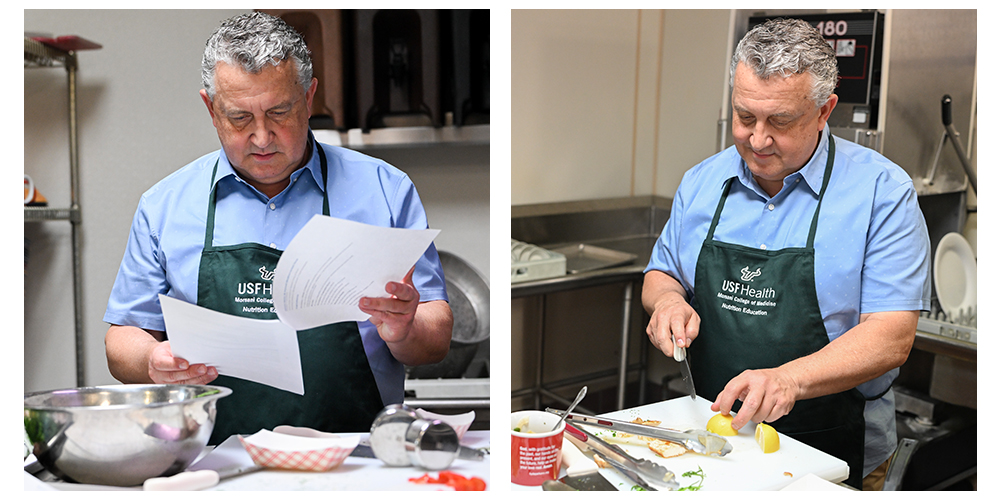
“We’ve been working on this for a long time,” said Bryan Bognar, MD, MPH, professor and vice dean for the Office of Educational Affairs. “The added focus on nutrition will allow us to continue enhancing the activities we offer on the subject. This is about changing the trajectory of community health. I can’t think of anything more foundational to health and wellness than nutrition.”
Deborah DeWaay, MD, professor and senior associate dean for Undergraduate Medical Education at the Morsani College of Medicine, led the committee overseeing curricular changes in collaboration with clerkship directors, clinical leaders and experts in nutrition and nutrition education. She said the central challenge was to substantially increase nutrition instruction without adding to the total number of hours students spend in an already demanding medical school curriculum or displacing other essential content.
The committee identified places where nutrition could be incorporated naturally into existing courses and clinical experiences, while also looking for redundancies that could be replaced with more relevant nutrition instruction.
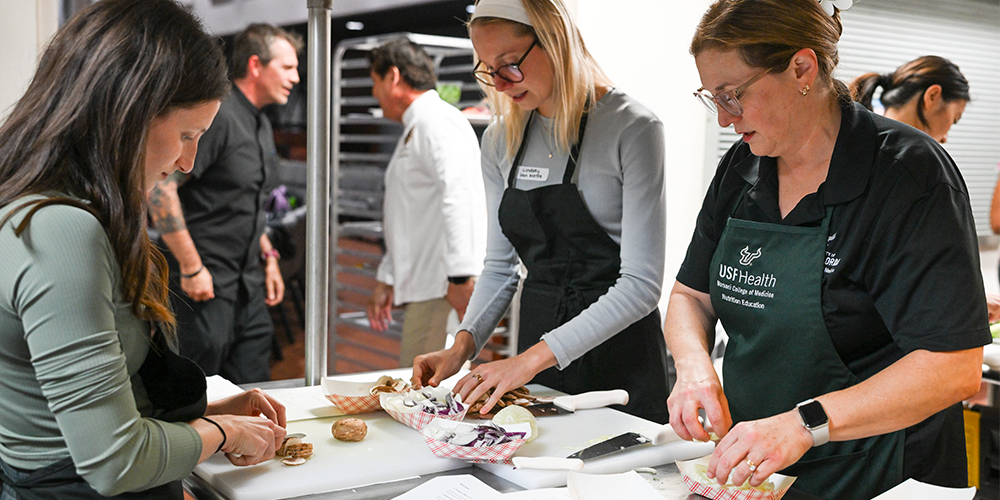
The result is an integrated approach that makes nutrition something students encounter repeatedly during their studies. Food and diet become part of how students think about medicine, rather than a subject they learn in isolation.
For example, students working with standardized patients during clinical skills training are already expected to assess a patient's condition and develop an appropriate care plan. With the expanded curriculum, students will also be asked to consider how nutrition may be contributing to the patient’s condition and whether dietary counseling could become part of the solution.
The practical application, said DeWaay, is essential to ensure the knowledge that students receive at USF becomes part of how they care for their patients at the bedside.
“Nutrition is a wonderful way to have a conversation with a patient to better understand where they come from,” said DeWaay. “Then it becomes a matter of taking the basic principles of nutrition and tailoring it to the patient.”
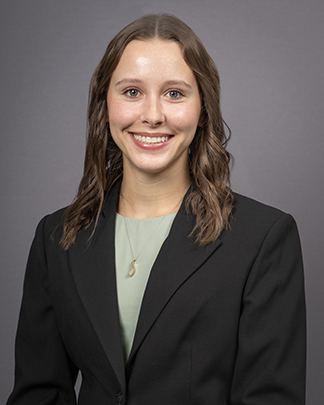
Katryna Adamski
Katryna Adamski, a first-year medical student at USF who earned her undergraduate degree in nutritional sciences at the University of Florida, came to medical school already interested in the connection between nutrition and health. She said seeing nutrition incorporated across subjects such as physiology will helper her connect concept and develop a more holistic approach to the subject.
“Nutrition has always been a passion of mine,” Adamski said. “I’m excited to take my passion and learn how to apply it in a way that has meaningful impact for my future patients.”
Students will also have opportunities to reinforce those lessons through experiential and interprofessional education. The college is continuing to develop culinary medicine experiences that allow students to apply nutrition principles outside the classroom and consider how evidence-based recommendations translate into the foods patients actually prepare and eat.
“At the end of the day, the overarching goal is to graduate physicians who can incorporate nutrition into everyday patient care,” DeWaay said. “This is something patients have been asking for. This is something physicians and educators have been asking for.”