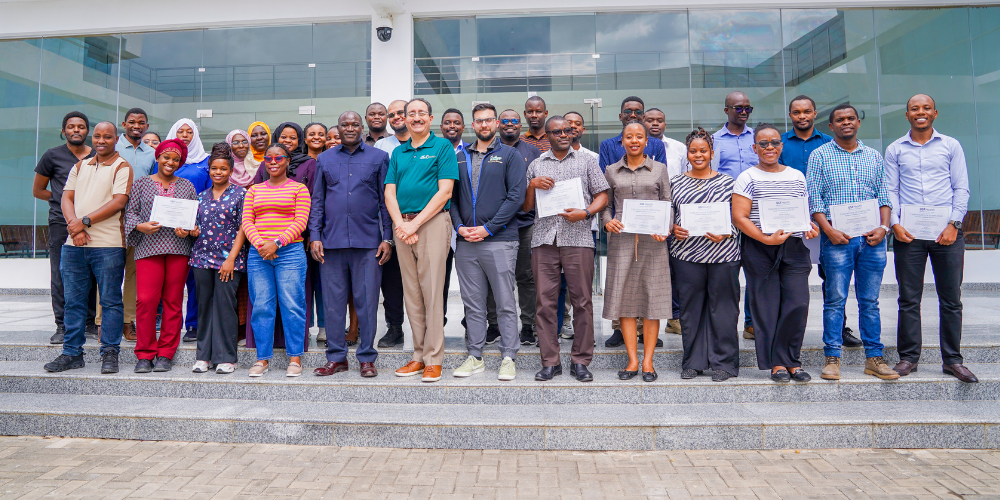
As Tanzania prepares to co-host the 2027 Africa Cup of Nations with Kenya and Uganda, its health leaders are working to expand the country’s emergency medicine workforce to meet the needs of athletes, spectators and communities during one of Africa’s largest sporting events.
In July, faculty and simulation experts from the USF Health Center for Advanced Medical
Learning and Simulation (CAMLS) traveled to Tanzania to support that effort, teaching
local healthcare educators the foundations of simulation-based education through a
four-day train-the-trainer course at Muhimbili University of Health and Allied Sciences
(MUHAS). The goal was to equip Tanzanian educators to serve as simulation instructors
who can continue teaching healthcare providers long after the course ended.
The training builds on a well-established and continuing collaboration between MUHAS
and USF Health’s Department of Emergency Medicine, with faculty from both institutions
working together to strengthen emergency medicine education and training in Tanzania.
The need is immediate. In advance of the Africa Cup of Nations, the emergency medicine
residency program at MUHAS has expanded from 18 residents to 40. While increasing
the number of residents helps Tanzania address the need for more emergency physicians,
it also creates a demand for more faculty members prepared to train them.
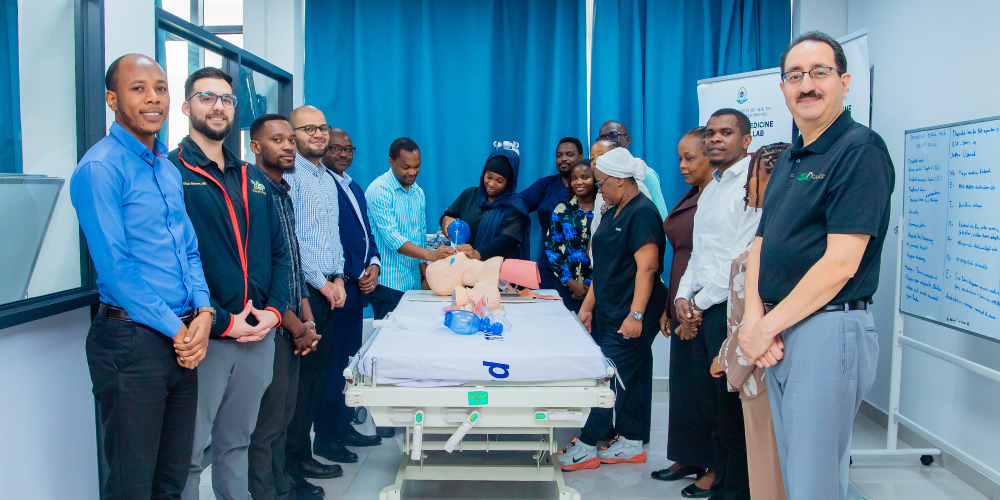
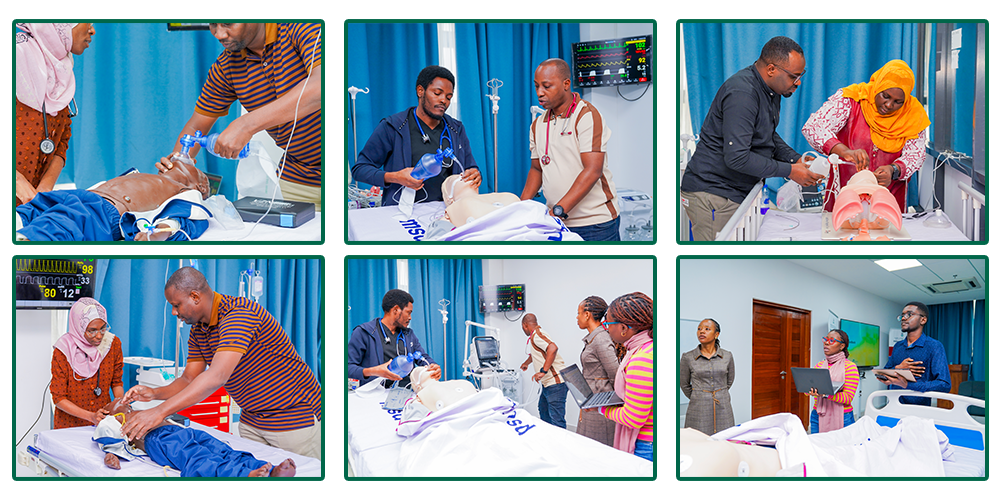
USF simulation experts designed the training course with those needs in mind. Across
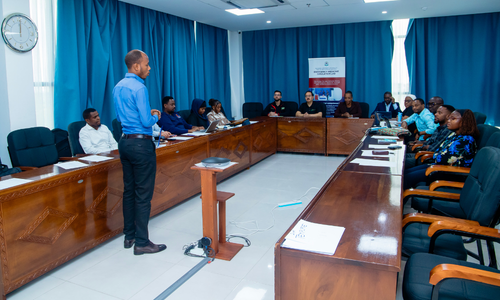
the four-day program, 13 Tanzanian faculty members received instruction in the foundations
of healthcare simulation, then put those skills into practice by teaching a group
of 16 emergency medicine residents.
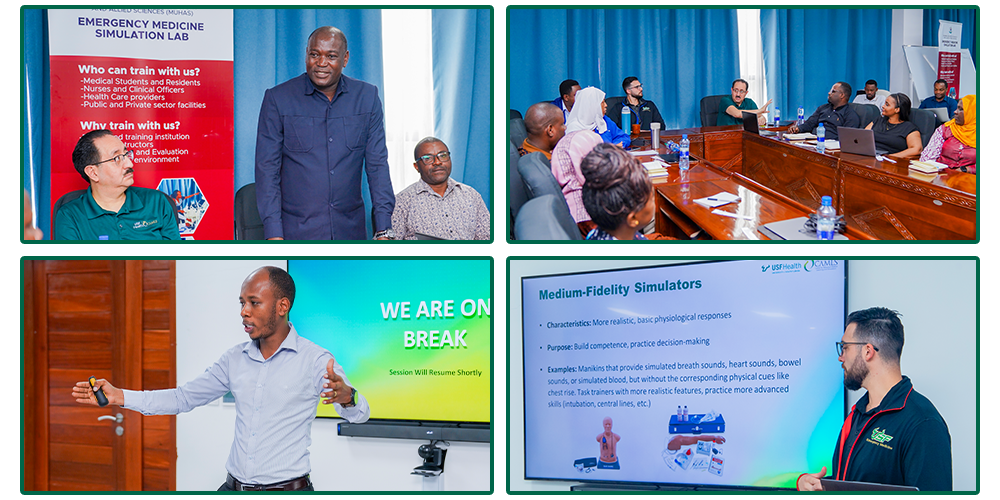
The training was led by Luis E. Llerena, MD, medical director of USF Health CAMLS
and professor of surgery at the USF Health Morsani College of Medicine, and Michael
Simoes, MD, assistant professor and simulation educator at USF Health CAMLS. Topics
included psychological safety, scenario design and debriefing, as well as how to identify
measurable learning objectives and determine the appropriate level of technology needed
for each simulation.
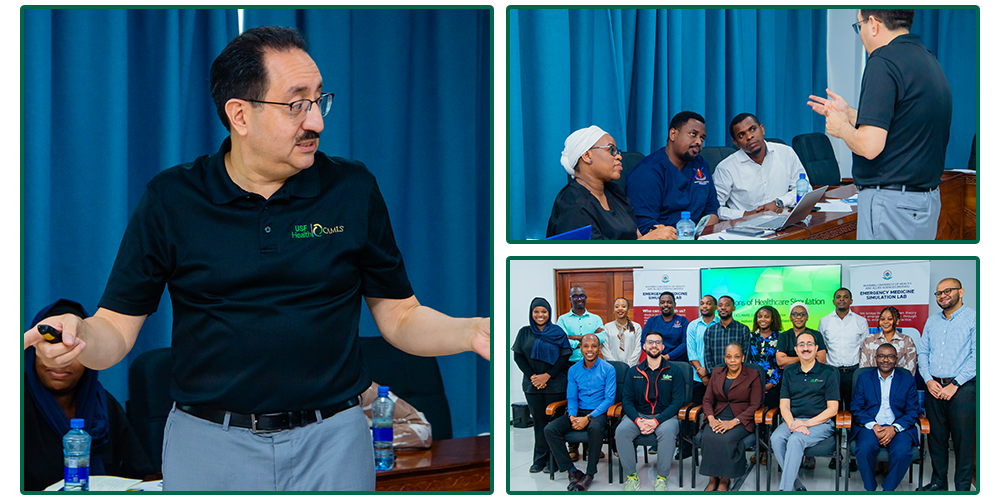
Participants designed their own simulated scenarios, practiced running them and then
debriefed. One scenario developed by the Tanzanian faculty involved caring for a dehydrated
baby using ultrasound. Another explored how to teach ultrasound-guided IV placement
using low-fidelity simulation equipment rather than relying on a high-fidelity mannequin.
The exercises encouraged participants to begin with the clinical skills they wanted
to teach, then determine what equipment and level of simulation were needed to recreate
the experience. The goal was to teach Tanzanian educators how to think like simulation
educators and prepare their learners for realistic clinical scenarios.
“These simulations allowed learners to practice procedures safely, build their communication
skills, make mistakes and receive feedback without putting patients at risk,” Dr.
Llerena said. “We’re helping create a reservoir of experts so they can continue to
share that knowledge with other healthcare providers across Africa.”
“Muhimbili University of Health and Allied Sciences houses one of Tanzania’s largest emergency medicine programs for physicians from other African countries. That provides an opportunity for the training to extend well beyond the initial group of participants who experienced it,” said Humphrey G. Medarakini, MD, a lecturer in the MUHAS Department of Emergency Medicine and adjunct faculty member in USF Health’s Department of Emergency Medicine.
“The newly trained faculty will bring education throughout Tanzania and ripple throughout Africa,” he said.
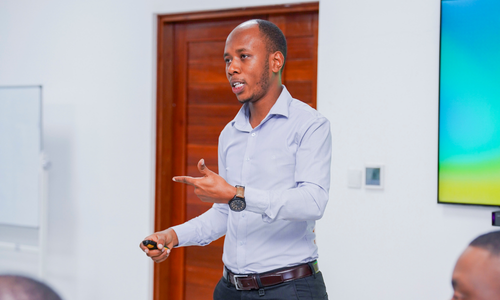
Humphrey G. Medarakini, MD
The timing of the training is particularly significant because Tanzania will host the eighth African Conference on Emergency Medicine in the city of Arusha in November 2026. The conference will provide another opportunity to share the simulation framework with emergency medicine educators and professionals from across Africa.
"It was inspiring to hear them talking about ideas not only for the conference in November, but also about how they could utilize simulation-based education in their current curriculum,” Dr. Simoes said. “It's very humbling to realize the potential impact this partnership could have in a country where emergency medicine as a specialty is rapidly expanding."
Muhimbili University of Health and Allied Sciences, in collaboration with USF Health’s Department of Emergency Medicine, plans to offer a Foundations of Healthcare Simulation course during the conference. The Tanzanian faculty members who completed the USF Health training will be positioned to help lead that effort.
“What we’re trying to do is make sure that this knowledge goes beyond Tanzania,” Dr. Medarakini said. “We want to share and spread simulation-based education throughout Africa.”
As they train new educators and healthcare professionals, Llerena hopes the framework introduced by USF Health continues to spread from one classroom to another, helping build a stronger emergency medicine workforce across the region.
“This is about building something that lasts beyond the training itself,” Dr. Llerena
said. “Ultimately, our hope is that this becomes a model that grows through the people
we train and reaches even more healthcare professionals and, most importantly, the
patients they serve.”