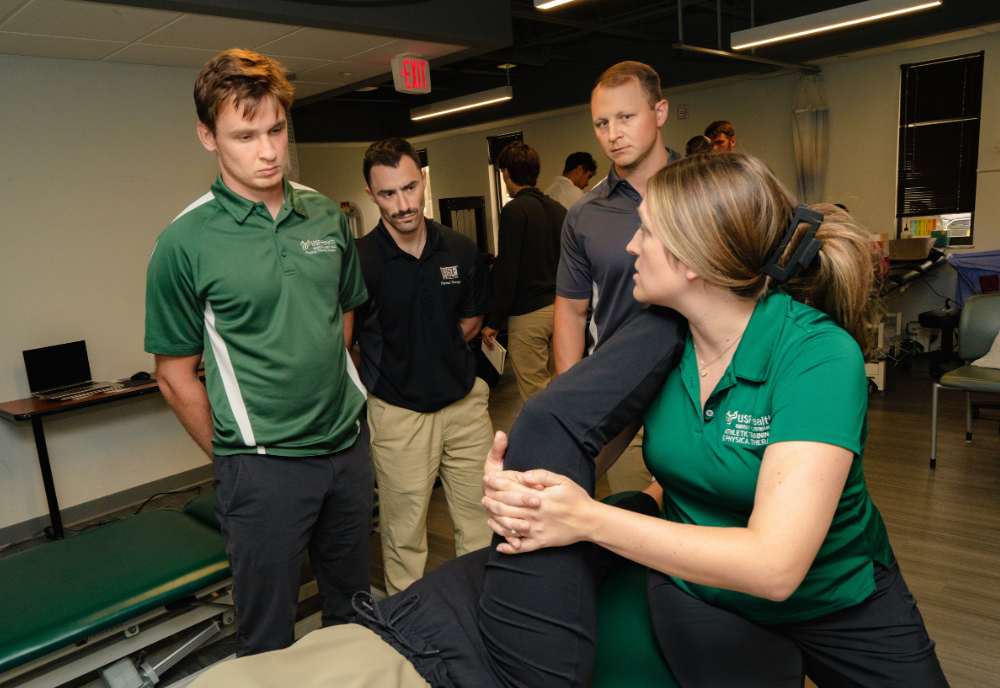
Graduates of a Doctor of Physical Therapy (DPT) program have traditionally faced two
choices: either enter the workforce immediately or spend another year or more in specialty
training.
But at the USF Health School of Physical Therapy and Rehabilitation Sciences, students
interested in orthopaedics have another option.
In 2025, the school launched an accelerated track within the USF Health Orthopaedic
Residency Program that allows selected DPT students to begin their residency training
during the final year of their doctoral program. The pathway enables students to complete
a portion of their advanced education and supervised clinical training before graduation,
giving them a head start toward specialty practice without reducing the requirements
of the residency.
The result is a quicker, more direct path from physical therapy school to specialty
practice that also reduces the financial pressures that sometimes discourage aspiring
physical therapists from pursuing residency.
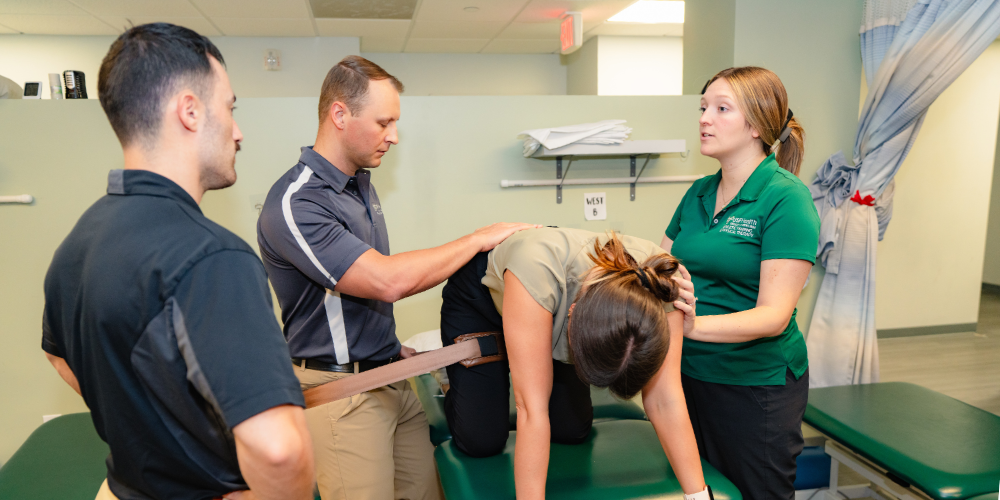
Mackenzie Brittain, PT, DPT, OCS, works with residents during a hands-on training
“We created this accelerated program to be an attractive option for the students,”
said Mackenzie Brittain, DPT, program director of the USF Health Orthopaedic Physical
Therapy Residency and a board-certified orthopaedic physical therapist. “We want to
get clinicians out to the community and elevate the level of physical therapy care
while allowing students to reduce their debt-to-income burden.”
USF is one of only a few institutions in the country to offer an integrated DPT-to-residency
pathway. The university’s traditional orthopaedic physical therapy residency has been
established and accredited since 2015, and the first integrated cohort began last
year alongside the traditional cohort, with two students in each track.
Conventionally, physical therapy residents begin training after earning their DPT
degree and becoming licensed in the profession, completing an average of 13 months
of additional residency training. USF Health’s accelerated format condenses that period
to eight months.
These students begin residency education while finishing the third and final year of their DPT program. During the fall semester, they continue their regular physical therapy coursework while completing four hours of residency didactic education each week.
In the spring, the training becomes increasingly clinical. Students spend approximately 36 hours per week at the University Professional Center, under the guidance of a board-certified orthopaedic physical therapist. They are exposed to a broad range of musculoskeletal conditions and patient populations, applying what they have learned in both their DPT and residency curricula.
“They’re still completing the same number of clinical hours that our traditional residents are,” Brittain said. “But some of them are performed while they are still Doctor of Physical Therapy students under the supervision of their clinical instructor, who is an orthopaedic specialist.”
After graduating from the DPT program and passing the National Physical Therapy Examination,
participants become licensed physical therapists and continue the remainder of their
residency. Students in the accelerated track are able to take their board certification
examination about a year earlier than in the traditional program.
Portrait of William Parrot
William Parrot, a new DPT graduate and current resident in the integrated residency
track, said “The integrated residency pathway stood out because it provides a unique
opportunity to deepen my expertise in a focused, efficient manner. Rather than waiting
years to accumulate advanced orthopedic knowledge, the integrated model offers concentrated
mentorship, structured learning, and progressive clinical exposure that accelerates
my development as a clinician.”
That combination of advanced clinical training and continued guidance from experienced
faculty is also a major draw for residents entering the program.
Portrait of Greg Lehr
Greg Lehr, another recent DPT graduate continuing his training through the integrated
residency track, said “Structured mentorship was one of the primary reasons I wanted
to pursue a residency. During my time in the USF DPT program, I found mentorship from
faculty throughout the MSK curriculum to be an invaluable part of my development.
Knowing I would continue learning from many of those same faculty and mentors throughout
residency was a major appeal of the program.”
Faculty believe that the commitment to mentorship is one of the elements that most
distinguishes USF’s program. Participants receive four hours of dedicated one-on-one
mentorship each week with a board-certified clinician who works alongside them on
their patient cases. In practice, Brittain said, those mentoring interactions extend
well beyond the structured hours.
“Our mentorship and didactics are only required four hours a week each, but mentorship
is essentially constant throughout the program,” said Brittain.
The USF Health School of Physical Therapy and Rehabilitation Sciences has offered an accredited Orthopaedic Physical Therapy Residency 2015, and the integrated pathway builds on that foundation by creating an earlier entry point for DPT students who have already identified specialty practice as a career goal.
Program leaders are exploring opportunities to further expand residency training into
other areas of physical therapy specialty practice, including acute care, neurology,
sports, pediatrics and oncology, as well as additional fellowship opportunities in
areas such as manual therapy and hand therapy.
The program anticipates adding one or two residents per year, and hopes to expand
clinical training opportunities through additional partner sites throughout the Tampa
Bay region.
“We want to continue building a program that gives students a pathway to specialty
practice,” Brittain said. “We want to create more opportunities for physical therapists
to develop advanced skills and ultimately provide better care for the patients and
communities they serve
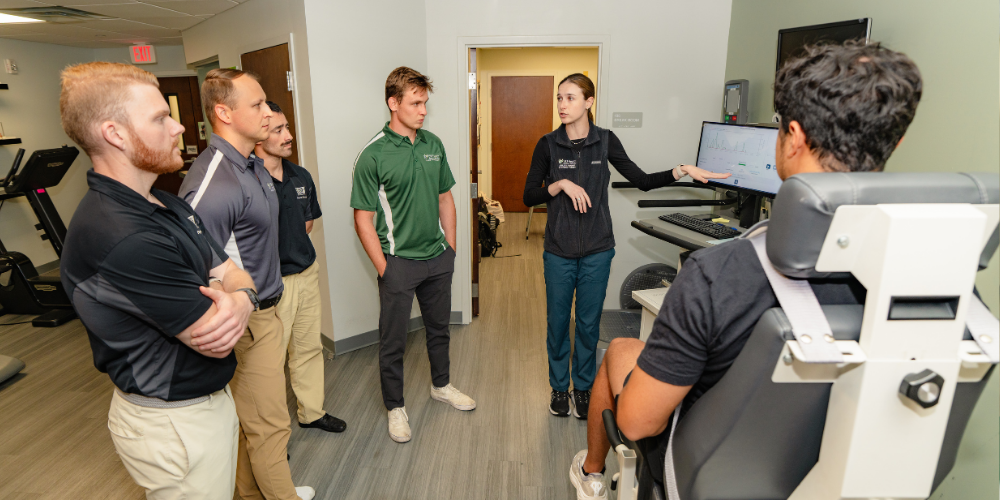
The residents learning how to use the Biodex system to gather data on strength, range of motion and physical performance