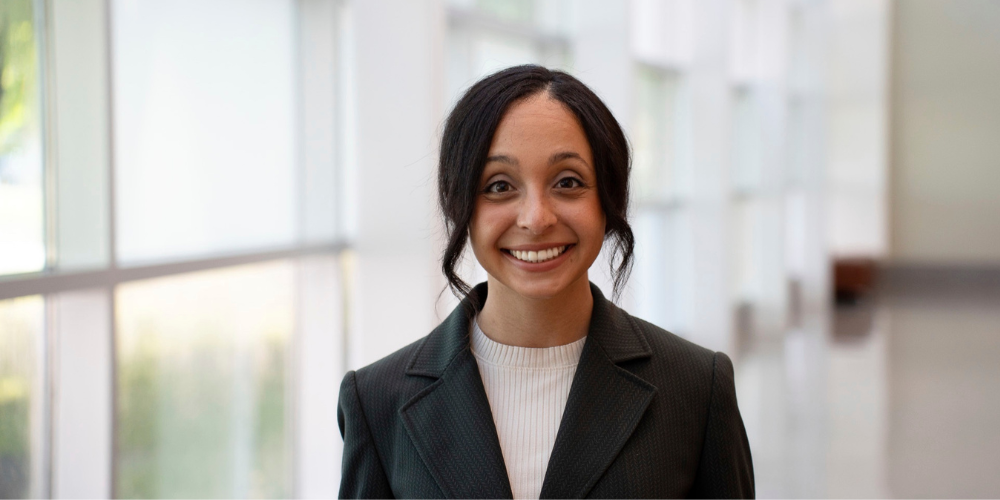
One of the most prestigious research grants offered by the National Institutes of Health (NIH), the F31 grant, has been awarded to a USF Health College of Nursing PhD student. It’s a career milestone many researchers don’t achieve, but for recipient Christina Hersh, it’s confirmation that years of hard work and determination to improve the lives of breast cancer survivors is a pursuit worthy of national recognition.
The F31 is one of the most competitive awards in biomedical and clinical research training. In 2025, the National Institutes of Health reviewed 3,607 F31 applications across all its institutes; only 849 were funded, meaning a success rate of less than one-in-four. Hersh’s reception marks the first time in over half a decade that a student from the College was given this grant according to Dean Usha Menon.
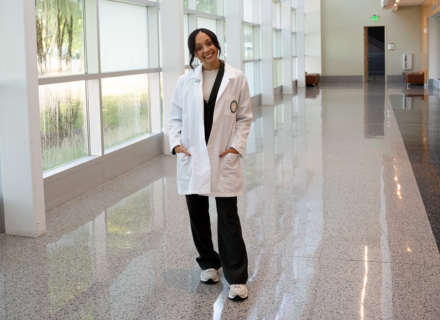
"Receiving this grant fills me with an incredible sense of gratitude," Hersh said. "I am deeply passionate about my emerging program of research to support breast cancer survivors experiencing cardiotoxicity. This grant award feels especially affirming because it reinforces that this work is meaningful not only to me but also recognized as such at the national level."
Hersh was quick to note she isn't the first from the College to submit an F31 grant application for a worthy cause.
"Students before me have submitted meaningful research proposals through their own F31 applications, and I'm grateful to be part of that community," she said. "To me, this recognition reflects the College of Nursing's strong emphasis on research and its commitment to supporting the next generation of nurse scientists."
Persistence and Personal Motivation
This wasn’t Hersh's first F31 application. She originally submitted in the summer of 2025 and received a score but wasn't funded. After self-reflection and being inspired by stories of perseverance, resilience and achievement during a visit to the National Museum of African American History and Culture, she decided to try again. Hersh and her supportive mentorship team spent the fall reworking the application based on reviewer feedback and resubmitted in December 2025. After months of extra work, the new version earned the award.
Hersh's determination in her work is driven in part by personal experiences tied to her mother’s breast cancer journey. Her mother fought breast cancer and won, fortunately, with no cardiotoxicity problems.
"Hearing breast cancer survivors share how they overcame cancer only to face living with a new cardiac diagnosis, such as heart failure, really hit home for me as a daughter," she said. "I couldn't help but think, 'What if my mom ever had to go through that?'"
That question, paired with her own years of experience as a cardiac intensive care nurse, pointed her toward cardiotoxicity, which is defined as a complication where heart problems can develop in breast cancer survivors because of their cancer treatment.
"Those formative experiences made me realize I wanted to bring what I learned from bedside care,” she said. “Particularly the importance of early recognition, advocacy, and symptom management into my program of research.”
What the Research Aims to Do
Her doctoral study compares breast cancer survivors with and without cardiotoxicity on measures like fatigue, anxiety, cognitive impairment, and quality of life, and includes in-depth interviews with survivors living with the condition about how they recognize and manage their cardiac symptoms.
Current cardio-oncology research hasn't fully accounted for how different these survivors' needs can be, she said. Her long-term goal is to use what she learns to help build patient-centered tools that could support earlier detection of cardiotoxicity and better cardiac outcomes down the line.
She's currently recruiting participants at two academic hospitals with established cardio-oncology clinics. While the quantitative data is still being collected, she says the interviews she's conducted so far have already surfaced insights she didn't anticipate.
Not a Solo Effort
Christina Hersh is quick to credit the mentorship team behind her work. At the center are her sponsor, Danielle Tometich, and co-sponsor, Carmen Rodriguez, who've met with her weekly for more than two years.
"They taught me the intricacies of NIH grant writing, provided countless rounds of feedback, helped me navigate unexpected challenges, offered unwavering encouragement, and shared their expertise in symptom science and cancer survivorship," she said.
In addition, Hersh acknowledges many others among the USF College of Nursing research faculty and beyond for helping guide her to this achievement.