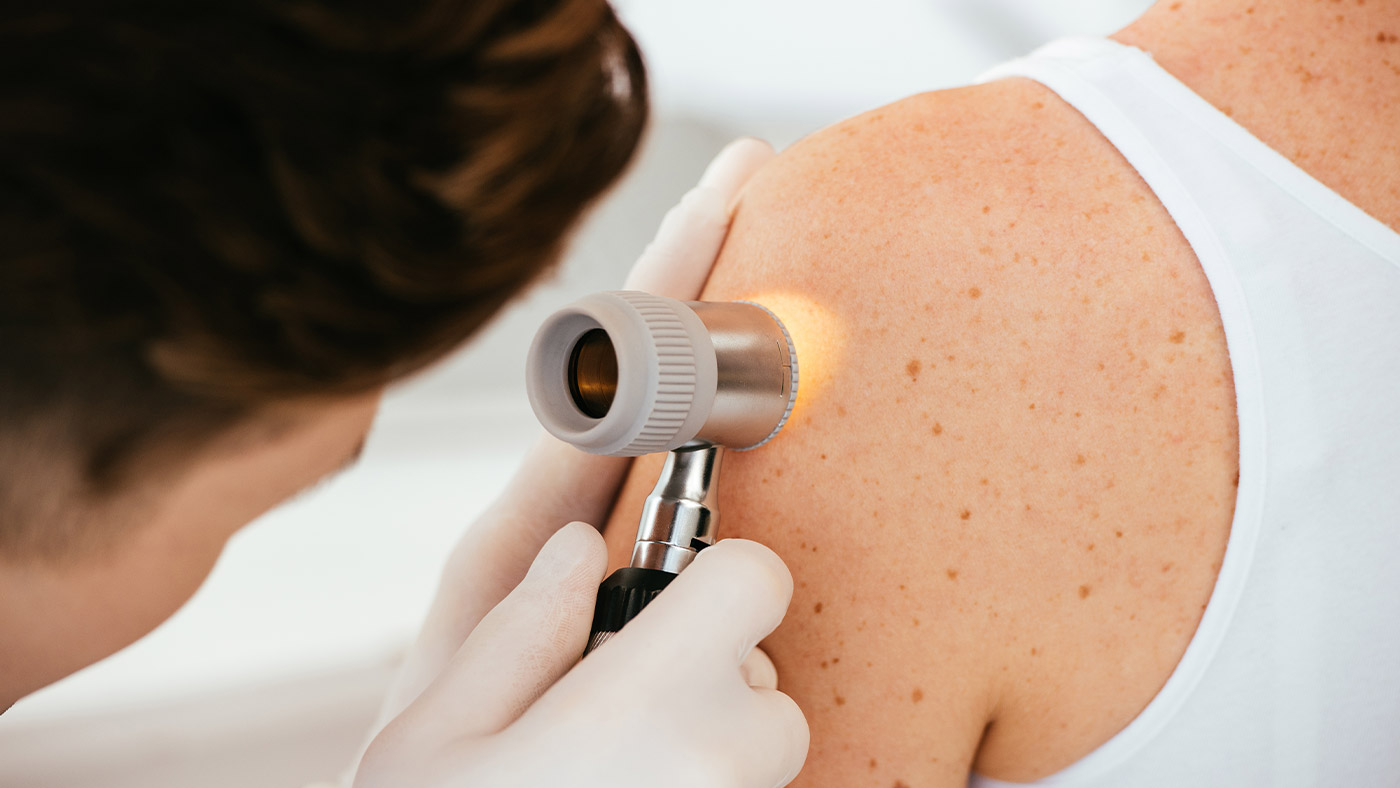
Did you know that your skin is the largest organ on your body and performs various functions?
The skin’s job is to protect us against infections, heat, water loss, and sunlight. Our skin also works to regulate our body temperature and produce vitamin D.
Our skin is comprised of two layers: the outer layer is the epidermis, and the dermis is the inner layer. Most cancer cells originate in the epidermis. The early detection of cancerous cells provides a more accurate diagnosis, more treatment options, and better patient outcomes.
“To detect melanoma early it is important to recognize the signs of skin cancer: ABCDEF” said Dr. Sharon Albers.
Early signs of skin cancer can include:
- Asymmetry
- Border, irregular
- Color, moles should not have red, white, blue or black or multiple colors
- Diameter, larger moles (bigger than a pencil eraser) may be more suspicious.
- Evolution, moles that are evolving or changing are suspicious
- Family history, the risk for melanoma might be inherited. It is important to know your family history.
We invite you to USF Health Dermatology for a free skin cancer screening
No appointment is needed. Screenings are on a first-come-first-served basis.
Morsani Center for Advanced Healthcare
13330 USF Laurel Drive, 6th floor
Tampa, FL 33612
Slip, Slap, Slop – Sun Safety Tips
USF Health expert Dr. Sharon Albers recommends using the slip, slap, slop method to maximize sun protection in the summer and all year long.
Slip on sun protective clothing and sunglasses. Tightly woven clothing blocks the sun’s rays and reflects heat helping you feel cool. Wear sunglasses with UV protection to protect both eyes and eyelids from damaging ultraviolet rays.
Slap on a wide brim hat to protect face, scalp, ears, and neck.
Slop on sunscreen/block. Apply a broad-spectrum UVA and UVB sunscreen with a SPF of 30 or higher, 20-30 minutes before going outside. Reapply at least every two hours, even on cloudy days. If swimming or sweating, apply it more often. There is no such thing as a “waterproof” sunscreen, look for water resistant.
Skin Cancer Risk and Treatment
“A skin exam by a dermatologist is vital to early detection of skin cancer. It is recommended to have a total body skin exam once a year starting in adulthood. If your dermatologist finds that you are at high risk for skin cancer, skin exams may need to be more frequent,” said Dr. Albers.
Some of the risk factors for developing skin cancer include:
- Use of tanning beds
- Blistering burns
- Outdoor jobs or sports
- Not using sunscreen
- Family history of melanoma
According to the American Academy of Dermatology, one in five Americans will develop skin cancer in their lifetime, and one person dies from melanoma – the deadliest form of skin cancer – every hour. Yet when caught early, skin cancer is highly treatable.
USF Health Dermatologists are specially trained to diagnose and treat common and rare skin disorders in patients of all ages. By connecting with our experts, you can rest assured that, if you develop anything suspicious, it is diagnosed and treated as early as possible, maximizing opportunities to cure and keep your skin as healthy as possible.
Visit USF Health Dermatology to learn more.