Faculty & Staff
Faculty
|
|
|
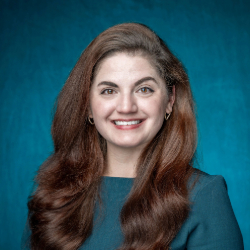
Kaitlyn R. Schuler, Ph.D. is an Assistant Professor in the Department of Behavioral Health Science and Practice at the University of South Florida. She received her B.A. in philosophy and the history of science and mathematics from St. John's College in Annapolis, her M.A. in psychological science from the Catholic University of America, and her Ph.D. in clinical-counseling psychology from the University of South Alabama. Dr. Schuler completed her predoctoral clinical psychology residency at the Canandaigua Veterans Affairs Medical Center, with a focus on evidence-based assessment and treatment of suicidality and co-occurring conditions, including a minor research rotation at the Center of Excellence for Suicide Prevention. She then joined the Innovation in Mental Health Lab as a Postdoctoral Scholar in USF's Department of Psychiatry and Behavioral Neurosciences where she trained in and delivered telehealth-based virtual reality exposure therapy and the development and validation of digital mental health interventions. Prior to returning to USF, Dr. Schuler was a tenure-earning Assistant Professor in the Department of Psychology at the University of North Carolina Wilmington where she was core faculty in the Clinical Psychology PhD program.
Currently, Dr. Schuler is Principal Investigator on an American Foundation for Suicide Prevention Early Career Research Award examining minority stress, social media use, and suicidality among LGBTQ+ emerging adults, and Co-Investigator on an NIMH-funded STTR/SBIR grant (PIs: Bunnell & Ong) developing and testing a telemedicine-based virtual reality exposure therapy application. Dr. Schuler directs the Digital Suicide Risk & Resilience Lab, which has three primary aims: (1) increasing access to and engagement in care for suicide and co-occurring conditions through digital methods, (2) the impact of digital environments on suicidality, and (3) examining mechanisms of disclosure and care engagement for underserved groups. Dr. Schuler is a licensed clinical psychologist and health services provider in Florida and North Carolina with authorization to practice interjurisdictional telepsychology through PSYPACT.
Education
- Ph.D., Clinical-Counseling Psychology (APA-accredited), University of South Alabama
- Predoctoral Residency (APA-accredited), Canandaigua Veterans Affairs Medical Center
- M.A., Psychological Science, Catholic University of America
- B.A., Philosophy and History of Science and Mathematics, St. John's College
Research Interests
- Mechanisms of suicide disclosure and care engagement
- Digital mental health intervention design and evaluation to reduce barriers to care
- The impact of digital environments on suicidality and co-occurring conditions
- Social determinants of mental health
Externally Funded Research Projects
Experiences of Minority Stress, Social Media Use, and Suicidality in LGBTQ+ Emerging Adults (American Foundation for Suicide Prevention Early Career Research Award; Principal Investigator)
Doxy.me VR: A Scalable Virtual Reality App to Facilitate Evidence-Based Immersive Telemental Health (National Institute of Mental Health, 2R42MH129065; Co-Investigator)
Selected Publications and Manuscripts
Schuler, KR., Struemph, E.*, Jones, A.*, Garcia, N.*, Gornet, S.*, Berry, D.*, & Barrows, S.* A meta-analysis of the association between sexual and gender minorities’ social media use and suicidality. Under review.
Schuler, KR, Hendricks, KE, Grigorova, B., Smith, PN. Associations Between Social Fragmentation and Suicide Mortality are Small, Robust, and Context-Dependent: A Meta-Analysis of Ecological Studies, 2009-2025. Under review.
Bunnell, B. E., Schuler, K. R., Craggs, J. G., Welch, B. M., & Ong, T. (2026). Examining the efficacy of a telehealth-based virtual reality clinic in treating adults with specific phobia: Feasibility randomized controlled trial. JMIR Formative Research, 10, e84670.
Schuler, K. R., Ong, T., Welch, B. M., Craggs, J. G., & Bunnell, B. E. (2025). Examining a telemedicine-based virtual reality clinic in treating adults with specific phobia: Protocol for a feasibility randomized controlled efficacy trial. JMIR Research Protocols, 14(1), e65770.
Bunnell, B. E., Schuler, K. R., Ivanova, J., Flynn, L., Barrera, J. F., Niazi, J., … Welch, B. M. (2024). Expanding a health technology solution to address therapist challenges in implementing homework with adult clients: Mixed methods study. JMIR Human Factors, 11(1), e56567.
Schuler, K. R., Baer, M. M., McDermott, R. C., & Smith, P. N. (2022). A psychometric pilot study examining the functions of suicidal communications using IRT and factor analysis. International Journal of Environmental Research and Public Health, 19(16), 10081.
Schuler, K. R., Smith, P. N., Ruffino, K., Stuart, G., & Wolford-Clevenger, C. (2021). Temporal stability of suicide capability among undergraduates with histories of suicidal ideation. Journal of Affective Disorders.
Schuler, K. R., Basu, N., Fadoir, N. A., Marie, L., & Smith, P. N. (2020). Five-factor model personality domains are not associated with suicidal communications. Journal of Aggression, Conflict and Peace Research.
Smith, P. N., Schuler, K. R., Fadoir, N., Marie, L., & Basu, N. (2019). Socio-ecological context and the interpersonal theory of suicide: A response to Hjelmeland and Knizek. Death Studies, 1–5.
Schuler, K. R., LaCroix, J. M., Perera, K., Baer, M. M., Trieu, T., Nademin, E., Englert, D. R., Jobes, D. A., & Ghahramanlou-Holloway, M. (2021). Interpersonal precipitants are associated with suicide intent communication among United States Air Force suicide decedents. Journal of Affective Disorders Reports.