Course Snapshot
| Format | Registration Fee | Access Begins | Time to Complete | Focus |
|---|---|---|---|---|
| Online | On-Demand | $1,995 | Upon Registration | 12 weeks of access and approximately 75 hours of self-paced content | Healthcare HR, recruiting, onboarding, credentialing, performance management, employee relations, OSHA, HIPAA, FMLA, and compliance |
Course Overview
HR for Medical Offices introduces learners to the people, compliance, and workforce responsibilities that shape healthcare workplaces.
You will study healthcare-specific HR functions, including recruitment, onboarding, credentialing, performance management, employee relations, workplace culture, training, HR documentation, labor regulations, and compliance. The course also covers laws and standards relevant to medical environments, including ADA, FMLA, EEOC, OSHA, HIPAA, and HR recordkeeping requirements.
This course is designed for learners who want to enter HR, move into healthcare, or formalize healthcare HR experience with structured training.
Skills You'll Gain
By the end of this course, you will be able to:
- Explain core HR functions in healthcare settings.
- Identify employment laws relevant to medical offices, including ADA, FMLA, and EEOC.
- Support recruitment, interviewing, onboarding, and credentialing workflows.
- Apply performance management and training practices.
- Address employee relations, conflict resolution, communication, diversity, and workplace culture.
- Recognize OSHA, HIPAA, and HR recordkeeping requirements.
- Explore healthcare HR career pathways, professional associations, and advancement options.
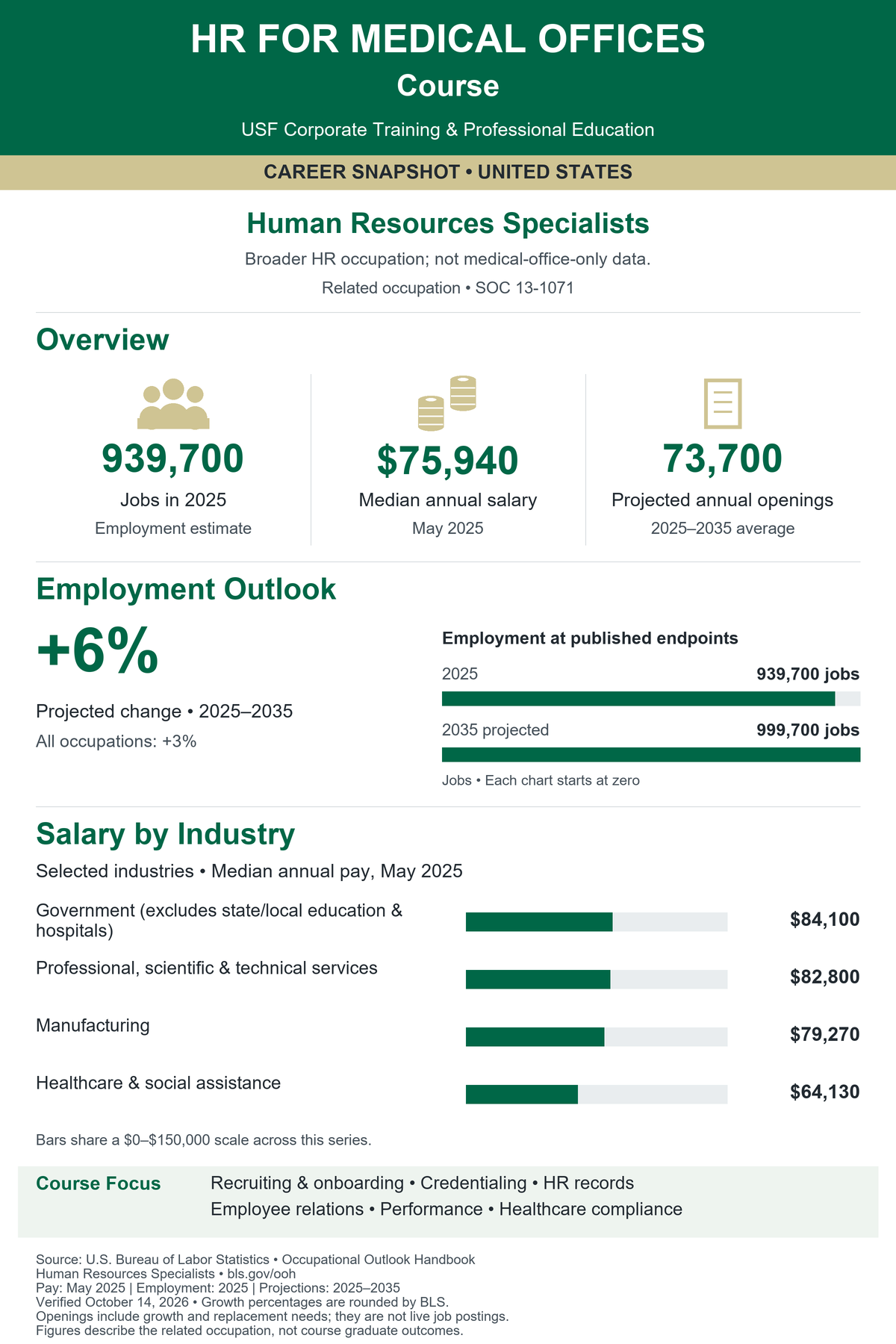
Tools and Details
Tools You'll Use
- Explain core HR functions in healthcare settings.
- Identify employment laws relevant to medical offices, including ADA, FMLA, and EEOC.
- Support recruitment, interviewing, onboarding, and credentialing workflows.
- Apply performance management and training practices.
- Address employee relations, conflict resolution, communication, diversity, and workplace culture.
- Recognize OSHA, HIPAA, and HR recordkeeping requirements.
- Explore healthcare HR career pathways, professional associations, and advancement options.
Topics You'll Cover
- Healthcare HR scenario exercises.
- Recruitment and onboarding examples.
- Credentialing workflow concepts.
- Performance management and documentation practice.
- Employee relations and conflict resolution scenarios.
- Compliance and labor regulation review materials.
- Career pathway and professional association resources.
What You'll Walk Away With
- HR foundations in healthcare.
- ADA, FMLA, and EEOC.
- Recruitment and onboarding.
- Job postings and interviewing.
- Credentialing.
- Performance management.
- Training and professional development.
- Employee relations and conflict resolution.
- Diversity, inclusion, and workplace culture.
- OSHA, HIPAA, and HR recordkeeping.
- Healthcare HR career growth.
- SHRM, AAPC, and ASHHRA.
Who Should Enroll
- Practical knowledge of HR work in medical office environments.
- A stronger understanding of healthcare workforce compliance.
- Skills for supporting recruiting, onboarding, credentialing, and employee relations.
- Awareness of OSHA, HIPAA, FMLA, ADA, and EEOC considerations.
- Career readiness for HR assistant, HR coordinator, or medical office HR roles.
- Familiarity with healthcare HR professional associations and advancement pathways.
The USF Difference
Healthcare-Specific HR Training
Study HR functions through the lens of medical offices, healthcare teams, credentialing, compliance, and patient-centered workplaces.
Compliance-Focused Skill Building
Learn how OSHA, HIPAA, FMLA, ADA, EEOC, and HR recordkeeping shape healthcare HR work.
Built for Career Changers and Early HR Professionals
Gain a structured entry point into HR roles connected to medical offices and healthcare organizations.
People Operations for Medical Teams
Learn how recruitment, onboarding, performance management, employee relations, and workplace culture support healthcare operations.
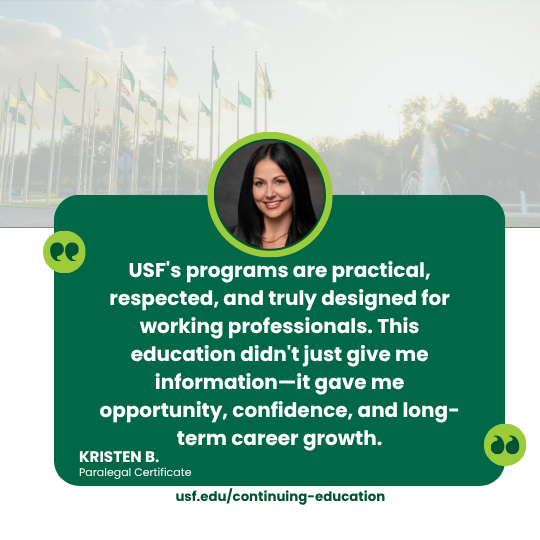
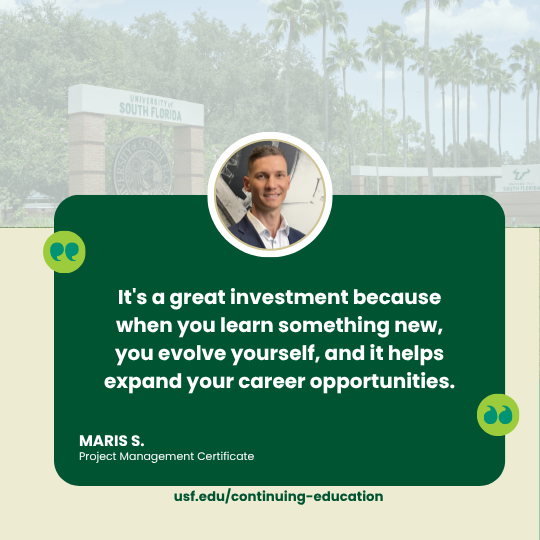
Participant and Client Feedback
Employees at companies like these have trusted USF Corporate Training & Professional Education with their skills training and career advancement.
Learn more about training for your team, organization, or company

A new career. Greater responsibility. New connections. Opportunities you haven't even
imagined yet.
Your potential is already there. Let's see where it can take you.

Not sure where to start?
Our advisors are here to help you compare options, understand formats, and choose a course that fits your schedule and goals.