Build specialized paralegal knowledge in litigation, evidence law, constitutional law, legal reasoning, court decision-making, Federal Rules of Evidence, and litigation support.
Course Snapshot
| Format | Registration Fee | Access Begins | Time to Complete | Focus |
|---|---|---|---|---|
| Self-Paced Online | $1,995 | The 15th of every month | 6 months | Litigation, evidence law, constitutional law, legal reasoning, court decisions, Federal Rules of Evidence, Legal Ethics, and eDiscovery |
Course Overview
The Litigation Paralegal Specialty Certificate introduces learners to evidence law, constitutional law, and the legal reasoning behind court decisions.
You will study major legal principles found in the Constitution and in Supreme Court decisions interpreting the Constitution. The program also examines how evidence law and constitutional law affect legal practice, with a focus on the Federal Rules of Evidence and how those rules connect to paralegal work.
Learners also study either Legal Ethics or eDiscovery to strengthen their litigation knowledge and support practical legal work.
This self-paced online program gives learners six months of access and can be completed from anywhere with an internet connection. Participants are also assigned a judge mentor or facilitator for guidance during the program.
Skills You'll Gain
By the end of this course, you will be able to:
- Analyze legal reasoning and court decision-making processes.
- Explain major constitutional principles and related Supreme Court decisions.
- Recognize how evidence law affects litigation practice.
- Understand how constitutional law applies to legal work.
- Connect the Federal Rules of Evidence to paralegal practice.
- Strengthen litigation knowledge through Legal Ethics or eDiscovery.
- Use course materials, exercises, forms, and reviews to support litigation-focused paralegal work.
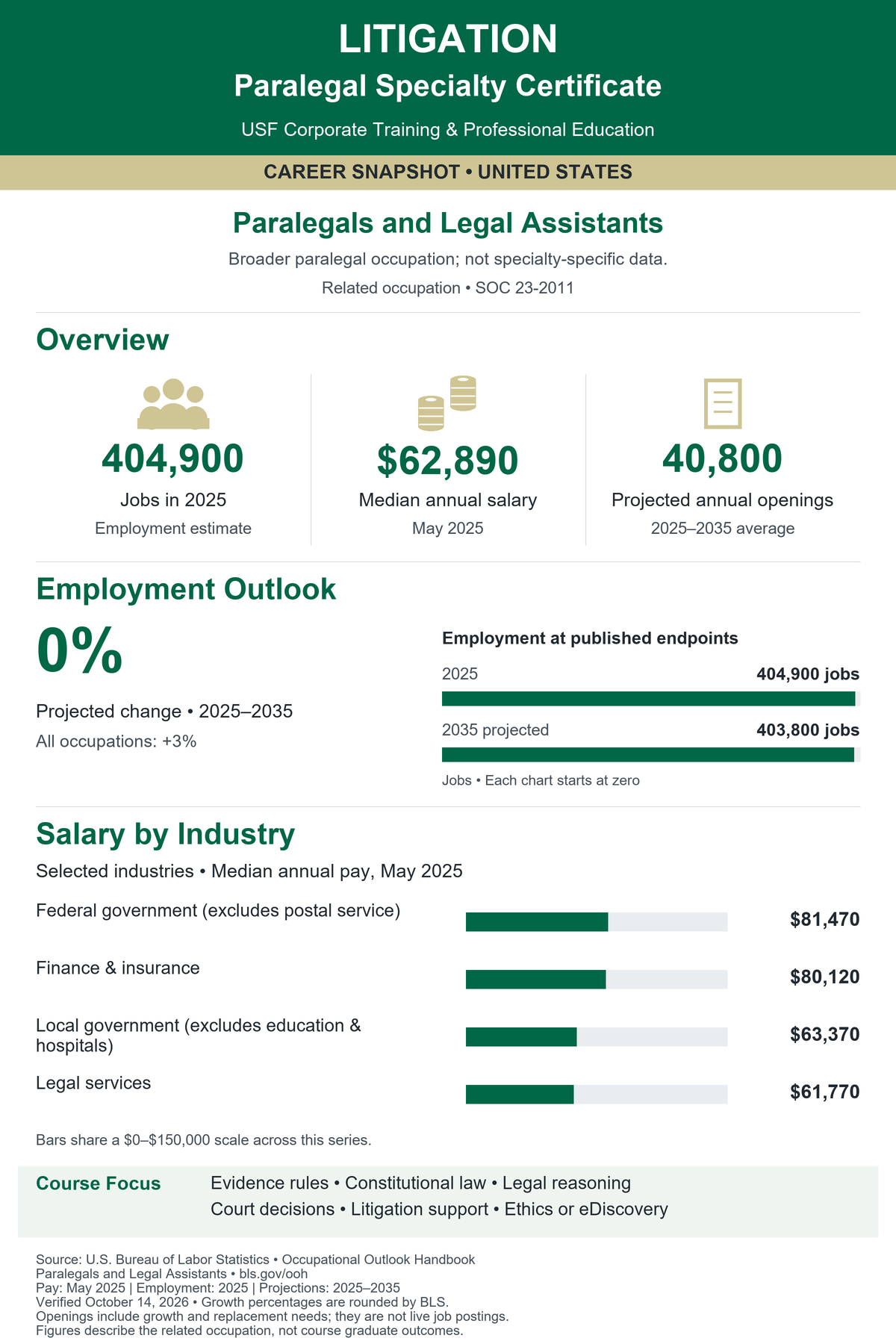
Tools and Details
Tools You'll Use
- Online lecture notes.
- Interactive exercises.
- Chapter reviews.
- Chapter analysis activities.
- Mock exams.
- Legal forms and reference materials.
- Case summaries, hypotheticals, and review questions.
- Federal Rules of Evidence references.
- Judge mentor or facilitator support.
Topics You'll Cover
- Litigation practice.
- Evidence law.
- Constitutional law.
- Supreme Court decisions.
- Legal reasoning.
- Court decision-making.
- Federal Rules of Evidence.
- Practical applications of evidence rules.
- Legal Ethics or eDiscovery elective pathway.
- Paralegal responsibilities in litigation support.
What You'll Walk Away With
- A Litigation Paralegal Specialty Certificate.
- Practical knowledge of evidence law and constitutional law.
- A stronger understanding of court reasoning and legal decision-making.
- Familiarity with the Federal Rules of Evidence and their role in paralegal practice.
- Litigation-focused knowledge through Legal Ethics or eDiscovery.
- Practice with exercises, reviews, forms, and mock exams.
- Support from a judge mentor or facilitator.
- Six months of access to complete the program.
Who Should Enroll
This program is designed for learners with prior paralegal education or experience.
Successful participants typically have at least one of the following:
- Completion of a Paralegal Certificate.
- A degree in Paralegal Studies.
- At least four years of substantive paralegal experience.
The USF Difference
Specialized Litigation Training
Study evidence law, constitutional law, court decision-making, and legal reasoning through a paralegal practice lens.
Federal Rules of Evidence Focus
Build practical understanding of how evidence rules affect litigation and paralegal work.
Built for Working Professionals
Complete the program online at your own pace with six months of access and no campus visits required.
Judge Mentor Support
Participants receive guidance from a judge mentor or facilitator during the program.
Practical Course Materials
Use lecture notes, exercises, chapter reviews, mock exams, hypotheticals, case summaries, forms, and Federal Rules of Evidence references.
Elective Pathway Included
Each Paralegal Specialty Certificate Program includes two required courses and one elective. Participants choose between Legal Ethics or eDiscovery after registration.
Participant and Client Feedback
Employees at companies like these have trusted USF Corporate Training & Professional Education with their skills training and career advancement.
Learn more about training for your team, organization, or company



A new career. Greater responsibility. New connections. Opportunities you haven't even
imagined yet.
Your potential is already there. Let's see where it can take you.

Not sure where to start?
Our advisors are here to help you compare options, understand formats, and choose a course that fits your schedule and goals.