The Bachelor of Science in Computer Science and Business gives students the power to turn technical knowledge into real-world impact — preparing them to lead where data, algorithms and business meet.
Combining the analytical depth of computer science with the strategic perspective of business, this degree equips graduates to drive digital transformation across industries.
Launching in 2026, this joint program between the USF Muma College of Business and the USF Bellini College of Artificial Intelligence, Cybersecurity and Computing offers one integrated curriculum designed to develop data-driven decision-makers who understand both technology and strategy.
INTERDISCIPLINARY, NOT PARALLEL TRACKS
Students in the interdisciplinary degree learn how technology and business interact from day one, not as separate silos. Dual-degree students often juggle two unrelated sets of requirements, general education classes and uncoordinated capstones. Here, there are no competing requirements, and the program is built so that students have a seamless experience.
- Connecting computing to a specific area of business: Instead of bolting business courses onto a technical major, this program fuses both fields into every semester, so students learn how to apply computing to business in real time. This includes core coursework from both colleges and allows a 15-credit-hour concentration in one of five business areas: accounting and analytics, fintech, business analytics and information systems, digital marketing and analytics, and supply chain.
- Save time and money: Dual-degree programs typically require 120 credit hours of study each, often adding several additional semesters. This program helps students graduate faster and gain deep expertise in both fields, with access to industry and academic leaders.
- More than surface familiarity in two fields: The interdisciplinary degree is intentionally designed so that computing and business courses reinforce one another. The result: graduates can walk into analytics meetings and engineering stand-ups with equal confidence. They can clearly articulate how their blend of skills applies to modern roles like data scientist, technical consultant, or fintech developer.
ABOUT THE PROGRAM
This program was built for students who want to translate technical ideas into business results, able to speak the languages of developers and decision-makers. Students build strong foundations in programming, AI and secure computing — plus business fundamentals. No computer science or coding experience needed to join this program.

- Emphasis on technology and strategy: Fluency in computing and business is a skill set few professionals possess and employers highly prize, setting graduates apart from peers in single-discipline programs.
- Customizable concentrations: Students shape their degree around fast-growing career paths in one of six business areas, from fintech and digital marketing to accounting or analytics. Students create their own path toward specific industry niches they enjoy.
- Capstone and internship opportunities: The required interdisciplinary capstone gives students experience designing technology solutions that deliver measurable business impact. This kind of integrated capstone is unique, and students leave with a hands-on, portfolio-ready experience that mirrors how cross-functional teams actually operate.
- Industry connections: Both colleges have strong partnerships across Tampa Bay’s growing tech and business ecosystems, providing internship opportunities and hands-on learning programs that students might not otherwise be able to access.
The end result: graduates are well-prepared for roles such as technical product manager, business systems analyst, fintech developer, accounting information systems manager or digital transformation consultant.
Read full course descriptions of the five Business options in the catalog:
- Computer Science and Business B.S., with Accountancy and Analytics Concentration
- Computer Science and Business B.S., with Business Analytics and Information Systems Concentration
- Computer Science and Business B.S., with Digital Marketing and Analytics Concentration
- Computer Science and Business B.S., with Fintech Concentration
- Computer Science and Business B.S., with Supply Chain Management Concentration
CAREER OUTLOOK

Employers increasingly seek professionals who can bridge technical development with strategic business decision-making. Gaining fluency in both fields positions graduates for some of the fastest-growing and competitively paid careers in the nation.
- High-growth fields: Employment in computing is projected to grow much faster than average. The U.S. Bureau of Labor Statistics projects a 20% growth in demand for computer and information research scientists from 2024 through 2034, and many related computing occupations fall into the broader computing/IT category where demand remains strong.
- Strong salaries: Overall employment in business and financial occupations is projected to grow faster than the average for all occupations through 2034. The median annual wage for this group was $80,920 in May 2024, which was higher than the median annual wage for all occupations of $49,500.
- Flexible future: Years after graduation, students will be able to pursue careers in roles that combine innovation and strategy, fields such as technical product management, financial software development, or cybersecurity and insurance leadership.
Graduates entering computing and business fields benefit from some of the highest return-on-investment majors nationally, according to Forbes and NACE.
- Computer science degrees generally offer the highest return on investment, due to strong job demand and high earning potential. Business fields like accounting also show a strong return. In fact, computer science and IT ranked No. 2 on the Forbes list of popular college degrees ranked by ROI, and accounting ranked No. 4.
- Computer science and business analytics graduates are among the top-paid majors, with average starting salaries in the high $70,000s for computer science and engineering majors and the mid-$60,000s for business-related fields.
This degree provides graduate program options, as students would qualify for either a master’s degree in computer science or an MBA, degrees that could open doors to lucrative leadership opportunities.
TWO COLLEGES, FULL ACCESS
Students are part of two powerhouse colleges at USF: A nationally ranked business school and a research engine focused on cutting-edge technology. They are part of both, not splitting time between the two.
Students enjoy all the benefits of being a business major, including access to the business school’s talent development center. They can participate in student organizations in both colleges. They have access to computer science labs that business students typically can’t access.
While faculty and student success leaders collaborate to align coursework, internships and career support, academic advising is led by Bellini College of Artificial Intelligence, Cybersecurity and Computing. Students have one advising home while enjoying the full resources and networks of both colleges.
LEARN FROM INDUSTRY-CONNECTED FACULTY
Learn from professors who bring real-world projects into the classroom, so that your education mirrors the challenges tackled in the workplace. Courses are taught by experts from both colleges, professors who consult with major corporations, advise startups, and bring their industry experience directly into the classroom.
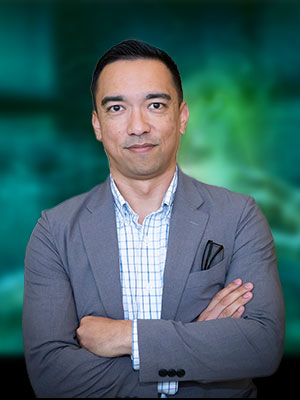
John Licato is an associate professor in the Bellini College of Artificial Intelligence, Cybersecurity and Computing at USF and director of the Advancing Machine and Human Reasoning Lab. His research focuses on artificial intelligence, natural language processing, and computational models of human reasoning. He received a PhD in computer science from Rensselaer Polytechnic Institute. View his full bio.
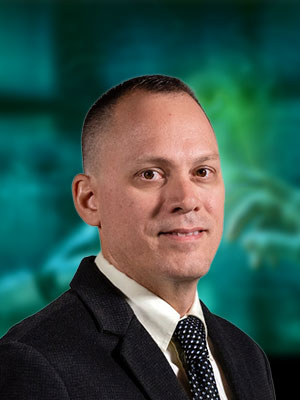
Clinton Daniel is an associate professor of instruction in the School of Information Systems in the Muma College of Business at USF. He teaches application development for analytics, database design, business data communications and cybersecurity. His professional background includes extensive experience in information systems within the U.S. Department of Veterans Affairs. He holds a doctorate in business administration from USF. View his full bio.
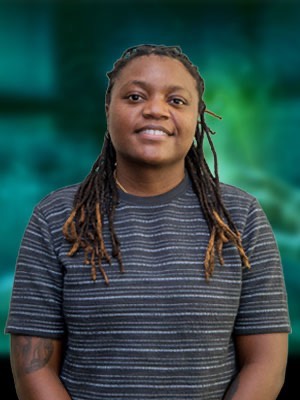
Tempestt Neal is an associate professor in the Bellini College of Artificial Intelligence, Cybersecurity and Computing at USF and director of the Cyber Identity and Behavior Research Lab. Her research focuses on biometrics, smart sensing and inclusive cybersecurity systems. She received a PhD in computer engineering from the University of Florida. View her full bio.

Rob Hammond is an assistant professor of instruction in the School of Marketing and Innovation in the Muma College of Business at USF and director of the Center for Marketing and Sales Innovation. With more than 30 years of experience, his work focuses on go-to-market strategy, sales transformation and innovation. He earned his doctor of business administration from USF. View his full bio.
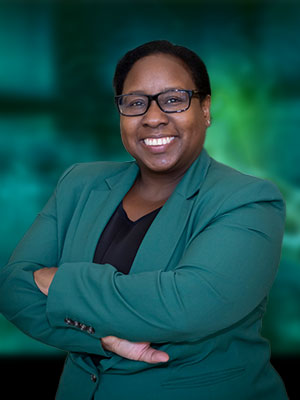
Schinnel Small is an associate professor in the Bellini College of Artificial Intelligence, Cybersecurity and Computing at USF. Her background spans computer science, electrical engineering and data visualization, with experience in teaching and research across technical disciplines. She received a PhD from Morgan State University. View her full bio.
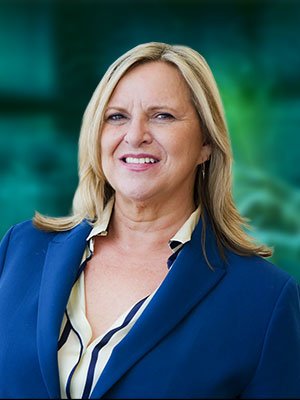
Carol Osborne is the director of the Zimmerman Advertising Program in the Muma College of Business at USF. She has a long career in advertising before joining the faculty at USF. She received a master’s degree in business administration from USF. View her full bio.