News & Events
The Second Tech for Aging Summer Hackathon (TASH)
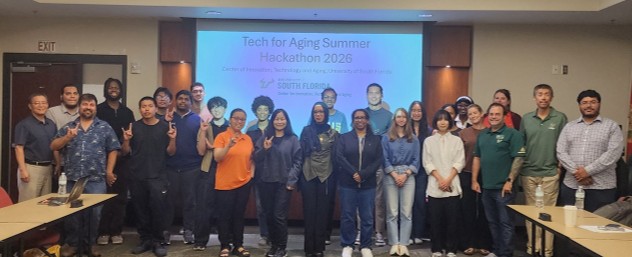
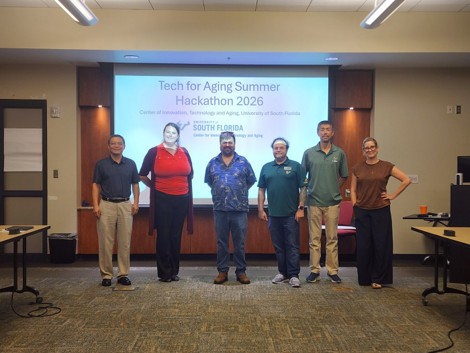
TASH 2026 participants, mentors, and organizers gather after the final presentations on July 13, 2026.
After nine weeks of building, eleven undergraduate student teams took the stage to present technology aimed at one of society’s most pressing challenges — helping people age with dignity, safety, and independence. It was the culminating day of the Tech for Aging Summer Hackathon (TASH) 2026, an annual program run by the University of South Florida’s Center for Innovation, Technology and Aging (CITA). What began in the spring as an open call to undergraduate and graduate students had, by July 13, become a showcase of working prototypes: a robotic dog engineered to carry oxygen up a flight of stairs, a wearable vest that measures how hard a caregiver pushes and pulls during physical assistance, and AI agents that let biologists analyze single-cell aging data without writing a line of code.
A Nine-Week Sprint
TASH launched with an ambitious pitch. Announced in the spring with a sign-up deadline of April 15, the program invited students to spend nine weeks — May 11 through July 13 — tackling real-world problems in healthy aging and caregiving. Each team was paired with a faculty mentor drawn from CITA and met regularly to keep the project on track.
The response was strong. Ninety undergraduate students signed up, and more than sixty went on to participate, organizing into eighteen teams across a slate of faculty-mentored projects spanning AI, robotics, mobile-app development, bioinformatics, data science, and wearable systems. The projects were grounded in live research questions — from training machine-learning models on large-scale health datasets, to programming a stair-climbing robotic dog, to rebuilding a music-therapy app for dementia home care.
A hackathon is as much a test of endurance as of engineering. Five teams stepped away in the first four weeks and two more could not complete their projects, but eleven teams held the course — finishing their work and earning a place at the final presentations.
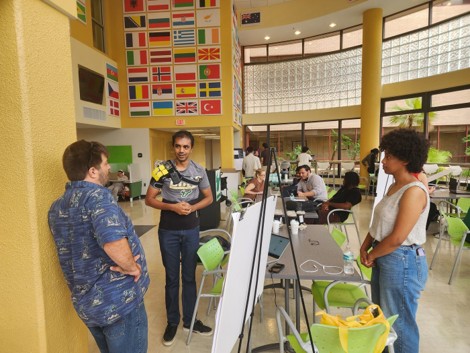
A participant shows off wearable hardware during the demo session, held in the atrium beneath USF’s hall of international flags.
The Projects
The eleven finalist teams tackled a strikingly diverse set of problems, united by a single thread: technology built with older adults in mind. Several took on mobility and oxygen therapy through assistive robotics; others turned to cognitive health, from dementia screening to predicting cognitive decline; a cluster pushed the frontier of AI agents for single-cell aging biology; and still others built wearables and in-vehicle systems to keep older adults safe. Each project is profiled below with its team, mentor, and presentation video.
Senescence Agent — A Governed AI Agent for Trustworthy Single-Cell Aging Analysis
Team: Rodela Ghosh, Aviral Gupta
Mentor: Fei He (Health Informatics Institute)
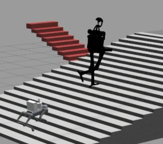
A Robot Dog That Carries Oxygen and Climbs Stairs
Team: Olga Druzhkova, Aibek Shadybekov, Chi Vo
Mentor: William Kearns (College of Behavioral & Community Sciences)
Assistive Robot for Long-Term Oxygen Therapy
Team: Seyoung Kan, Laray Lopez
Mentor: William Kearns (College of Behavioral & Community Sciences)
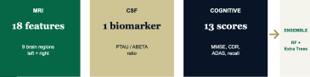
Multimodal Prediction of Cognitive Decline
Team: Haneen Shabaneh, Md Mushfiqul Islam
Mentor: Mohammad Al Olaimat (Bellini College of AI, Cybersecurity and Computing)
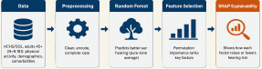
AI-Driven Analysis of Hearing Loss & Physical Activity
Team: Theresa Alsaindor, Fiorella Cam Wu, Christine Chinapoo, Lynda Gordon, Fuad Yunusov, Annisha Wazed
Mentor: Michelle Arnold (College of Behavioral & Community Sciences)
Predicting Baseline Diagnosis from ADNI and HABS-HD Datasets
Team: Adhithi Mudaliyar, Hong Gao
Mentor: Mohammad Al Olaimat (Bellini College of AI, Cybersecurity and Computing)

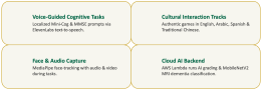
Culturally Aware Dementia Screening for Aging Adults
Team: Harshavardan Yuvaraj, Fares Ibrahim, Brandon Ugbesia
Mentor: Chuanhai Cao (Taneja College of Pharmacy)
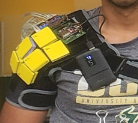
Wearable System for Measuring Engagement Force During Physical Assistance
Team: Nandhu Shankar, Bethelhem Tadesse
Mentor: Yu Sun (Bellini College of AI, Cybersecurity and Computing)
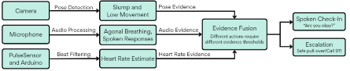
Measured Response for Driverless Cabins
Team: Quynh Giang Ho, Khai Dong Nguyen, Phu Vinh Khang Dang
Mentor: Yu (April) Zhang (College of Engineering)
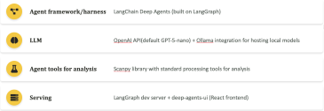
AI Agent for Single-Cell Aging Atlas Analysis
Team: Trung Lam
Mentor: Fei He (Health Informatics Institute)
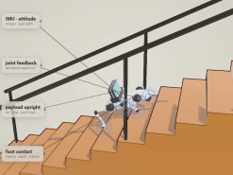
Stair-Climbing Robotic Oxygen Carrier
Team: Anthony Sinchi
Mentor: William Kearns (College of Behavioral & Community Sciences)
Awards
On July 13, five judges attended the final presentations and scored every team. To keep the evaluation fair, mentors who served as judges reviewed only the projects they had not mentored. The panel brought together clinical, academic, and industry expertise: Michelle Arnold, Associate Professor in the Department of Communication Sciences & Disorders at USF; Chuanhai Cao, Professor in the Department of Pharmaceutical Sciences at USF; Jonathan Clapp, a post-doctoral fellow in the School of Aging Studies at USF; Jeff Craighead, Lead Scientist at Accelint AI; and Jacqueline Hausmann, a senior Ph.D. student at the Bellini College of AI, Cybersecurity and Computing.
Based on the judges’ scores, CITA named five award winners across distinct categories — recognizing not only the strongest overall solution but also standout innovation, engineering, presentation, and live demonstration.
The 2026 TASH Award Winners
- Best Overall Solution — Culturally Aware Dementia Screening for Aging Adults
Team: Harshavardan Yuvaraj, Fares Ibrahim, Brandon Ugbesia
Mentor: Chuanhai Cao (Taneja College of Pharmacy) - Best Innovation Solution — AI Agent for Single-Cell Aging Atlas Analysis
Team: Trung Lam
Mentor: Fei He (Health Informatics Institute) - Best Technical Execution — A Robot Dog That Carries Oxygen and Climbs Stairs
Team: Olga Druzhkova, Aibek Shadybekov, Chi Vo
Mentor: William Kearns (College of Behavioral & Community Sciences) - Best Presentation — Measured Response for Driverless Cabins
Team: Quynh Giang Ho, Khai Dong Nguyen, Phu Vinh Khang Dang
Mentor: Yu (April) Zhang (College of Engineering) - Best Demo — Wearable System for Measuring Engagement Force During Physical Assistance
Team: Nandhu Shankar, Bethelhem Tadesse
Mentor: Yu Sun (Bellini College of AI, Cybersecurity and Computing)
The TASH 2026 final-presentation judges — Chuanhai Cao, Jacqueline Hausmann, Jeff Craighead, Jonathan Clapp, and Michelle Arnold — with organizer Yu Sun. The five judges scored all eleven finalist teams.
The TASH 2026 final-presentation judges — Chuanhai Cao, Jacqueline Hausmann, Jeff Craighead, Jonathan Clapp, and Michelle Arnold — with organizer Yu Sun. The five judges scored all eleven finalist teams.
Clinical & Innovation Review Panel
Every team also produced a five-minute video of its work, reviewed by a Clinical & Innovation Review Panel, a group of industry leaders and clinicians assembled to weigh each project’s real-world potential. Each panelist independently scored the videos, and based on those scores CITA named two additional awards, recognizing the projects with the greatest real-world impact and the strongest translational promise.
The review panel comprised six members:
● Katie Desorcy, Operational Leader at InnovAge
● Tzu-Jen Kao, Senior Biomedical Engineer at GE HealthCare
● Haru Okuda, Executive Director of CAMLS
● John Reinhart, innovator, strategist, and advisor active with the National Institute on Aging
● Jason Wilson, Chairman of the Department of Emergency Medicine at USF
● Ghada Zamzmi, Regulatory Science Principal at Heartflow
Clinical & Innovation Review Panel Awards
Real-World Impact Award — Culturally Aware Dementia Screening for Aging Adults
Team: Harshavardan Yuvaraj, Fares Ibrahim, Brandon Ugbesia
Mentor: Chuanhai Cao (Taneja College of Pharmacy)
Translational Promise Award — Stair-Climbing Robotic Oxygen Carrier
Team: Anthony Sinchi
Mentor: William Kearns (College of Behavioral & Community Sciences)
Looking Ahead
TASH is a beginning, not an endpoint. The Center will work with mentors and students to advance the most promising solutions into life-changing technologies by building partnerships with local organizations and securing external funding. Outstanding participants may also be selected for paid research positions in Fall 2026 to continue developing and translating their innovations.