People
Alumni Profiles
William L. Ball, AICP , MA in Economics (1988)
Chief Operating Officer
Tindale-Oliver & Associates, Inc., Planning & Engineering

As a freshman at Florida Southern College in Lakeland, I took my first economics class in 1983 (Microeconomics). I had excelled academically in high school without working very hard and was shocked when I got a “D” on my first economics exam—and so mastering economics became my challenge. With some hard work, I salvaged a “B” in that first Economics class and was hooked on the subject.
After receiving my B.A. and while working in a new job in banking, I pursued a Master
of Arts in Economics at USF. Those studies led to a graduate assistantship opportunity
with the USF Center for Urban Transportation Research and, after receiving my M.A.,
a transportation research faculty position. After a few years, I used that experience
to seize an opportunity with Tindale-Oliver & Associates, Inc., a 75-person transportation
planning, urban planning, and engineering firm with 6 offices throughout the U.S.
Now, nearly 25 years after completing my academic pursuits, I maintain great relationships
with many of my USF Economics professors and mentors and am grateful for the experiences
they provided and the knowledge they imparted. I can look back and say without hesitation
that the USF Economics Program provided an outstanding foundation for my career and
where it has evolved today. It taught me how to think, not only from an academic perspective
but, more importantly, from a “common sense” business perspective and I owe much of
my success to that background.
Alison Jimenez, MA in Economics, 2002
President and CEO, Dynamic Securities Analytics, Inc.
Alison completed her Master of Arts in Economics in 2002 and shortly thereafter founded Dynamic Securities Analytics (DSA). It did not take long for Alison to build DSA into a highly successful business consulting firm that specializes in securities litigation. DSA provides economic analysis of brokerage accounts and determines compliance with anti-money laundering regulations. DSA is retained by national brokerage and law firms to perform this analysis.
Alison’s success has been widely recognized. She has received such accolades as the USF Alumni Association’s Outstanding Young Alumnus Award in 2010 and was appointed to the Florida Advisory Council on Small and Minority Business Development. Furthermore, Alison holds two pending patents for technological advancements in economic data analysis.
As to the value of her MA degree, Alison states “earning a Master of Arts in Economics from USF helped to qualify me as an expert witness by demonstrating that I have the knowledge and ability to prepare complex analysis. Additionally, I have applied the data analysis skills that I learned in Econometrics and Macro Economics to offer innovative services to DSA’s clients”.
Her advice to students, “Get a career-related internship while in school. It will help you to determine if that is in fact what you want to do with your career, and it will give you an advantage in landing your first full-time job”.
In the future Alison not only wants to build on her past success in business, but also contribute to the Tampa community and USF: “I want to further utilize technology to provide insightful economic analysis to my clients, but without sacrificing any of the personal customer service that DSA is already known for. I would also like to continue to contribute to the Tampa community and one day serve on USF’s board”.
Bob McKee, MA in Economics (1993)
Chief Economist – Florida Department of Revenue (FDOR)
After completing his Masters of Arts in Economics at USF, Bob relocated to Tallahassee where he became employed by FDOR. He worked as an Economic Analyst for the Property Tax Oversight Program from 1995 to 1999. In 1999 he transferred to the Office of Tax Research and analyzed proposed legislation during the 1999 Legislative Session. In the fall of 1999, Bob left FDOR to join the Florida Association of Counties where he lobbied Florida’s Legislative and Executive branches on behalf of Florida’s County Commissioners, handling finance, tax and appropriations issues. In 2007, Bob returned to FDOR, first in the role of Chief Economist and then as the Deputy Executive Director, heading the Office of Legislative Services during 2008. In January 2009, Bob went to the Florida Senate as the Staff Director of the Finance and Tax Committee, also serving as the Senate Principle to the Economic Estimating Conference and the Revenue Estimating Conference. He returned to FDOR as the Chief Economist in January 2011.
Bob is also a Certified Public Accountant.
As the Chief Economist for FDOR, Bob leads a team of six economists in the Office of Tax Research. The duties include forecasting collections of sales tax, corporate income tax, documentary stamp tax, insurance premium tax, mortgage intangibles tax, motor fuel tax, gross receipts tax, communication services tax, severance tax and the rental car surcharge, as well as forecasting the property tax base by county. Another duty is to produce revenue impact analyses of proposed legislation for consideration by Florida’s Revenue Estimating Conference.
Reflecting on the value of his MA, Bob states “Knowledge is currency in today’s information economy. The MA program gave me a set of tools to use in analyzing prospective changes in law and the knowledge to use them appropriately.”
His advice to students, “Never be afraid to question assumptions. Do not be offended when someone questions yours.”
Lovisa Gunnlaugsdottir, BS Econometrics and Quantitative Economics, BS Criminology (2026)
During my time at USF, I pursued an interdisciplinary path that combined quantitative economics, econometrics, criminology, undergraduate research, student leadership, and service. I am a member of the Cybercrime Interdisciplinary Behavioral Research Lab (CIBR Lab), where I have contributed to several research projects focused on cybercrime, technology-enabled fraud, and financial safety. Through this work, along with internship and experiential learning opportunities, I developed a strong interest in the intersection of financial services, technology, and consumer protection. Following graduation, I will be joining Webull as a Cryptocurrency Operational Analyst, where I hope to apply behavioral analytics and data-driven insights to improve consumer protection and financial safety in digital financial environments.
My advice to current Economics students is to stay open to opportunities that may be connected to economics in unexpected ways. For me, combining economics with criminology, cybercrime research, and cybersecurity-related work helped me discover a path that is both meaningful and professionally exciting. Economics is a very versatile degree, and some of the best opportunities can come from exploring interdisciplinary interests that may not seem obvious at first.
As an international student from Iceland pursuing higher education independently in the United States, my experience at USF has been shaped by adaptability, financial independence, and a commitment to building opportunities through research and campus involvement. In addition to my academic work, I have been involved in Zeta Tau Alpha, where I participated in philanthropic initiatives supporting Breast Cancer Education and Awareness and service efforts such as the Feed A Bull food security program. I also served as Team Coordinator for the Women’s Gymnastics Club, where I helped organize media days, manage merchandise initiatives, and support branding and outreach efforts. These experiences have strengthened my interest in service-oriented leadership, collaboration, and creating a lasting impact both on campus and beyond.
Yovela Tesfagaber Debesay, BA Economics, BA International Studies, & Minor in Public Service and Leadership

Since graduating from USF, my career has centered on development economics, international policy, and cross-sector strategy. I went on to earn a Master of Arts in International Development from The George Washington University, where I focused on economic development, foreign investment, and institutional resilience in Sub-Saharan Africa.
I currently work in Washington, DC within the international policy and U.S.–Africa engagement space, supporting research, programming, and communications efforts that bridge economic analysis and global development practice. My work spans economic research, policy brief development, multilateral engagement, and diaspora-centered development initiatives.
In addition, I am the Co-Founder of the Global Climate Cooperative, a diaspora-centered initiative focused on mobilizing global human capital and community-driven solutions to accelerate sustainable development and climate resilience in the Global South. Through this work, I am building platforms that connect economics, climate finance, and institutional capacity-building in emerging markets.
I am particularly interested in how institutions, diaspora capital, and public–private collaboration shape long-term economic transformation in Africa.
One of the most important things I have learned is that economics is far more multifaceted than many students initially realize. It is not a single career path, industry, or job title. Economics is a discipline, a way of thinking, and a toolkit that can be applied across sectors.
The analytical training students receive, especially in econometrics, statistics, and theory, equips them to approach complex problems with structure and clarity. But how that training is applied is entirely up to the individual. Economists work in government, international development, finance, technology, research, sustainability, consulting, nonprofits, and entrepreneurship. There is no single correct way to build a career in economics.
I encourage students to explore interdisciplinary applications. Economics intersects with public policy, climate, health, international affairs, business strategy, and community development. The field rewards curiosity and adaptability.
Most importantly, students should not feel pressured to follow a single path. Their background, interests, and lived experiences can shape how they practice economics in the real world. The discipline is broad enough to accommodate many trajectories, and that diversity of application is one of its greatest strengths.
Beyond my academic and professional roles, I have remained actively engaged in global economic and policy spaces. I have participated in major international conferences and convenings, including serving as a Youth Delegate at the United Nations and engaging in programming and policy dialogue connected to the World Bank. These experiences have deepened my understanding of how economic theory translates into multilateral decision-making, development finance, and global governance.
Across research, policy engagement, and entrepreneurship, my work reflects a commitment to applying economics not only as a technical discipline but as a tool for institutional resilience, inclusive growth, and long-term development.
Juan Oropeza, BS Econometrics & Quantitative Economics, Minor in Leadership Studies
I started off with TeachForAmerica, directly after USF teaching 6th grade ELA in Miami to a primarily immigrant population. This was a great way to give back to my community in an impactful way. From there I worked my first role in finance with Goldman Sachs in Slat Lake City, Utah doing Financial Reporting for their Tax Department. I then worked two years as an Information Reporting AVP in Citibank back here in Tampa. Currently, I’m working as the youngest VP in my division in JP Morgan Chase managing two seperate tax teams.
Internship’s go along way, and if you have the time and ability to focus on them I definitely recommend it. However, I didn’t really get any internship opportunities while in college, but I did make the best of every opportunity I had. I networked and when I was in any role I would go above and beyond whatever outlined responsibilities I was given. This allowed me to build a strong reputation and brand that has allowed me to excel quickly in my career. People always notice what you do and they will talk about you, what they say is up to you.
I really recommend certifications! Alteryx and SQL are great ones, but with AI making a splash I’d consider looking into those tools as well.
Denise Marton, BA Economics, BA International Relations, & Minor in French.
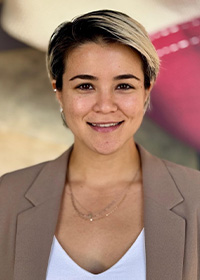
Through the Honors College, I applied for and was awarded the Thomas R. Pickering Foreign Affairs Fellowship, which opened the door for me to pursue a master’s degree in Global Finance, Trade, and Economic Integration at the University of Denver and ultimately join the U.S. Department of State as a Foreign Service Officer. During my fellowship, I interned in the Sate Department DC office covering OSCE and NATO affairs and later in the Economic Section at U.S. Embassy Paris. My first tour was in Beijing, followed by Jerusalem and two tours in Istanbul. I currently cover private sector engagement and emerging technology in Istanbul, where I work at the intersection of economics, innovation, and foreign policy.
Stay curious. The models and econometrics matter-but so do your relationships, communication skills, and willingness to raise your hand for new opportunities. Have the courage to pursue paths that may feel uncertain. Careers are rarely linear. If you stay adaptable, invest in your interpersonal skills, and remain open to the unexpected, your economics degree can take you further than you imagine.
Amoy Ellis, BA Economics, BA Political Science
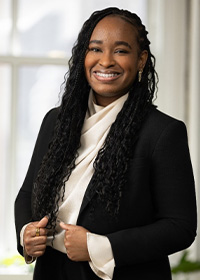
I began my career with a strong interest in both business and the law, earning a dual undergraduate degree in economics and political science before pursuing my J.D. at Emory University School of Law, where I focused on transactional and intellectual property work. During law school, I gained practical experience through externships with major companies such as Coca-Cola, NCR Atleos and Celsius, and developed a foundation in corporate law, deal structuring, and business operations.
I am currently a corporate associate at BakerHostetler in New York, where I advise clients on a range of transactional matters, including mergers and acquisitions, debt finance, and fund-related work. My practice involves supporting deal execution, drafting and negotiating agreements, and collaborating with senior attorneys to provide strategic, business-oriented legal guidance.
Economics students should be intentional about building practical skills early on, as the analytical foundation the major provides becomes much more valuable when paired with real-world experience like internships, research, or exposure to business and legal settings. I would also encourage students to stay open-minded about where an economics degree can take them. Before graduating from undergrad, I seriously considered becoming an economist or even an economics professor, largely because I was inspired by the many great teachers I had at USF. That experience ultimately reinforced how versatile the field is and how your interests can evolve over time. Strong communication skills are equally critical, as the ability to clearly explain complex ideas can set you apart in any profession.
Students should also be proactive about networking and seeking mentorship, since many opportunities come from relationships and conversations rather than traditional applications. Finally, trust that your path does not need to be perfectly linear; staying curious, continuing to learn, and remaining adaptable will help you find the direction that best aligns with your goals.
During my time at the University of South Florida, I was highly involved on campus, serving in student government as a senator, acting as a student representative for the College of Arts and Sciences Dean’s Student Leadership Society, and working as a resident assistant. I am also honored to be a member of the Order of the Golden Brahman, which recognized leadership, scholarship, and service. These experiences helped shape my leadership style, strengthened my ability to collaborate across diverse groups, and ultimately prepared me for my transition into a career in corporate law.