Events
Upcoming Events
September
Wednesday, September 16, 2026
Funding Now, Success Later: A Grant Development Workshop for Researchers Working in the Humanities
Oak View Room (Tampa campus)
3720 Spectrum Blvd.
1:00 PM - 4:00 PM
About Event
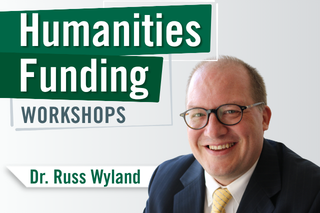
Join Dr. Russell Wyland for a free 2.5-hour workshop that includes an overview of the rapidly changing humanities funding landscape—what’s shifting, why it matters, and how faculty working in the humanities can position themselves strategically—and an in-depth discussion on how to frame your project, match your project to the right opportunity, and craft your strongest arguments. The workshop will include one 15-minute break and an opportunity for Q and A.
To register: Email Research Development Institute Program Manager David Croxford at
dcroxford@usf.edu
Dr. Wyland is a nationally recognized leader in humanities research and grantmaking. He retired from the National Endowment for the Humanities in 2025 after 35 years of public service, has delivered more than 70 grant writing workshops, and has led major federal and philanthropic collaborations with such organizations as the Mellon Foundation, the Library of Congress, and the National Science Foundation. He is the principal author of Research Fellowships: An Evaluation of 2002–2004 Awards and is currently writing an open-access Field Guide to Humanities Grant Writing, supported by USF. Russell is currently the Senior Research Fellow at USF’s Research Development Institute and a fellow at the Library of Congress’s John W. Kluge Center.
Thursday, September 17, 2026
Care as Research, Research as Care: Listening at the Margins through the Culture-Centered Approach
ISA 5020 | Interdisciplinary Sciences Building
12030 USF Cherry Dr, Tampa, FL 33620
4:00 PM - 6:00 PM (EST)
About Event
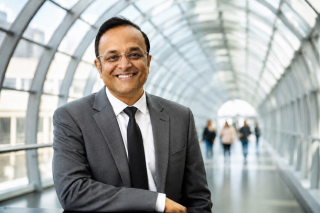
Join the Faculty Fellows for a lecture and Q&A with Mohan J. Dutta, joining virtually from New Zealand. This event is free to attend and refreshments are provided.
This talk positions care as research as fundamentally the labour of learning to listen, a practice that calls for a shift in the orientation of the body—from its outward turn toward the impetus to extract, to an inward turn toward the act of listening that is held accountable to communities.
Drawing on the culture-centered approach, I theorise this reorientation as slow and reciprocal work, learning over time to respond to the calls that emerge from within communities rather than to the demands imposed upon them from outside. Here the devaluation of care and the erasure of subaltern knowledge emerge from the same colonial-capitalist logic, one that trains the researching body to acquire, measure, and take. Research-as-care offers instead a praxis of co-construction that reorganises who is heard, on whose terms, and toward what transformation, reframing care as a mode of knowing, relating, and remaking the structures that render care at once indispensable and disposable.
About the Speaker:
Mohan J. Dutta is Dean’s Chair Professor of Communication at Massey University and Director of the Center for Culture-Centered Approach to Research and Evaluation (CARE), where he develops community-led approaches to social change, health justice, and social transformation. His activist scholarship, recognized through more than 30 international awards, works alongside communities at the margins across diverse global spaces to build communicative infrastructures that advance voice, dignity, and collective organizing, rooted in the ethic of care.
Wednesday, September 23, 2026
Funding Now, Success Later: A Grant Development Workshop for Researchers Working in the Humanities
USF St. Pete campus SLC 2100
1:00 PM - 4:00 PM
About Event
Join Dr. Russell Wyland for a free 2.5-hour workshop that includes an overview of the rapidly changing humanities funding landscape—what’s shifting, why it matters, and how faculty working in the humanities can position themselves strategically—and an in-depth discussion on how to frame your project, match your project to the right opportunity, and craft your strongest arguments. The workshop will include one 15-minute break and an opportunity for Q and A.
To register: Email Research Development Institute Program Manager David Croxford at
dcroxford@usf.edu
Dr. Wyland is a nationally recognized leader in humanities research and grantmaking. He retired from the National Endowment for the Humanities in 2025 after 35 years of public service, has delivered more than 70 grant writing workshops, and has led major federal and philanthropic collaborations with such organizations as the Mellon Foundation, the Library of Congress, and the National Science Foundation. He is the principal author of Research Fellowships: An Evaluation of 2002–2004 Awards and is currently writing an open-access Field Guide to Humanities Grant Writing, supported by USF. Russell is currently the Senior Research Fellow at USF’s Research Development Institute and a fellow at the Library of Congress’s John W. Kluge Center.
October
Thursday, October 8, 2026
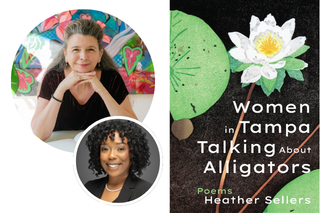
The Poetry of Place: Tangela Serls & Heather Sellers in Conversation with a reading from Women in Tampa Talking About Alligators
MSC 4200 (The Chamber) Marshall Student Center
4103 USF Cedar Cir. Tampa, FL 33620
4:00 PM - 6:00 PM
About Event
Flowing along the subtropical waterways and rooted in the happenstance of our day-to-day experiences, award-winning poet Heather Sellers’ latest poetry collection, her fifth, Women in Tampa Talking About Alligators, presents radiant portraits of the people — and creatures — that she encounters in her wonderfully weird home state of Florida.
Drawn from the author’s daily observation journals, the collection’s sun-struck, open-hearted poems eavesdrop on conversations among neighbors and follow the quirky behaviors of humans—and other interesting animals—throughout the course of a year in The Sunshine State. And as increasingly powerful hurricanes brew in the background, the reader experiences fresh compassion for the fragile lives carved out of a fragile landscape. In the end, Sellers assures us that paying close attention, noticing wildness in the ordinary, and ultimately, tending our connections to each other, is what will see us through.
About the Author:
A Florida native, Heather Sellers is the author of five volumes of poetry, including the award-winning collections Field Notes from the Flood Zone (BOA Editions) and The Boys I Borrow (New Issues Press). Her new collection is Women in Tampa Talking About Alligators, poems about daily life in suburban Florida, in all its weird glory.
Sellers’ memoir, You Don’t Look Like Anyone I Know, was an Oprah Magazine Book of the Month selection and Editors’ Choice at the New York Times Book Review, featured on NPR, The Today Show, Dateline, and Good Morning America.Her short story collection, Georgia Under Water, was the winner of a Barnes & Noble Discover Great New Writers Award. She has also authored four books on the craft of writing, including Page after Page and The Practice of Creative Writing, and her essays have been published in Good Housekeeping, The Sun, Parade, Reader’s Digest, The New York Times, Redbook, The Sun, and Best American Essays. She teaches in the creative writing program at the University of South Florida.
Friday, October 23, 2026
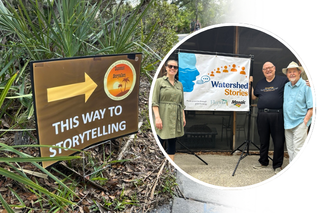
The Watershed Stories Showcase
USF St. Petersburg Campus
6:00 PM - 8:00 PM
Lynn Pippenger Hall (LPH) Room 101 | USF St. Petersburg campus
About Event
The Watershed Stories Showcase will bring together voices from across the region to reflect on the ways water connects neighborhoods, sustains ecosystems, shapes memories, and challenges communities facing environmental change. Designed in the spirit of the public humanities, the program emphasizes listening across experiences and creating opportunities for meaningful civic dialogue through story.
The Watershed Stories Showcase kicks off a broader series of water-focused humanistic events at the St. Petersburg campus, including a Pop-Up Film Fest developed in collaboration with the USF Honors Gulf Scholars Program and Sarasota's TWE International Film Festival. Together, these events will highlight the power of narrative, documentary film, and creative expression to foster environmental awareness and community engagement.
For more information, contact Heather O’Leary.
November
Thursday, November 5, 2026
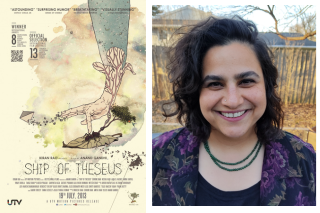
Care as Lens: Ship of Theseus Film Screening & Discussion with Megha Anwer
TECO Hall (EDU 103) College of Education
4110 USF Apple Dr. Tampa, FL 33620
5:00 PM - 8:00 PM
About Event
How can literary and visual clues lead us to a new understanding of care? Join the Faculty Fellows and Megha Anwer from Purdue University for a film screening and discussion of Ship of Theseus (2012) directed by Anand Gandhi. The film explores questions of identity, justice, beauty, meaning and death through an experimental photographer, an ailing monk, and a young stockbroker. This event is free to attend and refreshments are provided.
About the Speaker:
Megha Anwer is Assistant Vice Provost for Research and Scholar Development at Purdue’s John Martinson Honors College and Clinical Associate Professor at the Department of English. She is a theorist of literature and visual culture. Her research areas include contemporary postcolonial literature, global cinema, Victorian literature and visual culture. Her co-authored book, Screening Precarity: Hindi Cinema and Neoliberal Crisis in Twenty-first Century India, published by University of Michigan Press came out in 2025. She also has a co-edited volume, Bollywood’s New Woman: Liberalization, Liberation, and Contested Bodies (Rutgers UP, 2021).
In her courses, Dr. Anwer invites students to engage with literary and visual cultural productions—literature, film, photography, digital media, popular culture. She treats the classroom as an investigative pathway into the world, where students can better understand its complexity and their individual and collective place within it. She encourages students to explore the interconnected of ideas, trace how ideas travel and morph, to revisit the past, re-see the present, and imagine new configuration of the future.
Friday, November 13, 2026
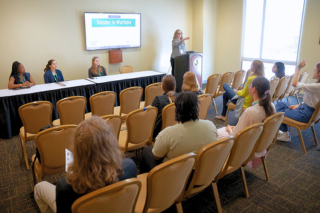
3rd Annual Graduate Humanities Symposium
Marshall Student Center (MSC 3705)
4103 USF Cedar Cir. Tampa, FL 33620
Apply now! Applications are due October 9.
Learn more about the Graduate Humanities Symposium
January
January 28-29, 2027
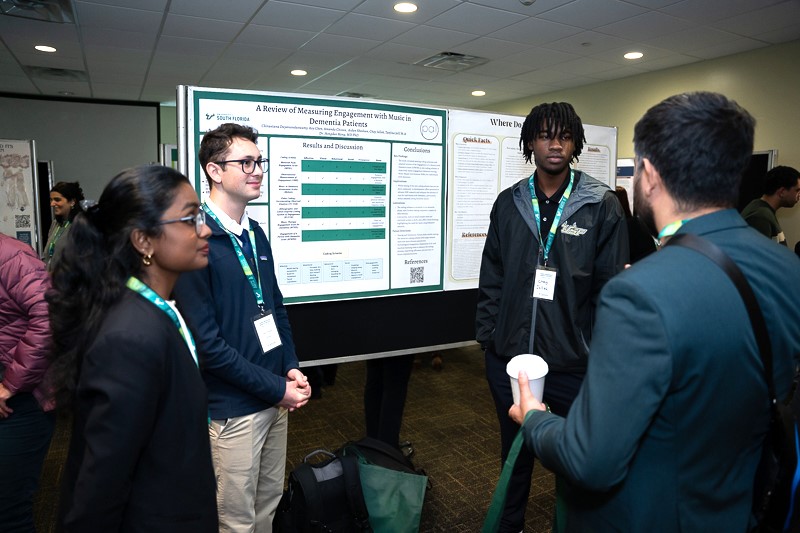
8th Annual Undergraduate Humanities Conference
Marshall Student Center (MSC 3707)
4103 USF Cedar Cir. Tampa, FL 33620
Applications open October 1, 2026.
Learn more about the Undergraduate Humanities Conference
February
Thursday, FEbruary 11, 2027
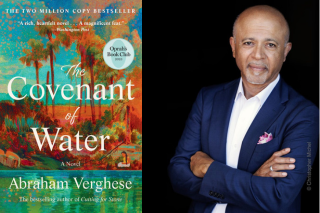
Abraham Verghese Care as Praxis Keynote Lecture
Marshall Student Center Oval Theater (MSC 2500)
4103 USF Cedar Cir. Tampa, FL 33620
6:00 PM
About Event
Dr. Abraham Verghese is a bestselling author and a prominent voice in medicine with a uniquely humanistic view of the future of healthcare. Trained in infectious diseases and pulmonary medicine, he holds the Linda R. Meier and Joan F. Lane Provostial Professorship at Stanford University School of Medicine. In addition to patient care and teaching, he leads PRESENCE, a multidisciplinary center that studies the human experience of patients, physicians and caregivers.
A phenomenally successful author with tremendous popular appeal, Dr. Verghese is best known for his novel Cutting for Stone that spent 107 weeks on the New York Times bestseller list. His recent release, The Covenant of Water, debuted on the bestseller list and was selected as the 101st pick for Oprah’s book club. Dr. Verghese has served on the Board of Directors of the American Board of Internal Medicine, is a Master of the American College of Physicians, and has been honored with the National Humanities Medal.
March
Wednesday, March 10, 2027
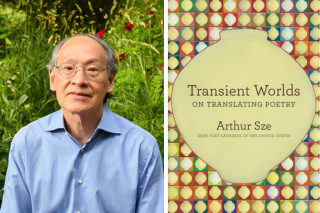
Arthur Sze
United States Poet Laureate
Time and Location TBA
About Event
Arthur Sze is a poet, translator, and editor, and in 2025 he was named the 25th Poet Laureate of the United States. He is the author of twelve books of poetry, including Into the Hush (2025) and The White Orchard: Selected Interviews, Essays, and Poems (2025) and Sight Lines, for which he won the National Book Award.
Sze recently published Transient Worlds: On Translating Poetry (2026), The Silk Dragon II: Translations of Chinese Poetry (2024), and edited Chinese Writers on Writing (2010). His work in literary translation has received international acclaim. He is a chancellor emeritus of the Academy of American Poets, a fellow of the American Academy of Arts and Sciences, and he was the 2023–2024 Mohr Visiting Poet at Stanford University. Professor emeritus at the Institute of American Indian Arts (IAIA), Sze was the first poet laureate of Santa Fe, where he lives with his wife, the poet Carol Moldaw.
April
Thursday, April 8, 2027
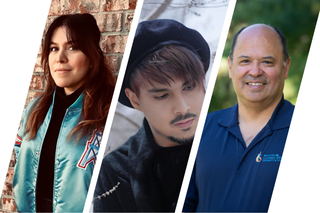
Latine Poetry Symposium
TECO Hall (EDU 103) College of Education
4110 USF Apple Dr. Tampa, FL 33620
6:00 PM
About Event
Latine Poetry Panel featuring:
Iliana Rocha is originally from the Southeast region of Texas, and her family is one of Mexican immigrants. She is the 2019 winner of the Berkshire Prize for a First or Second Book of Poetry for her newest collection, The Many Deaths of Inocencio Rodriguez, selected by Oliver de la Paz, available from Tupelo Press. Karankawa, her debut, won the 2014 AWP Donald Hall Prize for Poetry, selected by Joy Harjo, and is available through University of Pittsburgh Press. She holds a PhD from Western Michigan University and is an Associate Professor at the University of Tennessee-Knoxville.
Aldo Amparán was born & raised in the border cities of El Paso, TX, & Ciudad Juárez. They earned their MFA in Creative Writing from the University of Texas at El Paso. Amparán is the author of The House Has Teeth (Alice James Books, 2026) and Brother Sleep (AJB, 2022), which won the Alice James Award and was a finalist for the 2023 Lambda Literary Award for Gay Poetry. They have received fellowships from the National Endowment for the Arts and CantoMundo. Amparán’s poetry has also been anthologized in Best New Poets & Latino Poetry: The Library of America Anthology.
Francisco Aragón is the son of Nicaraguan immigrants. A native of San Francisco, California, he holds degrees in Spanish from UC Berkeley and NYU. Upon his return to the U.S. in 1998 after a decade in Spain, Aragón completed graduate degrees in creative writing from UC Davis and the University of Notre Dame. His books include, After Rubén (2020), Glow of Our Sweat (2010), and Puerta de Sol (2005). His most recent book is a book of translations, Handbook of Foams, by Spanish poet Gerardo Diego, published in 2026 by Shearsman Books in England. He teaches courses in Latinx poetry and creative writing at Notre Dame and directs Letras Latinas, the literary initiative of Notre Dame’s Institute for Latino Studies.