Speakers

Distinguished Speaker Series

Speaker series

The Bellini College of Artificial Intelligence, Cybersecurity and Computing at the University of South Florida brings in globally recognized researchers that engage in cutting-edge and deeply impactful scientific R&D across all areas of computing.

The fields of artificial intelligence, cybersecurity and computing are witnessing explosive growth in so many areas. The college is commitmented to ensure that our students, faculty, collaborators and stakeholders are exposed to critical scientific advancements in the broader landscapes of artificial intelligence, cybersecurtiy and computing.

Upcoming Distinguished Speaker Series

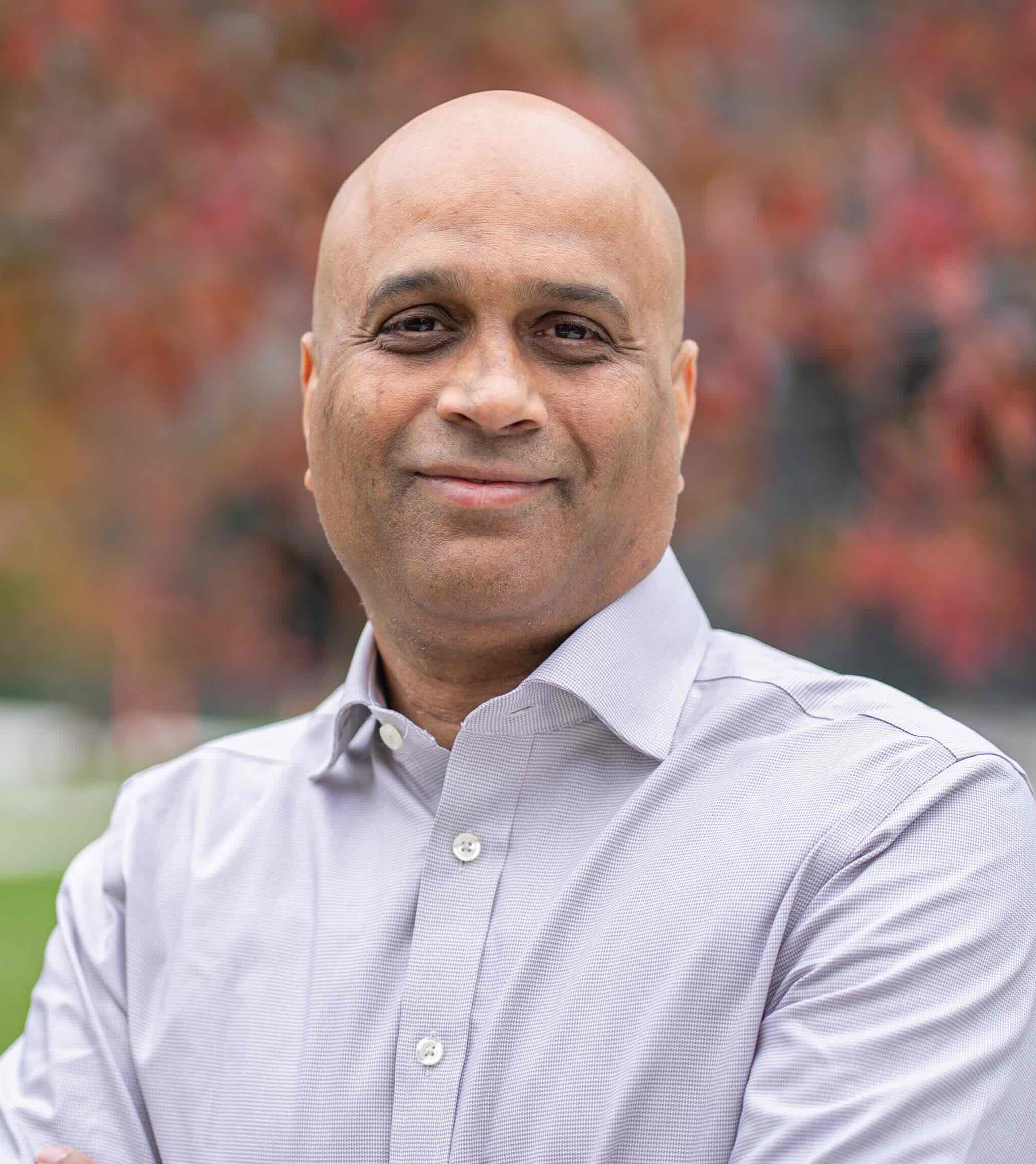
A man with a bald head and a slight smile stands confidently with his arms crossed, wearing a light gray collared shirt, against a blurred backdrop of colorful foliage and a sports field. The setting conveys a sense of approachability and professionalism.

Prashant Shenoy, PhD
University of Massachusetts Amherst
Massachusetts, USA
Wednesday, April 8, 2026
11:00 a.m. – 12:00 p.m.

Read Bio

Prashant Shenoy is currently a Distinguished Professor in the College of Information and Computer Sciences at the University of Massachusetts Amherst. He received the B.Tech degree in Computer Science and Engineering from the Indian Institute of Technology, Bombay and the M.S and PhD degrees in Computer Science from the University of Texas, Austin. His research interests lie in distributed systems and networking, with a recent emphasis on cloud and sustainable computing. He has been the recipient of several best paper awards at leading conferences, including two ACM Test of Time Awards. He is a fellow of the ACM, IEEE, AAAS, and AAIA.

Data Centers, AI Workloads, and Efficiency: A Systems Perspective

Read more

The exponential growth of cloud computing has been a defining trend of our time, fueled by rapidly growing demands from online and data-intensive workloads. Despite the end of Denard scaling, the cloud's energy demand grew more slowly than expected over the past decade due to the aggressive implementation of energy-efficiency optimizations. However, the rise of AI workloads, which are often more resource-intensive than traditional cloud workloads, has led to rapid growth in data centers with power-hungry accelerators such as GPUs and TPUs, leading to a resurgence in the cloud's energy consumption and a strain on our electric grids.

In this talk, I will provide a systems perspective on the challenges and opportunities in enhancing the efficiency and sustainability of cloud platforms in the face of rising AI demand. I will discuss how systems resource management techniques, such as workload shifting, can enhance the efficiency of cloud platforms by exploiting the spatio-temporal variability in grid demand, energy availability, and electricity prices. I will then discuss how these systems techniques introduce new tradeoffs in performance, efficiency, and cost during their operations and present ideas for navigating these tradeoffs. I will conclude with several open research challenges that the systems community must address to ensure the continued growth of AI-driven cloud platforms.


Previous Distinguished Speakers

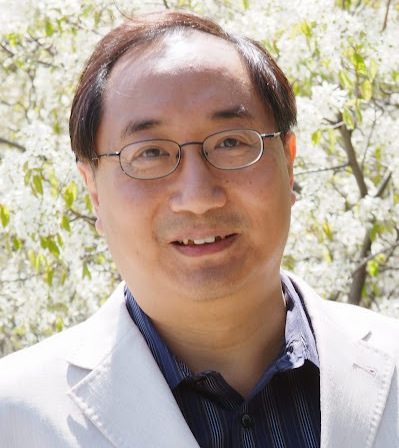
A man with glasses and a light-colored blazer smiles in front of a backdrop of flowering trees, suggesting a bright, pleasant day. His expression is friendly and approachable, with soft sunlight illuminating his features.

AI, the Scaling Law, and the Memory-Wall Problem: An Entangled Advancement of Technology and Application

Xian-He Sun
Professor at Illinois Institute of Technology


A man with curly gray hair and a slight smile is dressed in a white shirt and black suit jacket against a plain white background. His expression conveys confidence and professionalism.

Learning the Action Grammar

Yiannis Aloimonos
Professor of Computational Vision and Intelligence at the Department of Computer Science, University of Maryland

Read Yiannis Aloimonos' Abstract and Bio 


A man with dark hair and a slight beard, dressed in a light blue shirt, stands against a backdrop marked with faded mathematical or scientific notations, displaying a calm demeanor and wearing sunglasses around his neck.

Planning Agents for Collaborative Reasoning and Multimodal Generation

Mohit Bansal
John R. & Louise S. Parker Distinguished Professor of Computer Science, UNC Chapel Hill

Read Mohit Bansal's Abstract and Bio 


A woman with curly, medium-length brown hair smiles warmly at the camera, wearing a black blouse adorned with embellishments and dangling earrings, set against a neutral gray background.

The Eye In AI: Human Visual System (HVS) Approaches for Robust Artificial Intelligence

Karen Panetta
Distinguished Professor, Tufts University School of Engineering

Read Karen Panetta's Abstract and Bio 


A man with short black hair and a slight smile is pictured against a neutral, textured background. He is wearing a light blue shirt and appears to be engaging with the viewer warmly.

A new way of looking at the 3D World for Better Representation and Understanding

Chandra Kambhamettu
Professor of Computer Science at the University of Delaware

Read Chandra Kambhamettu's Abstract and Bio 


A woman with long dark hair stands confidently with her arms crossed, wearing a bright pink patterned jacket over a matching top, set against a backdrop of a large window with a view of the city. She smiles warmly at the camera, exuding professionalism and approachability.

Unlocking the Future: 30 Years of Innovation at the Crossroads of Visualization, Immersion, and Digital Twins

Carolina Cruz-Neira
Agere Chair Professor of Computer Science, University of Central Florida

Read Carolina Cruz-Neira's Abstract and Bio 


A man with medium-length dark hair and glasses smiles warmly, wearing a blue suit and a light blue striped tie against a neutral background. The focus is on his friendly expression and professional attire.

Traversing the AI + X Continuum for Impact

Nitesh Chawla
Frank M. Freimann Professor of Computer Science and Engineering, University of Notre Dame

Read Nitesh Chawla abstract and bio