News
News
Rains et al. (2016) Named Among Key Papers of the First 40 Years of Hydrological Processes

Hydrological Processes is celebrating its 40th year anniversary with an editorial titled "40@40: 40 Key Papers From the First 40 years of Hydrological Processes". Highlighted on the list is Geographically isolated wetlands are part of the hydrological landscape (Rains et al. 2016). The editorial notes that the paper links "wetlands to navigable waters, and thus sets the scientific foundation of why wetlands should be protected under the U.S. Clean Water Act". We are honored to see our 2016 paper included alongside these 39 other key papers marking four decades of foundational hydrological research.
Ecohydrology Research Group Showcases Work at South Florida GIS Expo 2026

Members of ERG recently attended and presented at the South Florida GIS Expo 2026. The team spotlighted their ongoing work in developing decision support tools for water quality, analyzing cumulative effects on wetlands, the best available datasets for historic wetland mapping, and applying machine learning for wetland mapping. Their presentations demonstrated how geographic information systems (GIS) can transform environmental investigations and provide actionable insights for ecosystem conservation.
Dhrubo Wins Best Poster at the Society of Wetland Scientists Student Chapter Conference 2026

Dhrubo Barua, a PhD student in Geography/ESP, was awarded Best Poster at the Society of Wetland Scientists Student Chapter Conference 2026. His Poster, titled "Setting Baseline Conditions for Land Cover Change Analysis Through Digitization of Symbology on Historic Mid-20th Century USGS Topographic Maps," highlights the critical role of historic maps in environmental science. Understanding how and where human activity has altered natural hydrology is essential for strategizing the conservation and restoration of our wetlands, helping to preserve and enhance water quality.
ERG partners with KBNERR to co-mentor a NOAA Hollings Scholar again!
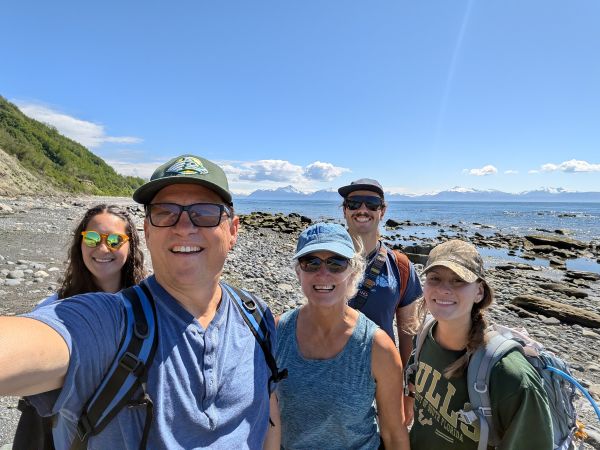
The ERG partnered with the Kachemak Bay National Estuarine Research Reserve (KBNERR) in Homer, AK, to mentor a Hollings Scholar, Arden Rathkopf. This past summer, Arden's research compared two different groundwater flow pathways to determine which is more effective at delivering nutrients, specifically nitrate, to salmon-bearing streams. The Ernest F. Hollings Undergraduate Scholarship was formed to help train young scientists in the fields of oceanic and atmospheric sciences. During the program, awardees are able to attend a 10-week full-time paid internship at a NOAA facility, such as KBNERRR, during the summer to work on student-driven research projects. New applications start this September. If you are interested, applications can be found here.
SWS Annual Meeting 2026 Bogs to Bayous: Wetland Science, Policy, and People
Dr. Kai and Dr. Mark presented in the SWS symposium showcasing ERG's collaboration with Montana State University and the Southern California Coastal Water Research Project to develop a rapid tool for wetland ecosystem services assessment, funded by the EPA. See their talk titles below:
- Kai: Ecosystem Services: Classification and Linkages to Ecosystem Function
- Mark: Rapid Wetland Ecosystem Service Assessment for Federal, State, and Tribal Regulatory Needs
ERG presentations at the 7th International Symposium on River Science hosted by UC Davis
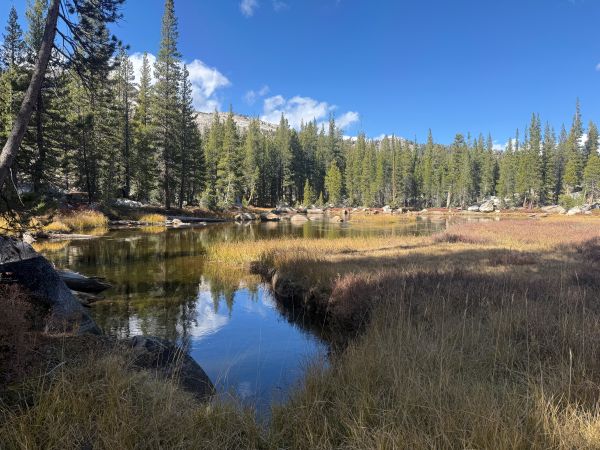
The ERG was in full force at the recent ISRS 2025: One Earth, Many Rivers symposium presenting on the topics listed below.
- Tyelyn: How Far is Too Far? Varying Roles of Groundwater Source Temperature Modulation in Salmon Bearing Streams
- Edgar: Planning With Purpose: Decision-Support Tools for Managing Groundwater Contributions to Salmon Streams and Communities
From the Field to the Headlines
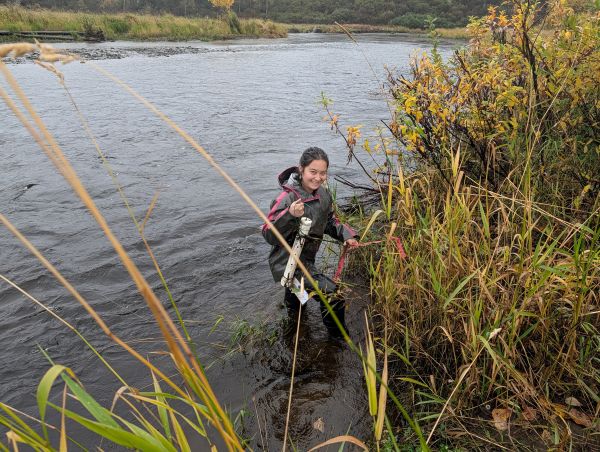
Tyelyn Brigino's research into critical connections between groundwater and river flow is capturing the attention of the fishing community! Read the full features in National Fisherman and FishSens Magazine.
Check out LANLoad and CReST on the FGIO website
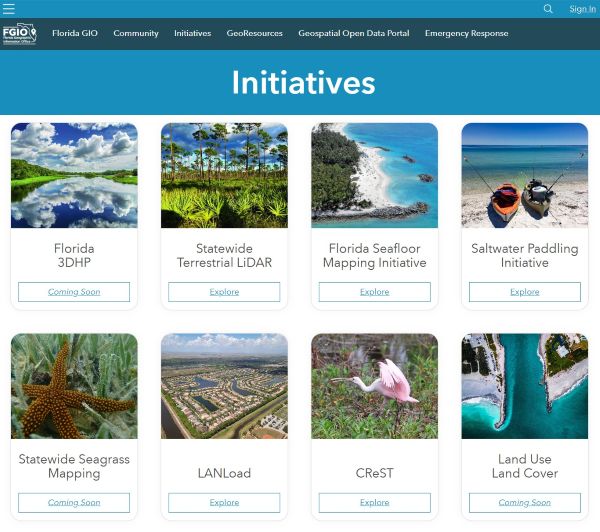
The Ecohydrology Research Group (ERG) has been working with partners to create both the Landscape Assessment of Nutrient Loading to Waterbodies (LANLoad) and the Conservation and Restoration Screening Tool (CReST). Each project is a GIS-based decision support tool made to assist with water quality improvements. Both applications can be found through the Florida Geographic Information Office (FGIO) website in their Initiatives tab. To learn more about LANLoad, check out our Project Spotlight in the Research section.
Fieldwork in Indian River County
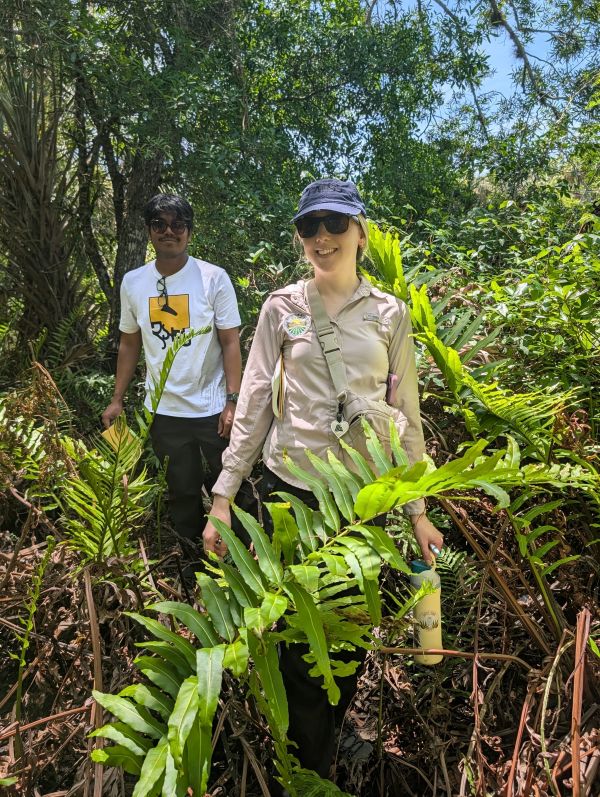
Dr. Kai, Dhrubo, and Bethany conducted a two-day field investigation in Sebastian, located in Indian River County. Using georeferenced PDF imagery derived from historical 1940s grayscale aerial photographs, the team validated present-day field conditions to identify photo signatures associated with potential wetlands. During the survey, they evaluated landforms, documented wetland indicator plant species, and collected GPS points and site photographs across the areas explored. The fieldwork provided valuable data for the CReST project and supported ongoing wetland hand-delineation efforts. A highlight was attending the 2026 IRLNEP BOD meeting, which brought local governments, scientists, and community stakeholders together to coordinate restoration, water quality, and conservation efforts for the Indian River Lagoon ecosystem. Check out OneLagoon to learn more about future meetings.
Tyelyn Awarded AWRA Alaksa State Conference Student Award

Tyelyn was invited to present on her most recent publication No Groundwater, No Fish: The Critical Role of Groundwater in Supporting Non-Glacial, Salmon-Bearing Rivers in South-Central Alaska at the American Water Resources Association (AWRA) Alaska Chapter Spring Conference in Anchorage. After giving her stellar oral presentation, Tyelyn was awarded the AWRA Alaska State Conference Student Award. Congradulations Tyelyn!
Savannah Earned Her G.I.T.
Savannah recently found out that she passed the Fundamentals of Geology exam she took in March 2026, awarding her the title of Geologist In Training. This is a huge accomplishment and furthers her on the path to becoming a Professional Geologist. Congradualtions Savannah!
Award-Winning Poster

Zamil recently won the University of Florida Water Institute Symposium Student Poster Award in February 2026 for his poster on "Advancing Historical Wetland and Lake Mapping with GeoAI-riven Analysis of Grayscale Aerial Imagery". Keep up the great work Zamil!
New funding to enhance water quality
The State of Florida has awarded funding to the ERG to develop a geospatial decision support tool to facilitate identification of sites where physical attributes indicate nutrient loading pose a high risk to waterbodies. This tool can be used, for example, to determine where sites should be prioritized for conversion from septic systems to sewer to enhance water quality. In Phase 1, we identified a process to evaluate and weight physical factors, in Phase 2, in which we fully developed the tool in a pilot location (St Lucie County, FL). In subsequent phases we are extending and refining the tool in select basins through Florida.
Michael awarded the Craig B. Hutchinson Memorial Scholarship by the USF Geology Alumni Society
Michael is completing his MS degree in Geology with a focus on modeling groundwater hydrology. His model systems have included both beaver ponds in Alaska and surface waterbodies susceptible to excess nutrient loads in Florida.
Tyelyn delivers the keynote presentation

Tyelyn delivered the keynote presentation at the annual Student Virtual conference of the Society of Wetland Scientists. She highlighted the importance of collaborations with community members and other stakeholders to research programs. She delivered this message through describing her research on the significance of groundwater to maintenance of streamflow and ecosystem support in salmon-bearing streams in Alaska while showcasing collaborations she has contributed to and benefitted from. These collaborations have led to increased community awareness of the significance of groundwater and have resulted in meaningful policy change.
ERG Research Makes an Impact on Federal Policy
A recent article by the ERG, Reorganizing the waterscape: asymmetric loss of wetlands and gain of artifical water features in a mixed-use watershed, details the continued loss of wetlands and the simultaneous rapid gain in artificial water features (e.g., AWF, including stormwater ponds, golf course water features, and reservoirs) in the Tampa Bay Watershed, leading to a vast reorganization of the waterscape with unknown effects on ecosystem functions and the goods and services they provide. ERG was encouraged to write the paper during a conversation with Dr. Megan Lang, Chief Scientist with the US Fish & Wildlife Service’s National Wetland Inventory (NWI). NWI has been observing similar trends at a coarser scale nationwide, recently expressed in a report to the US Congress. The Wetland Status and Trends report , which draws upon the ERG article several times, expressly states, “We must commit to raising the bar related to ‘No Net Loss’ to a more explicitly defined standard of ‘No Net Loss’ of vegetated wetlands going forward.” This represents a clear shift away from past policies that tended to treat wetlands and many AWF as equivalent features in status and trends reporting.
Tyelyn selected for NOAA Margaret A Davidson and USF Geology Alumni Richard A Davis fellowships!

We are so pleased to announce Tyelyn recently has been awarded two fellowships. She was awarded the 2024-2026 NOAA Margaret A. Davidson Fellowship to expand on her research being conducted in the springs, seeps, rivers, and estuaries of Kachemak Bay, Alaska. She looks forward to further collaborations with the community of Homer and KBNERR . We accompany this post with a picture of Tyelyn wading through the Everglades so she remembers Florida is fun, too, and doesn't forget to come back once in awhile. Tyelyn has also been announced as the recipient of the Richard A. Davis Fellowship- awarded by the USF Geology Alumni Society in recognition of her progress as a graduate student and her promise as a geologist. Wow!
ERG presentations at the University of Florida Water Institute 2026 Symposium
The ERG was in full force at the recent symposium Sustainable Water Resources: Complex Challenges, Integrated Solutions , presenting on the topics listed below.
- Mark: Making it Matter: Designing Scientific Research to Achieve Decision-Support Outcomes
- Bethany: Historical Wetland Mapping Utilizing Readily Available Geospatial Datasets
- Edgar: What Are the Chances? A Geospatial Tool for Predicting Nutrient Loading to Florida's Waterbodies
- Dhrubo: Automated Mapping of Wetlands and Waterbodies from Mid-20th Century USGS Topographic Maps
- Zamil: Advancing Historical Wetland and Lake Mapping with Geo-AI-Driven Analysis of Grayscale Aerial Imagery
- Omer: Potential Effects of Climate Change on Groundwater Availability and Temperature, South-Central Alaska
St Lucie County Installs Public Education Exhibit Highlighting ERG Research
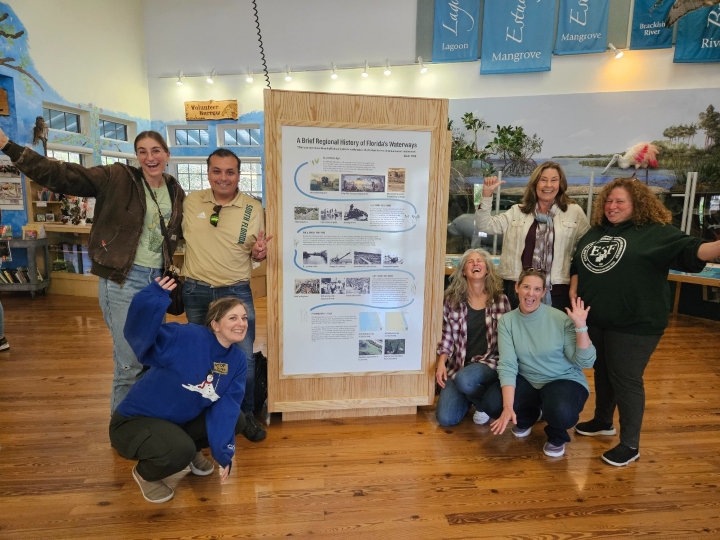
The Oxbow Eco-Center and Preserve in St Lucie County, FL, has a new exhibit to illustrate the profound changes that have occurred in regional land use. Each change is an uncontrolled experiment with potential consequences for down-gradient water quality. The new installation protrays land change since the earliest surveys, circa 1850s. Although it sounds like a long time ago, it was only a few generations ago and Florida was astoundingly different. Our recent publication Forensic wetland and deepwater habitat mapping for setting pre-development conditions details this work. It's fantastic to see it brought to the public in the form of this installation spearheaded by our collaborators, the St Lucie County Environmental Resources Department.
The ERG has a new project in Alaska: Utilizing beavers to mitigate climate drying peatland
USF-ERG is collaborating with Kachemak Bay National Estuarine Research Reserve and Alaska Center for Conservation Science, Alaska Wildlife Alliance, and University of Oregon on a multidisciplinary project studying the potential use of beavers as a nature-based solution to counter peatland drying in the Kenai Lowlands, Alaska. USF-ERG’s role in this collaborative project is to conduct hydrologic analyses to test what function a beaver dam may play in lag, sink and source hydrologic functions.
Apalachicola Riverkeepers
Kai participated in the annual Apalachicola Riverkeepers Rivertrek, a 5 day event in which paddlers kayak 107 miles of the Apalachicola River, camping along the way. This event is intended to raise funds to protect and restore this mighty river that delivers over 20% of the freshwater input to the Gulf of Mexico and is amongst the top five hotspots or biodiversity in the nation.
Summer 2023 Field Work in Alaska
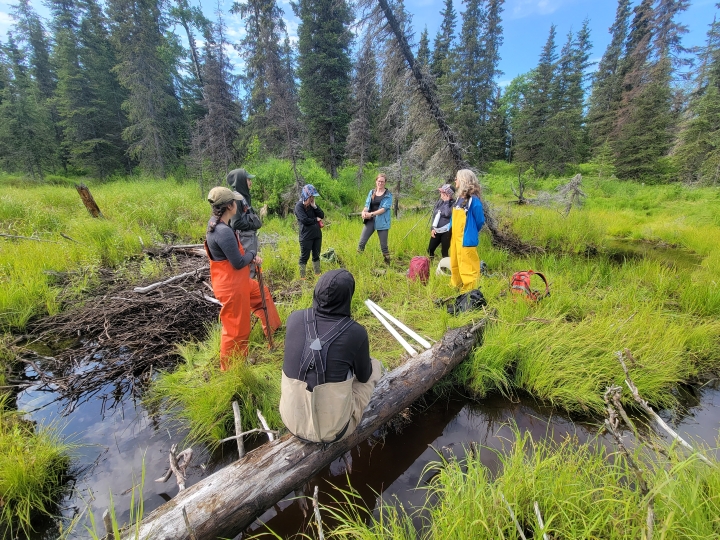
The University of South Florida Ecohydrology Research Group (USF-ERG) had a busy summer working alongside KBNERR and other partners and stakeholders on both existing and newly launched projects. Drs. Mark and Kai Rains and their PhD student Tyelyn Brigino were joined at times by two Ernest F. Hollings Undergraduate Scholars, Eojin Lee (Columbia University) and Maxwell Lyons (UC San Diego). The USF-ERG team continued a long-term study of the role groundwater plays in supporting salmon-bearing streams. This year, they continued focusing on spatial and temporal variability of groundwater, with an added focus on peatlands. They installed monitoring wells, installed continuous water-level and conductivity recorders, and collected water samples. This project has been funded through numerous grants over the years but is currently funded through a grant from the City of Homer with matching funds from the USF-ERG. The USF-ERG team also helped launch a new study on the roles beaver dams and beaver dam analogs might play in hydrologic restoration and the related support of ecosystem functions and services, including carbon sequestration. They helped select field sites and then installed monitoring wells and continuous water-level recorders. This project is funded by a grant from the Wildlife Conservation Alliance and is being conducted in collaboration with the Alaska Wildlife Alliance, the UAA-ACCS, KBNERR, and the University of Oregon.
The ERG at the AGU conference in Washington DC December 2024
Swing by our posters and learn about our recent projects!
- Edgar: Policy-Driven, Science-Based Decision Support Tools for Water Resources Managment: Insights from Two Case Studies Session H31I: Advances in Decision Support Modeling for Water Resource Management, Wednesday, 11 Dec; 08:30 - 12:20 EST, Convention Center Hall B-C (Poster Hall)
- Tyelyn: Varying Roles in Groundwater Support to Streamflow and Temperature Modulation
in Non-Glacial Salmon Streams in South-Central
Alaska Session H41M: Groundwater-Surface Water Interactions in Terrestrial, Coastal, and Marine Environments IV, Thursday, 12 Dec; 08:30 - 12:20 EST, Convention Center Hall B-C (Poster Hall)
ERG tools coming soon to FGIO website
ERG work is increasingly central to Florida’s water-quality protection and restoration strategies, including two decision-support tools jointly funded by federal, state, and local government sponsors: the Landscape Assessment of Nutrient Loading to Waterbodies (LANLoad) – a GIS-based physical model being used to support the prioritization of septic-to-sewer conversions – and the Conservation and Restoration Tool (CReST) – a GIS-based application being used to support the prioritization of land acquisition, conservation, and restoration. Both remain in active development and expansion but are already featured by and will soon be freely available to stakeholders through the Florida Department of Environmental Protection Geographic Information Office Initiatives Portal.