Five considerations for making smarter leadership development investments in 2027.
As companies finalize their 2027 budgets, I believe it's time to take a harder look at how we're investing in leadership development.
I've spent much of my career working with organizations to develop their leaders, and one thing continues to frustrate me. Companies invest significant resources in leadership development without always connecting those investments to what the business is trying to accomplish.
Too often, the planning process starts with last year's programs, participation numbers, and evaluations. We make a few adjustments and build next year's calendar. Meanwhile, the business may be facing an entirely different set of challenges.
In recent conversations with executives, I've heard concerns about declining demand, pressure on revenue, rising costs, and changing customer expectations. These challenges require leaders who can think differently, make difficult decisions, and find new opportunities.
Consider a company experiencing a significant slowdown in sales. Rather than offering another traditional leadership course, imagine bringing its leaders together to rethink their go-to-market strategy, identify new revenue opportunities, or develop more innovative ways to serve customers.
They're developing as leaders while working on problems that matter to the business.
As organizations plan for 2027, I believe five considerations deserve particular attention.
1. Are we developing leaders to address our biggest business challenges?
Leadership development should start with business strategy, not a training catalog. For some organizations, the priority will be innovation and growth. For others, it may be operational efficiency, organizational change, or building the capacity to scale. The specific capabilities we develop should reflect those priorities. Otherwise, we risk investing in programs that participants enjoy but that do little to move the business forward.
2. Are we investing in the right people?
One of the concerns I hear most often from executives is the need to develop their next generation of leaders. They recognize the importance of building a stronger leadershippipeline, but too often succession planning and leadership development operate as separate activities.
They shouldn't.
High-potential employees need meaningful development well before they're asked to step into larger roles. That includes exposure to different parts of the business, opportunities to tackle complex challenges, and experiences that stretch their capabilities. Not every leader needs the same development, and not every investment will deliver the same value. Organizations need to be more deliberate about preparing the people who will lead them into the future.
3. Are we making learning part of the work?
Most leaders are already stretched thin. Their calendars are full, expectations keep growing, and stepping away for another development program isn't always realistic.
Yet we continue treating leadership development as something separate from the work leaders are responsible for doing.
Imagine sales leaders developing innovation skills while creating a new go-to-market strategy. Or managers building their ability to lead change while implementing an actual organizational transformation.
Traditional classroom learning still has an important place. But integrating development into real business challenges can make learning more relevant while producing something of immediate value to the organization.
4. Are we preparing leaders for the future?
AI is changing how work gets done, and organizations are investing heavily in new technologies. But technology alone won't deliver the results companies are expecting. Leaders need to understand how to rethink workflows, make decisions with new information and tools, and help employees adapt to changing expectations. Preparing leaders for the future requires more than teaching new technical skills. It means developing the judgment, adaptability, and willingness to challenge established ways of working.
5. How will we know if our investment worked?
We spend considerable time measuring attendance, completion rates, and participant satisfaction. Those measures have value, but they tell us very little about whether leadership performance has actually improved.
Organizations should define the intended outcomes before investing in development. That might mean better decision-making, stronger team performance, improved retention of high-potential talent, or measurable progress on a specific business challenge.
Just as important is what happens after the learning experience. Without opportunities to apply new skills, feedback from managers, and accountability for results, even an excellent program can have limited lasting impact.
One final thought.
I'm not suggesting companies need to spend more on leadership development in 2027. Given the pressures many businesses are facing, that may not be realistic.
But I do believe we need to spend differently.
That may mean fewer stand-alone programs and more development connected to real business challenges. It may mean concentrating resources on future leaders or finding better ways to integrate learning into everyday work.
Ultimately, leadership development should do more than help individuals become better leaders. It should help organizations become more successful.
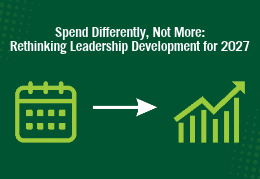
The real opportunity for 2027 isn't to build a better training calendar. It's to build the leadership capabilities your business needs to succeed.
Ready to build the leadership capabilities your business needs?
The Center for Executive and Leadership Education partners with organizations to connect leadership development to real business results.
- Custom programs: We design development experiences around your organization’s strategy and challenges, so leaders grow while working on problems that matter.