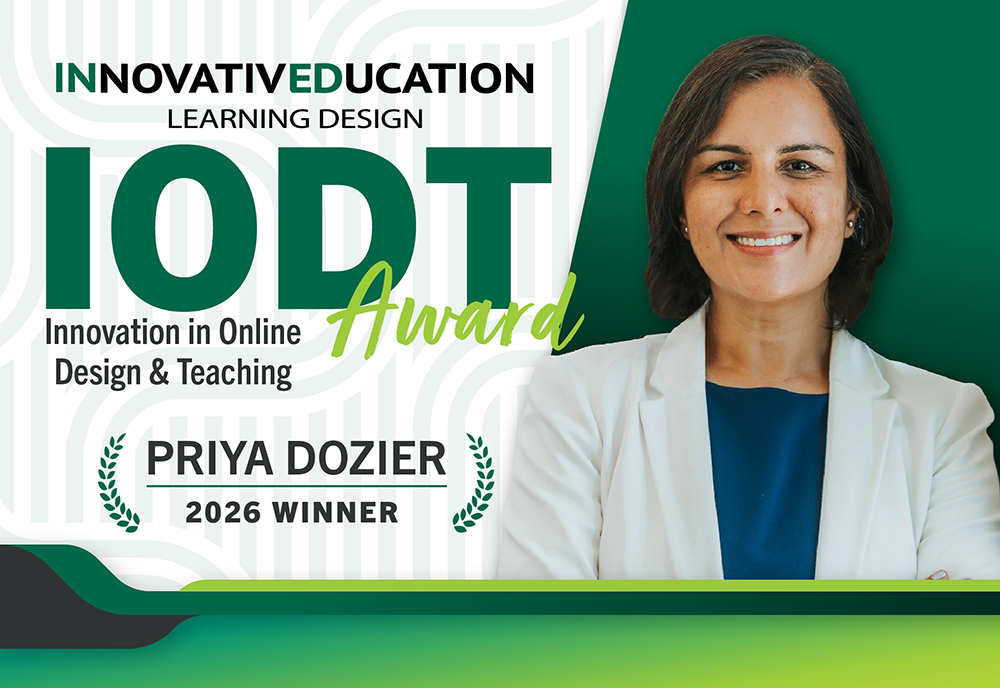
What makes an online course exceptional enough to win an award?
It might mean creating an experience where students move beyond simply learning about
fintech industries to actually engaging with the people, challenges and opportunities
shaping them.
That approach heavily influenced FinTech & Payment Technologies, an online course
designed by Associate Professor Priya Dozier in the USF Muma College of Business. It's also earned Dozier the 2026 USF Innovation in Online Design and Teaching Award, which recognizes faculty who combine innovative online teaching with intentional
course design to create meaningful learning experiences for students.
An online, asynchronous graduate-level course in USF’s new Master of Science in FinTech program, the course was designed to reflect the speed, complexity and real-world decision-making
of today’s financial technology industry. This course connects students with working
fintech professionals, incorporates current industry data and case studies, and gives
students hands-on experience consulting with real fintech startups. Dozier partnered
through the course development process with Innovative Education Learning Designer Koichi Sato. By combining Dozier's teaching and industry expertise
with Sato's expertise in learning design, they created an intentional, student-centered
online journey. The course content was carefully sequenced, with each experience building
on the last and reinforcing real-world application.
Dozier's course also earned USF's High-Quality Gold designation for online course design. The recognition reflects the course's strong design and
commitment to an engaging, student-centered learning experience, achieved through
strategic assessment of learning outcomes, instructional materials, course technology,
and learner interaction.
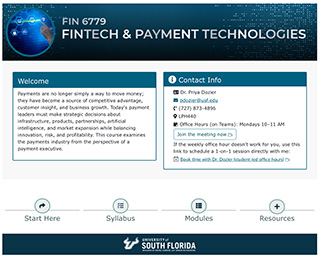
A look inside Dr. Priya Dozier’s online FinTech & Payment Technologies course.
Connecting Students to an Evolving Industry
When designing the course, Dozier set out to address a challenge. Students often enter
the master’s program with limited knowledge of the career opportunities available
within fintech. She saw an opportunity to not only build students' industry knowledge,
but to also help them understand the roles, skills and career trajectories available
to them.
One way Dozier brings the industry into the classroom is through a series of career
spotlight interviews featuring working fintech professionals, each intentionally aligned
with a course module. Rather than simply watching the interviews, students connect
what they hear from industry professionals to course concepts. They then reflect on
how the insights discussed relate to their own career goals.
And students say it has made a big difference.
In a mid-semester survery, one student said the career advice shared by speakers helped
them feel, “more confident and prepared for entering the job market.” Another identified
the career spotlight videos as their favorite part of the course because of the additional
insight and inspiration they gained from professionals working in the field.
Applied Final Research Project for a Real Fintech Startup
The course culminates in an applied consulting project that takes real-world learning a step further. Students work with a fintech startup that participated in USF’s partnership with the Tampa Bay Wave FinTech Accelerator, applying what they learned throughout the semester to research and analyze a real business challenge.
The result is a robust portfolio piece exemplifying fintech work with an actual company, along with new professional contacts for the students.
The experience provides an opportunity to practice business analysis in a professional context while producing work relevant beyond the classroom. One student described working with the fintech organization as the most valuable and memorable part of the course, noting the opportunity to turn course concepts into actionable research for an industry partner.
Designing an Online Experience Around Connection
The course’s impact isn't limited to building technical knowledge.
For USF Muma College of Business MBA student Nick Morris, one of the things that stood out about Dozier's course was the sense of connection she created in the online environment.
“Dr. Dozier provided an environment that felt as if we were well connected and always could reach out and communicate with her effectively.”
Morris had taken several online courses previously, but said Dozier's course stood out.
“It was the one that I think I had the best experience with due to the structure that Dr. Dozier had put in place,” he said. “It also inspired me to start looking more into different opportunities here in the Tampa Bay area, which ultimately led me to land a job at JPMorganChase.”
For Dozier, creating an effective online learning experience starts with viewing the course through the eyes of the student.
“Designing an online course, you have to think so much more through all of the touch points, and all of the navigation points students will have to go through,” said Dozier. “So for me it’s all about decreasing friction for them.”
That attention to the student experience also shaped the course’s custom media. Sato worked with Dozier to create a series of videos that introduce each module, featuring an animated bobblehead avatar of Dozier that brings her personality into the online environment while helping orient students to what’s ahead.

Designing for Impact Beyond the Classroom
“What stands out about Dr. Dozier’s course is how intentionally every part of the learning experience connects students to the industry they’re preparing to enter,” said Christine Brown, AVP of Innovative Education. “Students aren’t just learning about fintech concepts. They’re engaging with industry professionals, working through authentic challenges and applying what they’ve learned in meaningful, real-world contexts. That combination of thoughtful teaching and design creates an experience that feels relevant to students now while also preparing them for what comes next.”
The Innovation in Online Design and Teaching Award recognizes USF faculty who are
finding creative and effective ways to make online learning more engaging and impactful
for students. Winners are selected by a Faculty Selection Committee of online faculty
representatives and past award recipients based on criteria including creativity,
innovation, engagement and best practices in online teaching and course design. The
award also gives faculty an opportunity to showcase their work, share approaches that
can benefit the broader USF community and be recognized for their commitment to creating
meaningful student experiences.
"For students," said Dr. Uday Murthy, associate dean for research, graduate programs,
and international affairs in the Muma College of Business, "the benefit of engaging
in a course like FinTech & Payment Technologies extends well beyond the end of the
semester. Students have explored new career possibilities, built connections with
professionals and applied their learning to challenges facing the industry today.
That's the confidence they carry with them into their next step in the field."
Interested in applying for next year’s Innovation in Online Design and Teaching Award? Be on the lookout for the call for submissions this fall.