

Nearly five years ago, zookeeper Matt James made a hard left turn career-wise. As the senior director of animal care at the Dallas Zoo, he was managing the welfare of thousands of animals, specializing in the husbandry and breeding of large exotic animals.
With stints at Zoo Miami and Lowry Park Zoo in Tampa, the USF executive MBA alumnus was on the rise in the animal science world. He was known as one of its leading care and conservation experts.
Then Ben Lamm called.
The co-founder and CEO of Colossal Biosciences had a wild idea. He was starting a company to bring back extinct species such as the woolly mammoth and needed to build a team of animal science experts.
James jumped at the chance to join and says the past four and a half years have been a “crazy” ride.
“This type of company didn’t exist, and we got to build it from scratch,” he said. “It’s been an incredible journey. It is a unique opportunity, so I couldn’t be happier.”
Colossal Biosciences, the first company in the world specifically focused on resurrection biology, also known as de-extinction, made headlines in April 2025.
It was a birth announcement heard around the world.
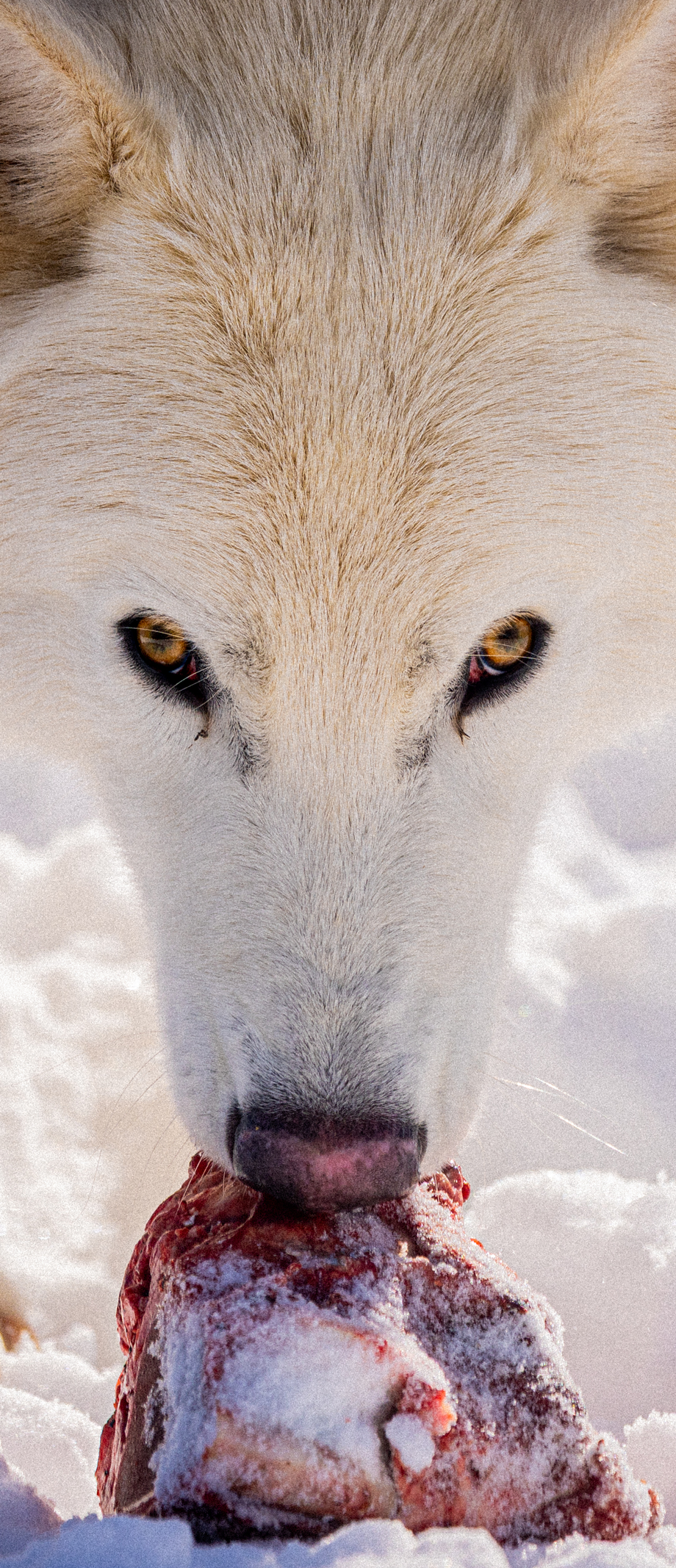
Three genetically engineered dire wolf pups named Romulus, Remus, and Khaleesi had been successfully restored from extinction, a species that last roamed the Earth some 12,500 years ago at the end of the last Ice Age.
Researchers used CRISPR technology to edit the genome of a gray wolf based on DNA from ancient dire wolf fossils, including a 72,000-year-old skull. The gray wolf cells were then implanted into dogs.
“It was very fast, much faster than I think anybody expected, probably even faster than we thought we could do it,” he said.
James, who is Colossal’s chief animal officer, credits the quick turnaround to the ability to get a really good genome.
“We had amazing DNA,” he said. “We had someone who knew the reproduction of wolves really well. We were able to quickly put together a program and in about a year from when we dreamt it up, the first dire wolves were born.”
We had amazing DNA. We had someone who knew the reproduction of wolves really well. We were able to quickly put together a program and in about a year from when we dreamt it up, the first dire wolves were born.
As Romulus and Remus turn 18 months old and sister Khaleesi turns 14 months old this April, researchers continue to work on other de-extinction projects, including resurrecting the woolly mammoth, the Tasmanian Tiger, moa, and the Dodo bird.
While each project is on a parallel track, often its complexity dictates the timeline, he said.
For example, the woolly mammoth requires more intricate gene editing and reproductive research. Researchers unveiled the “woolly mice” in March 2025, a first step in the goal of reviving the woolly mammoth by 2028.
And with every species project, James has a team focused on animal husbandry, figuring out how to manage and care for the species once they are restored from extinction.
The process starts by building a foundational knowledge of its closest living relatives and extrapolating that through the lens of their paleoecology, he said.
For an “animal care geek” like himself, James said it’s a fun exercise to sit back and dream up how to take care of these animals.
“The dire wolf was really fun,” he said. “We sat down for about three months and wrote a 250-page document on how to care for an animal that hasn’t existed in 12,000 years. There’s obviously a lot of educated guessing. But we have to be ready and flexible to pivot.”
James also serves as executive director of the Colossal Foundation, the company’s nonprofit conservation arm. With more than 40 projects worldwide, he spends about half the year traveling to the various research sites and visiting conservation partners.
That work takes him on incredible Indiana Jones-type exploration trips across the globe, from helping orphaned elephants in Botswana to working with the world’s most endangered rhinos in Indonesia.
“I have the unique privilege of bridging both organizations,” he said. “It’s great because we get to take all the technology we develop at Colossal and apply it to species on the brink of extinction today.”
One unexpected benefit has been the groundswell of young children interested in extinction and conservation science.
“Opportunities to engage with kids have been really great for me,” he said. “We’re helping to help create a generation that cares about nature.”
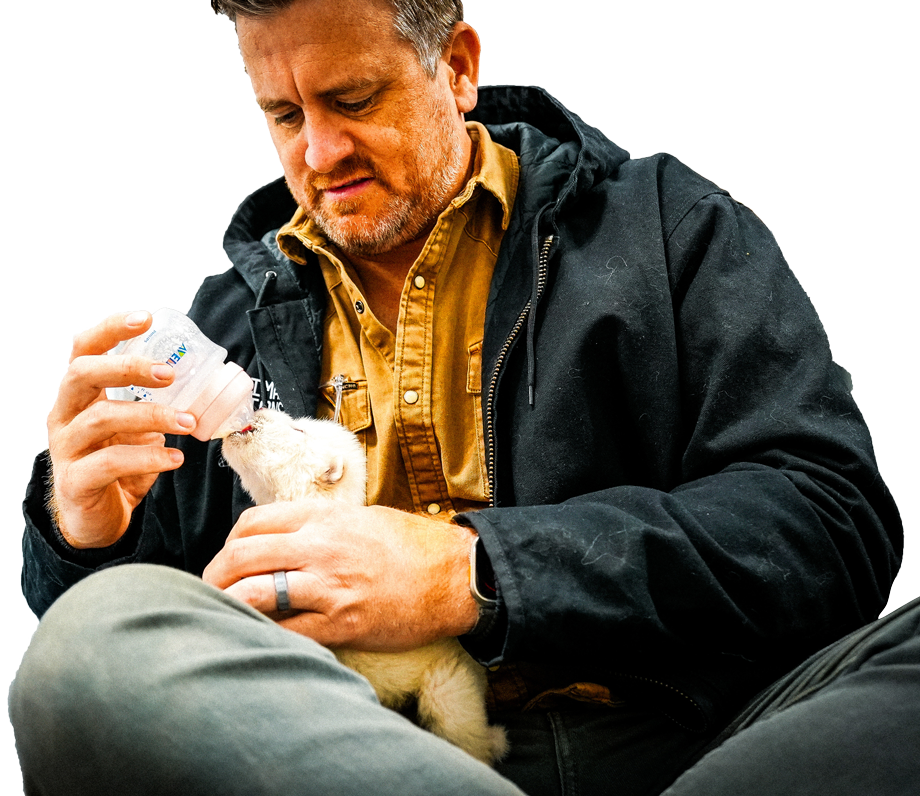
While the days of just “hanging out” with the animals are few and far between, especially those early days of bottle-feeding newborn pups Romulus and Remus, James still thinks he’s got the best job in the world, where every day feels like a create-your-own adventure.