Labs
Research Labs
The Department of Psychology has several active labs where volunteers can participate in studies led by our faculty.
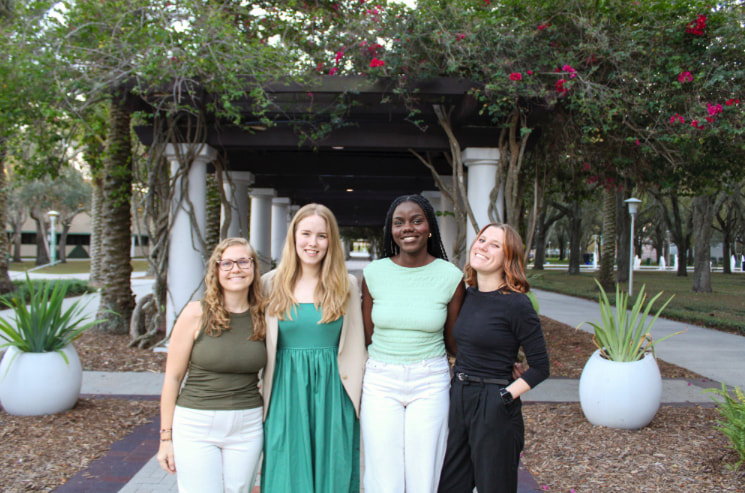
Alliance & Suicide Prevention Lab
The ASPL, under Dr. Marc Karver, focuses on the evaluation/improvement of mental health services/systems. The lab collaborates with the University of Central Florida on two state-wide suicide prevention grants, each with several aims. Projects include developing, improving, and evaluating suicide prevention trainings for laypeople and mental health professionals. To learn more about the lab and apply, email the ASPL!
Cardiovascular Psychophysiology Lab
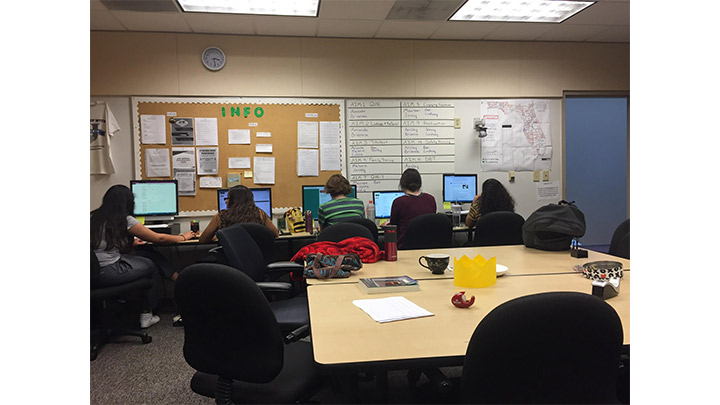
The CVP lab, under the advisement of Dr. Kristen Salomon at the USF Psychology Department, studies cardiovascular responses to stress, the psychological and social factors that moderate these responses, and how these work together to contribute to risk for cardiovascular disease. We focus on various sources of stress including depression, PTSD, discrimination, and sexism, examining both reactivity to and recovery from these stressors.
Center for Justice Research & Policy
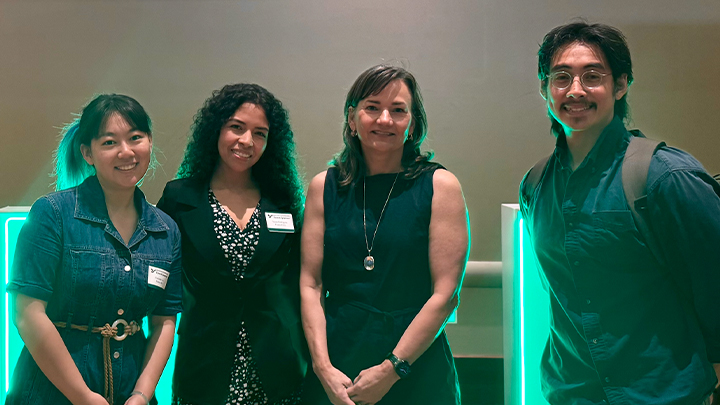
The CJRP research lab is interested in the intersections of psychology and crime, particularly that which has applied and policy implications for improving the criminal justice and mental health systems. Areas of interest include pathways to incarceration, reentry, intersections between mental health and criminal justice system involvement, program evaluation and implementation, psychological treatments for impulsive and emotionally dysregulated behaviors, and violence prevention. We aim to work closely with criminal justice agencies or community organizations to evaluate or develop evidence-based programming, understand factors impacting criminal justice trajectories, and consider solutions for improving public safety and wellbeing. Examples of lab projects include the evaluation of pre-release intervention (adapted from DBT) and post-release services to improve reentry among jail inmates, prediction of recidivism by psychological and structural variables, and the identification of risk factors and prevention of gun violence.
Dynamics of Externalizing Disorders and Emotional Regulation Lab
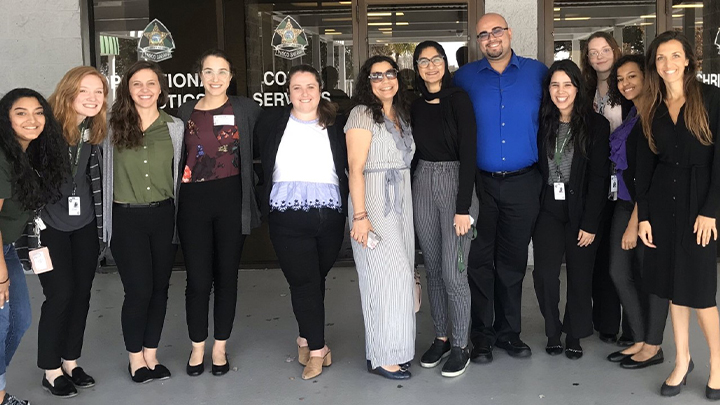
The DEXTER laboratory uses quantitative methods to study the structural, longitudinal, mechanistic, and dynamic processes underlying pathological personality traits (e.g., borderline personality disorder features), disinhibited behaviors (e.g., substance use, non-suicidal self-injury, sexual risk behaviors), and their comorbidity. We also investigate the broader taxonomy and comorbidity of psychopathology across time and development.

Disordered Eating Prevention, Treatment, & Health Lab
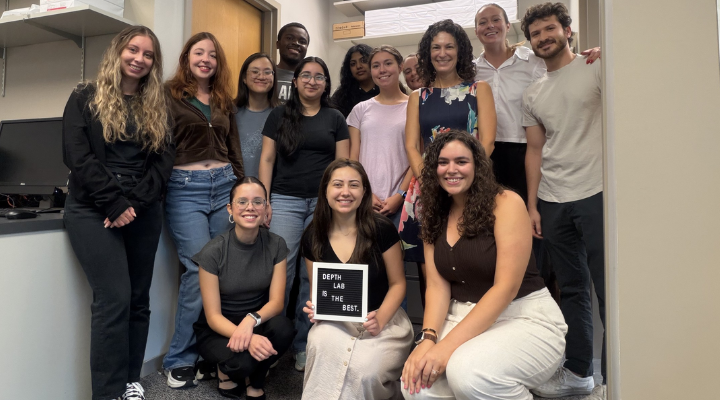
The DEPTH Lab investigates interoceptive (i.e., the extent to which individuals appropriately identify and respond to physiological cues) and sociocultural influences on adolescents’ and young adults’ weight-related behaviors (e.g., dieting, uncontrolled eating, muscle-gaining behaviors) across healthy and pediatric populations. We also are interested in the phenomenon of food and alcohol disturbance (FAD).
Eye Movements and Cognition Lab
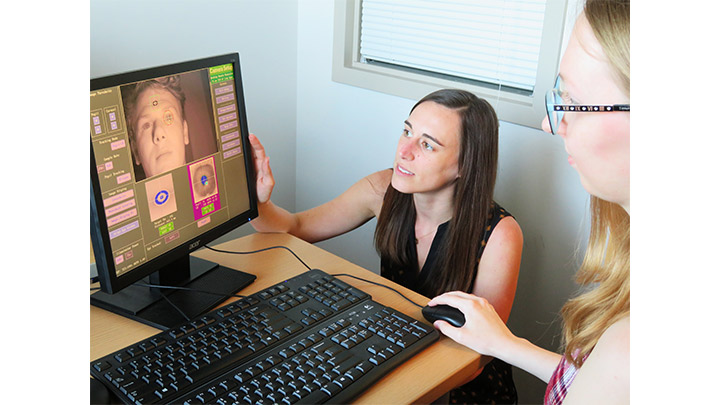
The EMaC lab investigates human perception and cognition as it relates to language comprehension using eye tracking, electroencephalography (EEG), and co-registration (combined eye tracking and EEG measurements). Our research focuses on the reading process and how people move their eyes through the text to gather information about the current and upcoming word (even before they look at it) and integrate this into their understanding of the sentence as it unfolds in real time.
Family Study Center
Basic and applied research studies concerned with understanding, supporting, and advocating for families with young children
Florida Intimate Relationships Research Team
Romantic relationships are among some of the most impactful social relationships we have during our lifetimes. We aim to advance theory on and generate novel insights into three broad relationship challenges that people face with romantic relationships: (1) How do people choose relationship partners?, (2) How do people maintain satisfying, long-term relationships?, (3) How do people manage relationship stressors, such as romantic rivals?
Gender and Interpersonal Dynamics Lab
I-CARE Lab
The I-CARE Lab investigates how stigma, systemic inequities, and social identities intersect to shape health outcomes among multiply marginalized communities. Grounded in a public health framework and guided by an intersectional lens, we primarily employ qualitative and mixed methods to generate rich, contextually grounded insights that inform more equitable health interventions, theories, and practices.
Interests, Careers, Assessments in the Future of Work & Technology Lab
The iCRAFT Lab is an Industrial-Organizational Psychology lab at the University of South Florida. We study how people develop and adapt their interests and careers across the lifespan and in the future of work shaped by technology. Our research uses automated video interviews, NLP, and longitudinal data to understand interest development and assessment, career transitions, meaningful work, and aging workforce.

Learning Lab
We conduct research on student learning, and our studies take place in both the laboratory and local classrooms.
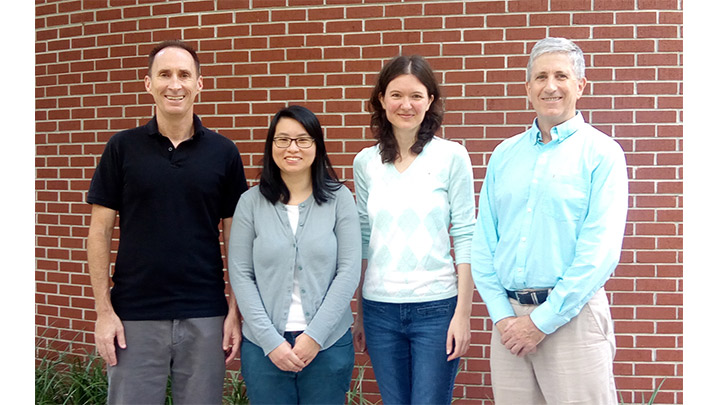
Parent-Adolescent Relationships Lab
Adolescents’ and early adults’ relationships with their parents, perceptions of parenting, and the broader family and cultural dynamics contributing to these processes.
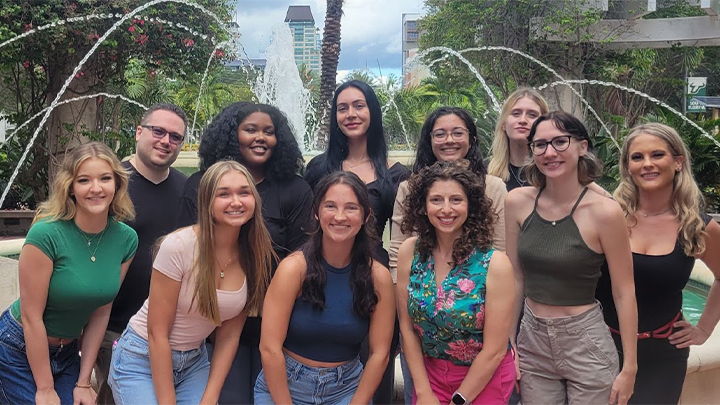
Psychology and Law Lab
Dr. Christine Ruva studies legal decision making with a focus on jury decisions. Research Assistants perform various tasks including designing studies, creating measures and stimuli, designing experiments, collecting data, analyzing data, and summarize results. Students have the opportunity to present their work at undergraduate research conferences and national/international conferences. Exceptional students can earn authorship on a publication.
Research on Ecological and Applied Cognition in Humans Lab
The R.E.A.C.H. Lab investigates diverse topics in neuroscience and cognitive psychology, focusing on threat and emotion processing, nature exposure, driving, mindfulness, and psycholinguistics. Grounded in ecological research, the lab aims to bridge real-world and lab settings through tools like EEG and driving simulators to advance understanding of cognition, emotion, and well-being.

REACH Youth Center
The mission of the REACH Youth Center is to conduct and disseminate research designed to improve outcomes for youth living with or at risk for HIV.
Social Dynamics Lab
Guided by a dynamic systems theoretical foundation, Dr. Michaels’ key idea is that people’s unique characteristics and adaptive cognitive processes continually evolve as situations change. The goal with the Social Dynamic Lab’s research is to understand how individual differences and cognitive mechanisms contribute to how people react to situations and how these carry consequences for favorable versus unfavorable outcomes.
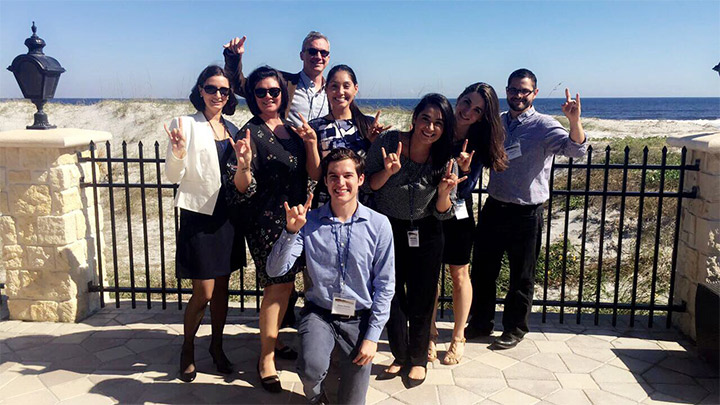
Successful Aging Lab
The SAGE lab investigates predictors of cognitive change in later life and interventions to prevent age-related cognitive decline.
Supporting Parents and ADHD Research for Kids Lab
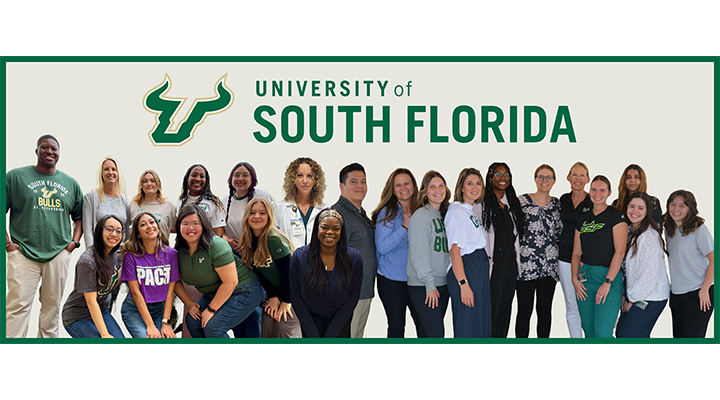
In the S.P.A.R.K Lab, we are interested in studying how different externalizing behavior disorders (such as ODD and CD) and neurodevelopmental disorders (emphasis on ADHD) impact children in their daily lives — at school, at home, and in their interpersonal relationships. Additionally, we work to develop and test the effectiveness of treatments that might better serve these populations and to figure out how best to disseminate those interventions to the individuals who need them most.
Technology, Adaptation, Coordination, and Training in Interdependent Complex Systems Lab
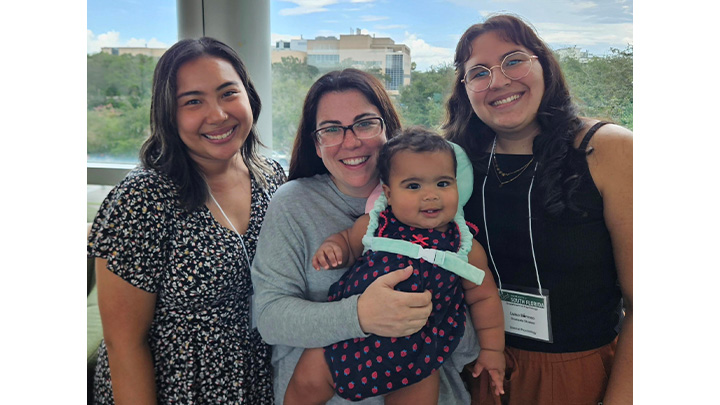
We are the TACTICS Lab. We are an Industrial-Organizational (I-O) laboratory at the University of South Florida (USF). We conduct research on teams, human-AI teams, technological adaptations in interdependent systems, and more! Under the leadership of Daniel Griffin at the USF, the lab has projects related to the work of organizations such as NASA and the Army Research Institute, and collaborations with universities across the nation.

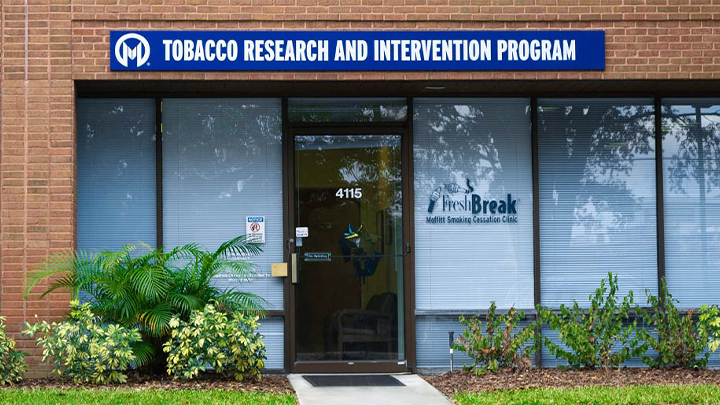
Tobacco Research and Intervention Program
Moffitt’s Tobacco Research & Intervention Program (TRIP) is directed by Thomas Brandon, a clinical psychologist with an appointment in USF’s Psychology Department. TRIP also includes several other faculty members, as well as staff, postdocs, clinical psychology graduate students, and undergraduate research interns. Research ranges from basic behavioral studies through national clinical trials of smoking cessation interventions.
Work Stress Lab
I-O Psychologist Dr. Claire Smith directs the Work Stress Lab. Research areas of our lab include the work-life interference and occupational health, with foci on health behaviors, leisure time, and lifelong approaches to well-being. Our goal is to promote real-world impacts on work and health lifestyles. Research assistants gain valuable experience contributing to ongoing projects. See our website to learn more, participate, or join the lab.