Ph.D. in School Psychology
The Ph.D. in School Psychology is designed specifically for training in school psychology and has been developed to meet all relevant national accreditation standards. Graduates of our program move to positions of employment as university faculty and researchers, as psychologists in school, hospital, and agency settings, and as program leaders in applied settings. Our program welcomes students who have already earned an Ed.S. degree or the equivalent and are certified as school psychologists or individuals who are looking for advanced doctoral study in the field. These advanced students create their own individualized specialization program within the broader school psychology curriculum, allowing for more in-depth study of content and issues in the field.
Students in the Ph.D. select an area of emphasis that allows them to focus on one or more specialization areas within School Psychology (e.g., organizational consultation, school-based mental health services, pediatric school psychology and intervention). This provides an opportunity for students to graduate with another area of advanced expertise.
The Doctor of Philosophy (Ph.D.) degree includes advanced leadership coursework, specialization and courses in an area of emphasis in school psychology, an advanced practicum, a 2,000-clock hour internship, and the dissertation. The programs have been designed specifically for training in school psychology and developed to meet all relevant national accreditation standards—most notably, the Council for Accreditation of Teacher Preparation (CAEP, formerly NCATE), and the American Psychological Association (APA).
The School Psychology Program is accredited by CAEP at both the Ed.S. and Ph.D. levels, and is approved by the National Association of School Psychologists (NASP) at those same levels. Thus, our programs meet NASP's training criteria for the National School Psychology Certification System. The School Psychology Program is also accredited by the APA at the Ph.D. level.
Beyond national accreditation, the School Psychology Program is approved by the Florida
Department of Education. Therefore, graduates of the program at the Ed.S. level and
beyond are eligible for provisional certification as school psychologists in the state
of Florida. While Florida-certified school psychologists often are certifiable as
school psychologists in other states, professional reciprocity is not always immediate
or guaranteed. Program faculty at USF will help students plan programs that result
in certification from other states wherever possible.
To be given full consideration and review, completed applications must be submitted
by December 1st.
Student Admissions, Outcomes and Other Data
Questions? Please send us a note to let us know which program(s) you're interested in, and we will follow up with more information.
What you will learn
Students gain advanced knowledge in cognitive, behavioral, and developmental psychology as it applies to school settings. The program emphasizes research design, data-based decision making, culturally responsive practice, mental and behavioral health interventions, and consultation with teachers, families, and systems. Through coursework, field experiences, and mentored research, students become skilled in providing evidence-based school psychological services and engaging in high-impact scholarship.

Career Opportunities
Graduates are prepared for leadership roles such as:
- School Psychologist (PK–12 settings)
- Pediatric or clinical psychologist in hospitals and health agencies
- University faculty or educational researcher
- Program leader in mental health, intervention, or MTSS initiatives
- Consultant to school districts, government agencies, or private organizations

Admission Requirements
If you are interested in applying to both the School Psychology Ph.D. and Ed.S. programs, you do not need to submit two separate USF admissions applications. Please indicate your interest in applying for both programs in your statement of professional goals. The statement of goals should be approximately 2-3 pages, single-spaced, and indicate why you are interested in school psychology, why USF in particular, your research/practice interests, and a paragraph to describe the role of a school psychologist as a system change agent. If you are selected for an interview, you will have the opportunity to discuss with faculty members which program would be most beneficial for you. Please note, the School Psychology Ph.D. and Ed.S programs do NOT require (1) a Master’s degree or (2) GRE scores for admission. We DO require a personal statement aligned to our training model, three letters of recommendation, and a resume.

Program History
The USF School Psychology Program is more than 40 years old and has approximately 55 full-time graduate students in residence. Earning more than $50 million in Federal and State grants since 1990, the program includes a faculty team of seven school psychologists as well as an "extended" faculty that includes affiliated, emeritus, and contributing faculty as well as school district partners.
USF's School Psychology Program has strong ties with school districts in the four
counties surrounding the USF area (Pinellas, Pasco, Polk, and Hillsborough), and our
students participate in practicum and internship placements in each. The School Psychology
Program also administers the Institute for School-Community Partnerships, Integrated Services, and Child Mental
Health and Educational Policy, a nationally recognized research and training center that provides technical assistance
to school districts and other service delivery leaders throughout the U.S., and the
School Mental Health Collaborative, a national research and technical assistance center for supporting school districts
with preventative mental health services.
Frequently Asked Questions
What is the application deadline?
Completed applications for Fall entry are due December 1. Applications submitted after this date may not be reviewed.
Do I need a master’s degree to apply?
No. Typically students in both the Ed.S. and Ph.D. program earn their Master’s degree after their first year in the program. Please note, a Master’s degree alone is not sufficient to practice as a school psychologist.
Is USF's School Psychology program offered online?
No. This program is only offered face-to-face on USF's Tampa campus.
Can the program be completed part-time?
We currently only accept full time students. If a part time option is desired, please contact the coordinator of admissions, Nathaniel von der Embse, Ph.D..
How long does the program take to complete?
The program takes approximately three years for Ed.S. students and five years for Ph.D. students (inclusive of an internship year).
What is the Ph.D. residency requirement?
For students entering with a bachelor’s degree, the five years include four years of full-time, on-campus study plus a one-year, 2,000-hour doctoral internship. The USF School Psychology Ph.D. Program requires a minimum of 3 full-time academic years of graduate study plus a doctoral-level internship prior to receiving the doctoral degree. Students entering with advanced degrees can fulfill some required coursework through demonstration of comparable training activities that led to attainment of elements of specific discipline-specific knowledge areas and profession-wide competencies. Even for students who enter with prior graduate-level coursework, at least 2 of the 3 academic training years must occur within the USF School Psychology graduate programs, and at least 1 year must be in full-time, in-person residence within the USF School Psychology graduate programs. The Ph.D. is not awarded until all internship requirements are completed.
What time of day are classes offered?
Most of the core school psychology courses will take place between 9:00 a.m. and 5:00 p.m. during the school week (Monday-Friday). Contributing courses (theory, statistics) typically take place in the evenings.
Does the program help students become a licensed school psychologist?
All graduates of the program, at either the Ed.S. or Ph.D. level, are eligible for state of Florida certification as a school psychologist. Learn more about the requirements for this certification on the Florida Department of Education's website.
Is financial assistance available to students enrolled in this program?
Currently, all students enrolled in USF's School Psychology Program who are in good standing receive financial support from the university. Financial assistance in our program typically includes a 20-hour graduate assistantship, health insurance, and a tuition waiver.
Full funding is available to Ed.S. applicants via Project TIERS
Does the program only admit for Fall term?
Yes, we typically accept between 10-14 students in the Fall cohort only. Visit the USF Graduate Studies website to learn more about application deadlines.
What do I need for my application?
Please note that GRE scores and a writing sample are NOT required. Your application SHOULD include three letters of recommendation and a statement of goals that is approximately 2-3 pages, single-spaced, and indicate why you are interested in school psychology, why USF in particular, your research/practice interests, and a paragraph to describe the role of a school psychologist as a system change agent. You will also be required to upload a copy of your undergraduate transcripts and a CV/resume.
Are there pre-requisites or undergraduate courses required for admission?
No, however having coursework in psychology, education, special education, research design, and basic statistics, as well as tests and measurements, is helpful.
Program Faculty
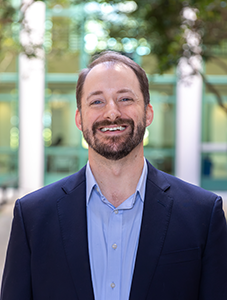
Evan Dart
Professor and Co-Executive Director of School Mental Health Collaborative
ehd@usf.edu

Jose Castillo
Professor and Co-Director of the Institute for School-Community Partnerships
jmcastil@usf.edu
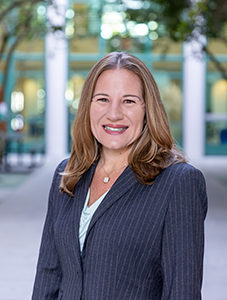
Shannon Suldo
Professor and Co Executive Director of School Mental Health Collaborative
suldo@usf.edu
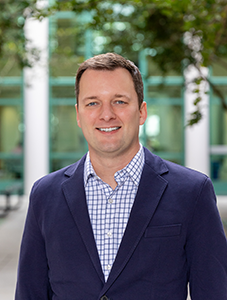
Nathaniel von der Embse
Professor and Co-Executive Director of School Mental Health
natev@usf.edu
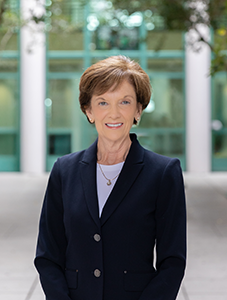
Kathy Bradley-Klug
Professor
kbradley@usf.edu

Stacy-Ann A. January
Associate Professor and Co-Director of Insitute of School-Community Partnerships
sajanuary@usf.edu
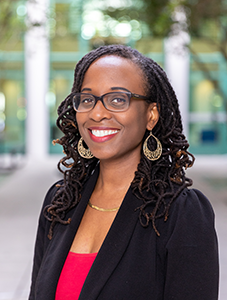
Kahlila Lawrence
Associate Professor of Instruction
kglawrence@usf.edu
Contact Us
Have questions about the School Psychology Ph.D. or Ed.S. programs? Our faculty and admissions team are here to help you explore program requirements, application details, and how our training aligns with your professional goals. Reach out to connect with us and take the next step toward advancing your career in school psychology.
Nathaniel von der Embse
Professor & Program Admissions Coordinator
natev@usf.edu
Evan Dart
Professor & Program Coordinator
ehd@usf.edu