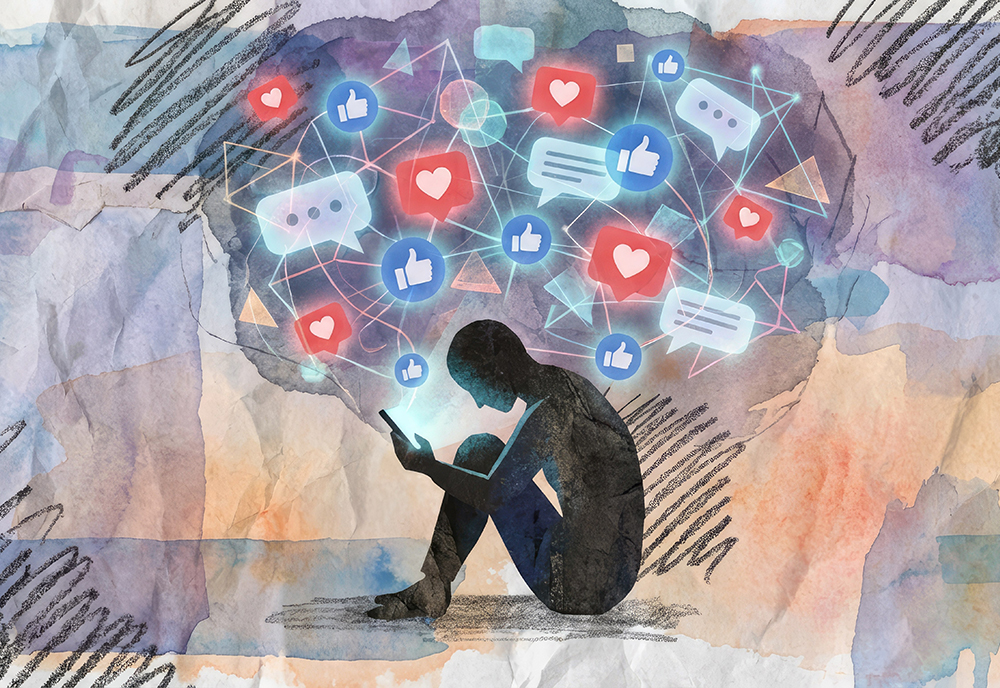
TAMPA — Every day, billions of people scroll through social media posts, online reviews, and news feeds filled with emotional content — from glowing five-star reviews to ragebaiting social media rants — and those emotions quietly shape what they buy, what they believe, and how they act.
A University of South Florida research paper recently published in MIS Quarterly introduces a new framework to explain how this flood of emotional content affects the doomscrollers, news skimmers and reel watchers — and why it happens.
The Tripartite Reactions to Emotions theory gives researchers, platform designers, marketers, and policymakers a shared language in the digital age and a roadmap for understanding how emotional content spreads influence online — and how its effects can be anticipated, measured, and managed.
Researchers say when someone expresses emotion in an online post or review, it can set off three separate psychological pathways, sometimes all at once:
- Readers form impressions about the product, place, or idea being discussed
- They make judgments about the person who wrote or posted it
- And they catch some of those feelings themselves — an effect researchers call emotional contagion
“Understanding these three distinct reactions helps explain why emotional content online can be so powerful — and why its effects are often surprising or contradictory,” said Dezhi Yin, lead author and professor at the USF Muma College of Business.
These three reactions can lead to very different — and sometimes conflicting — behaviors.
Yin said one of the most surprising revelations from the theory is how an emotional post or review can simultaneously push people toward and away from a product or brand.
For example, an angry review might make readers trust the reviewer less, making them discount the review, yet still make them feel negatively about the product being reviewed.
The paper’s other co-authors are Samuel Bond of Georgia Institute of Technology and Han Zhang of Hong Kong Baptist University.