
In the face of a shifting economy, technological advances like artificial intelligence and the pressures of workforce isolation, today’s executives are facing more stress than ever before.
The rapidly changing landscape can be a toxic mix for those in upper management, leading to higher levels of burnout and some CEOs choosing to take the elevator down, or even leave their high-level positions altogether.
Some University of South Florida researchers are familiar with the effects that CEO stress can cause and are taking steps to make it easier to detect.
By using AI to build mental health detection tools, these red flags are showing up in unexpected places, from quarterly CEO earnings calls in boardrooms to classrooms in India and mental health clinics in Turkey.
A recent study showed that AI can analyze subtle vocal patterns in CEO earnings calls to determine whether a leader exhibits vocal indicators associated with depressive symptoms.
USF assistant professor of accountancy Sung-Yuan (Mark) Cheng and co-author Nargess Golshan of Indiana University introduced a novel measure of CEO depression “by applying large audio models that analyze vocal acoustic features from CEOs’ conference call recordings.”
“Silent Suffering: Using Machine Learning to Measure CEO Depression,” was published in the Journal of Accounting Research in January 2025.
They found that depressive signals are relatively common among CEOs. In addition, CEOs show higher vocal depressive signals when their companies face greater uncertainty, such as lawsuits, volatile stock returns or disappointing financial results.
“CEOs with stronger depressive signals often receive higher total compensation, pay-performance sensitivity and turnover-performance sensitivity,” Cheng said.
Given their pivotal role as decision-makers, CEOs’ emotional states “can significantly impact their careers, firms and the broader economy. The demanding nature of their job, with long hours, high stress and critical decision making, increases their risk of depression,” the study said.
A silent shift for female and older CEOs
A key finding highlighted in “Silent Suffering” reveals differences in depression rates among CEOs based on gender and age. Female and older executives are less likely to experience depression, and overall CEO depression scores tend to be lower during the fall and winter months, the study found.
Research showed female CEOs are 16% less likely to be depressed, and that older ones are less likely to show depressive signals.
“This may reflect differences in who reaches the CEO role,” Cheng said. “For example, women executives who make it to the top may be exceptionally resilient and competent given the current male-dominant corporate environment.”
Cheng said those results could also reflect model bias, since voice-based AI “can perform differently across demographic groups depending on how well those groups were represented in training data.”
An award-winning AI mental health screening tool
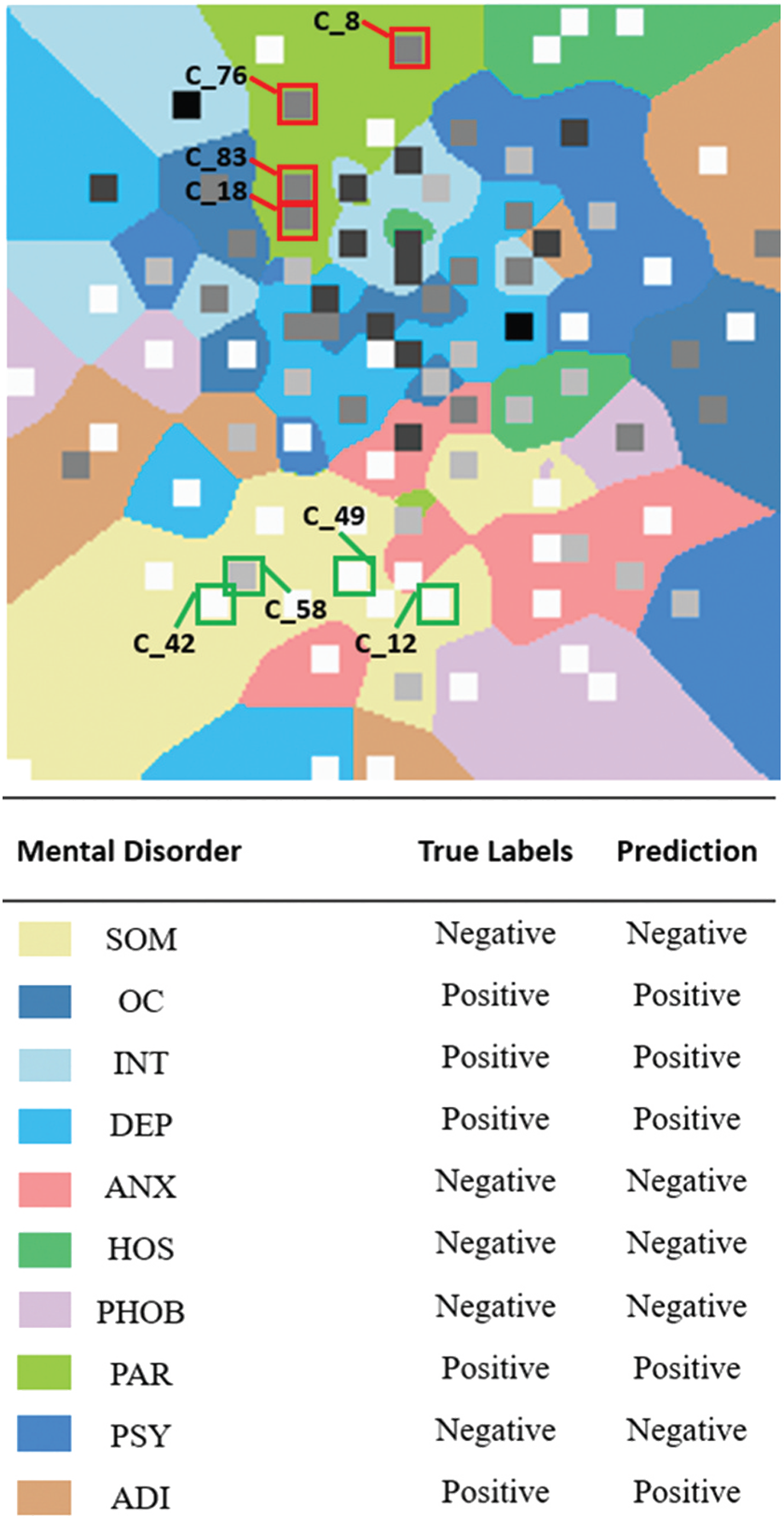
Beyond the boardroom, researchers created a way to translate common mental health disorders into full-color images, creating what some have called a “mental health MRI.”
Anol Bhattacherjee, USF professor of information systems, and his team published a design science paper about building an explainable AI artifact that generates an MDscan to screen for 10 common mental health disorders.
The tool uses an algorithm and converts a patient’s responses to a 90-question mental health screening into a patterned color visual image.
If we can provide them with an online tool to gauge their own mental health level and the seriousness of the situation, from the privacy of their homes or dorms, without interaction with anyone, that might raise awareness and help-seeking behaviors.
Anol Bhattacherjee
USF professor of information systems
The tool, which won first prize in the 2023 Institute of Industrial and Systems Engineers Cup Competition, was used at a mental health clinic in Turkey, allowing them to screen more patients in less time and ease the clinic’s caseload.
The MDscan could help address the growing global mental health crisis, Bhattacherjee said.
Notably, one in seven people worldwide lives with a mental disorder, says the World Health Organization. In the United States, one in five people experience mental disorders, according to the National Institute of Mental Health.
The MDscan tool could also be used by businesses, Bhattacherjee said.
“In an environment dominated by corporate layoffs, rising food and medical inflation, and insecurity about the future, many business employees too are struggling with mental health issues,” he said.
“Businesses can provide this tool to their employees as a means of self-diagnosis, based on which they can seek professional help if they so choose,” he said.
Adapting the MDscan for college students
Bhattacherjee, who teaches at the USF School of Information Systems, was asked to build a similar online tool for students at a university in India due to the growing mental health crisis on college campuses.
“This crisis has led to significant academic disruption, with many students skipping class, failing, or taking leaves of absence due to mental health issues, and is a leading cause of student dropouts, according to a 2023 Gallup Poll,” Bhattacherjee said.
Despite the high need, Bhattacherjee said, roughly 50% of the affected students do not access any mental health services.
The biggest challenges seem to be a lack of awareness of the problem and its consequences, and reticence to seek help. But students are not always open to confiding in others about personal problems, or don’t have the means to pay for a professional mental health diagnosis, he said.
“If we can provide them with an online tool to gauge their own mental health level and the seriousness of the situation, from the privacy of their homes or dorms, without interaction with anyone, that might raise awareness and help-seeking behaviors,” he said.
Tackling stress before entering the workplace
For young adults and recent grads newly entering the workforce, there is good news.
Paul Spector, a USF professor and organizational behavior science contractor at Tampa General Hospital, said the recent focus on mental health and workers bodes well for first-time job seekers.
“There’s been increasing interest in large companies regarding employee wellbeing,” Spector said. “Companies and executives really care about the wellbeing of their people. In my experience, most of them really do care about people. The other side is, it’s good for the organization.”
Spector, who blogs about mental health in the workplace, recommends disconnecting from work to improve one’s mental health.
“In health care, people who deal with patients often deal with pretty traumatic things. They need a break from that. It’s OK to go home and not think about work,” he said.
Spector said the type of detachment activity depends on individual preference.
“The common thread is, it occupies your mind and gets you thinking about something else,” he said.
More importantly, Spector said the relationship between one’s workplace and their health is key to keep in mind.
“If you hate what you’re doing, the more anxiety and depressive symptoms occur,” he said.