By: Cassidy Delamarter, USF College of Education
Inside a community center in Tampa, a group of students gather each week—not just to play video games, but to rethink what learning can look like. Through a unique partnership with the University of South Florida’s College of Education and the Tampa Housing Authority, a unique after-school program is turning research into real-world impact.
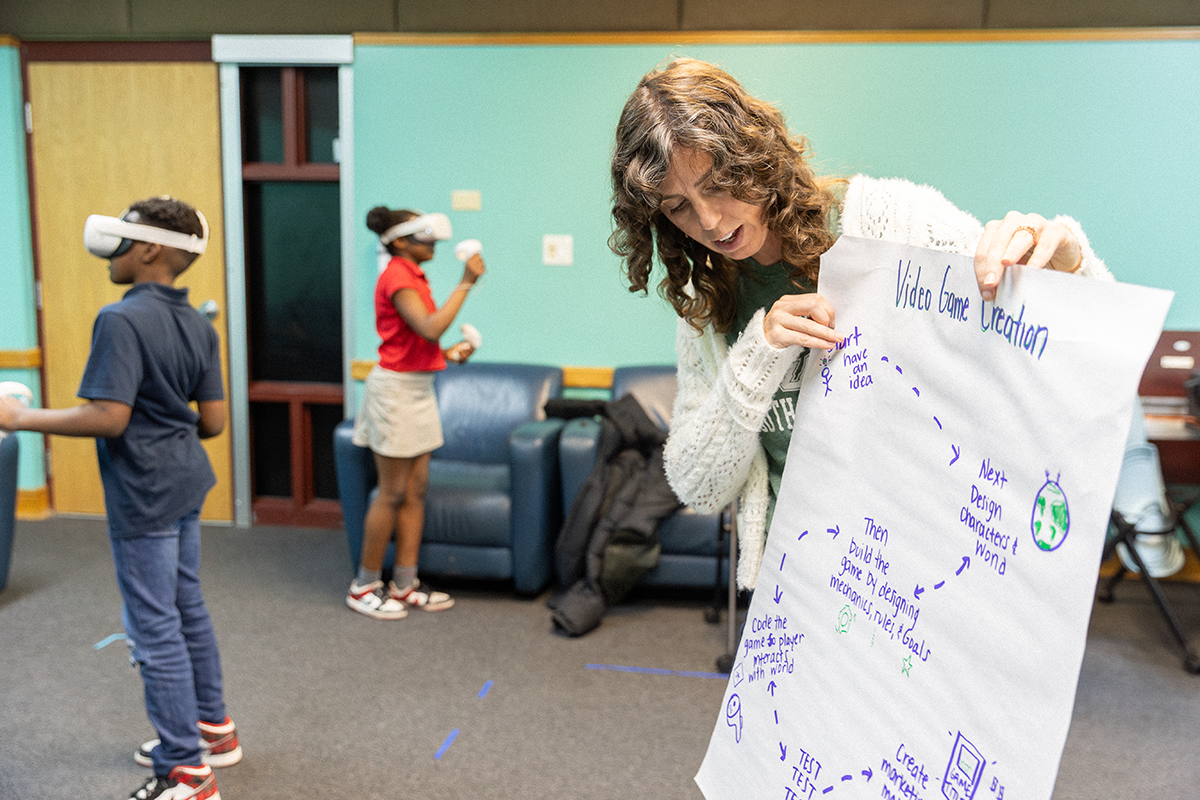
Known as the Gamers Club, the program provides fourth and fifth graders with hands-on experience in game design, virtual reality and digital tools while serving as an active research project for studying how children learn with technology.
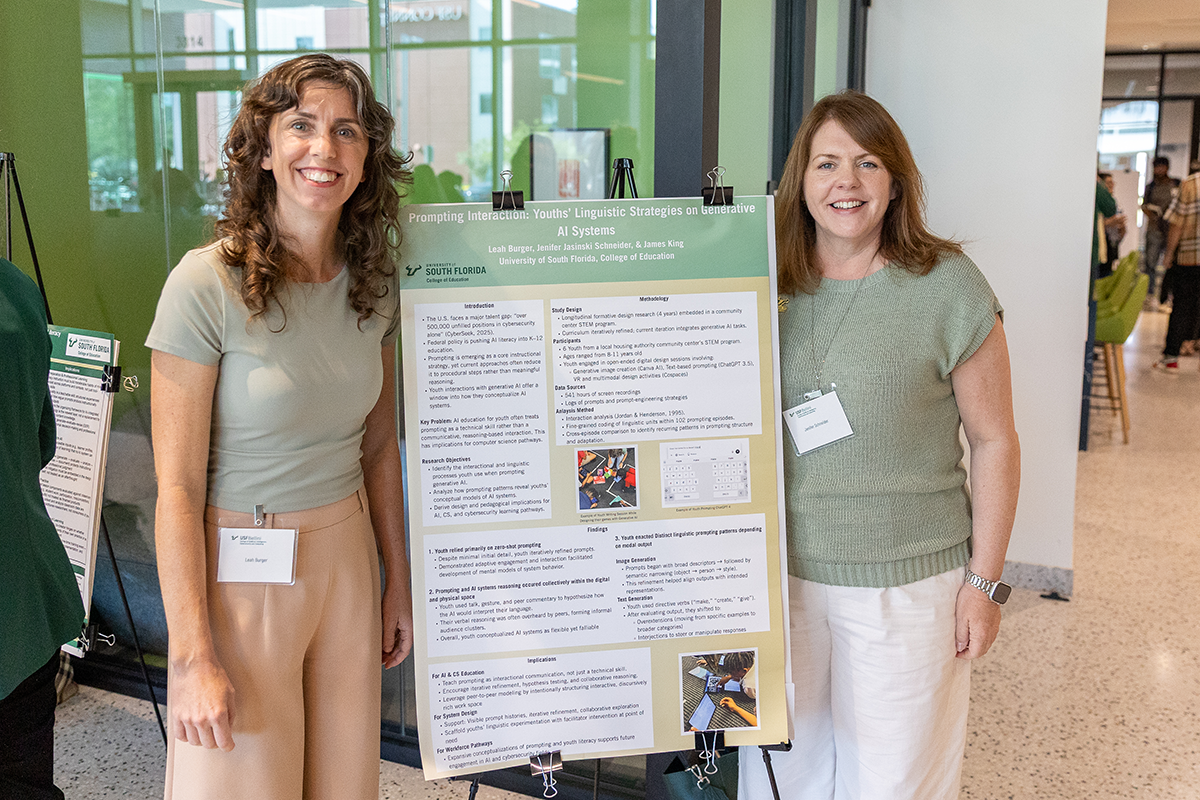
Burger and Schneider presenting their research at the 2026 AI+X Symposium
Led by doctoral candidate Leah Burger in collaboration with Interim Dean Jenifer Jasinski Schneider, the Gamers Club immerses students in design tools and emerging technologies, including virtual reality and artificial intelligence, allowing students to experiment with generating and refining their own gaming ideas.
“If we don't understand how kids learn with technology and how they can innovate with them further, then what is going to end up happening is we have the same problems in education that we've had before,” Burger said. “How do we expect kids to move further than where we've been if we don't give them the opportunity to do so?”
While many students enter the program with experience playing games, few have experience creating them or understanding how they function.
“The Gamer’s Club program has been a great addition to our community center, and it helps the youth with learning more about technology, as well as introducing them to unfamiliar experiences with coding, programming and design,” said Mark King, assistant youth and sports manager at the Tampa Housing Authority.
Over time, Burger said, students begin to shift their perspective. One of the biggest findings in the research challenges the idea that students are passive users of digital tools. Instead, Burger said students demonstrate strong decision-making skills when working with technologies.
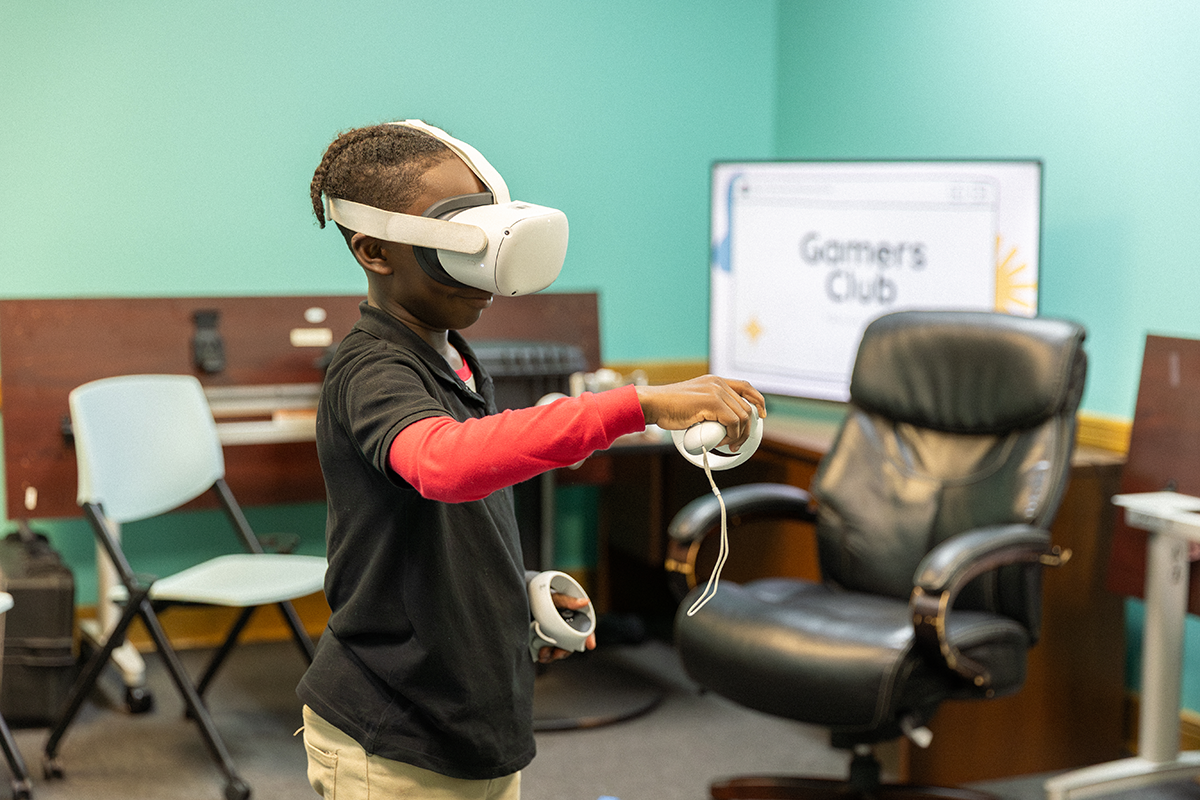
“At the beginning, they’re excited about playing,” she said. “By the end, they’re thinking about how games are made and what they could create themselves.”
As schools and districts continue to explore how to integrate technology into learning, Burger said the key takeaway is not necessarily access to advanced tools, but how educators approach student engagement.
“You don’t have to start with high-tech solutions,” she said. “Start with what students are interested in. It could be video gaming. It could be something else. But there is STEM and there are literacies pretty much in anything.”
Opportunities, like those in the Gamers Club, can lead to new ways of thinking about their future. By the end of the program, many begin to see connections between their interests and potential career paths in STEM.
“The University of South Florida has opened the minds of the inner-city youth we serve,” said James McQuay, youth and sports manager of the Tampa Housing Authority. “The partnership impacts them through collaborative community development, scholarship support and the opportunity to engage with artificial intelligence.”