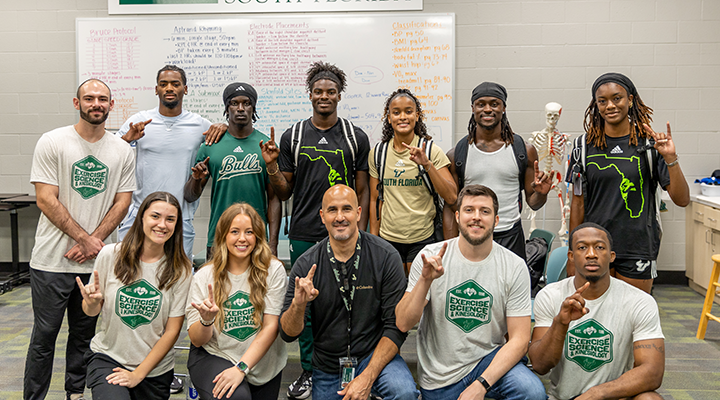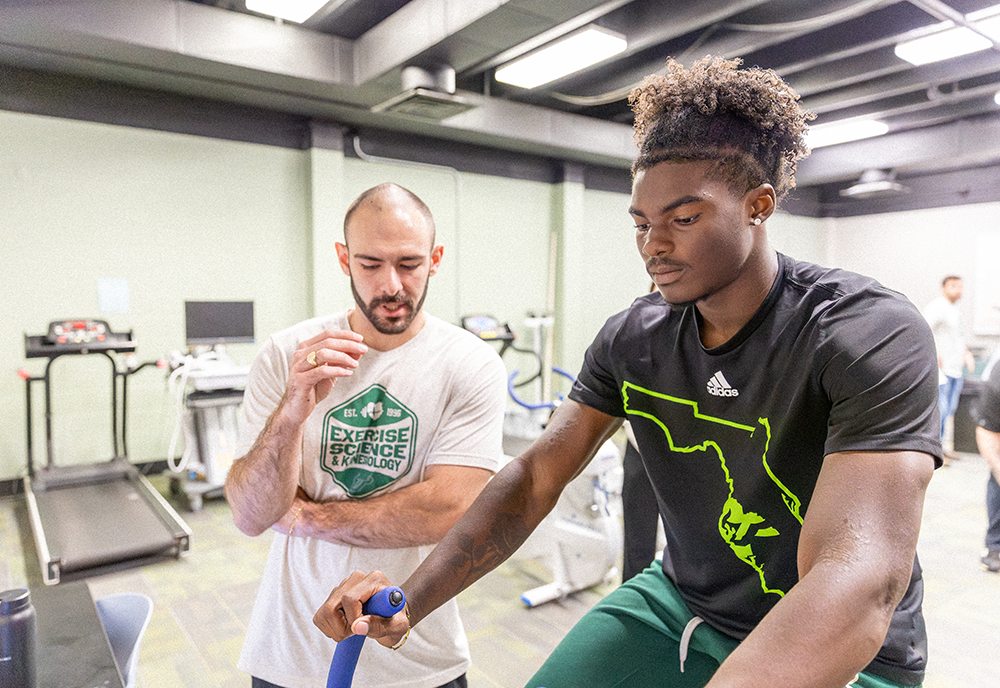
Students from the University of South Florida College of Education’s Exercise Science and Kinesiology (ESK) program are gaining practical experience in sports performance testing through a new partnership with the USF Track & Field student-athletes.
Each week inside the USF Human Performance Lab, the ESK students are helping the Track & Field team train with a high-intensity exercise used to measure an athlete’s power and energy production under intense effort.
"The primary factor driving that energy expenditure is anaerobic metabolism (without oxygen)," said Nic Martinez, Associate Professor of Instruction in Exercise Science and Kinesiology and Coordinator of the Human Performance Lab. “That’s what sprinters do; they run at top speeds under high biomechanical demand, relying heavily on anaerobic energy. Our training provides the precise resistance they need to adapt to these demands, helping them become stronger and more powerful.
As the student-athletes participate in the training, ESK students can apply classroom concepts in a practical setting by collecting data, operating research-grade equipment and assisting with testing.

“Through experiential learning, students learn how these metrics relate to concepts learned in the classroom, and how they can be trained for peak performance outcomes,” Martinez said.
During each training session, ESK students gather body weight data to assess athletes' resistance levels, manage specialized software and cycle ergometers. They also support athlete warmups, conduct blood lactate testing, analyze data and motivate athletes throughout the sessions.
“Having a background in track and field and continuing to follow the sport has made working with our track athletes a truly rewarding experience,” said Steevenson Michel, a senior in the USF Exercise Science and Kinesiology program. “I enjoy being part of an environment that pushes athletes to be the best versions of themselves while supporting them as they work toward their goals. One of the most fulfilling aspects is seeing their progress over time and knowing we’re making an impact.”
Michel said the experience has also helped him grow professionally through the program’s applied learning opportunities.
“This opportunity has been possible because of the Exercise Science program and the hands-on experiences provided through its lab,” Michel said. “Being able to apply what we learn in the classroom has played an important role in my development as a student and future professional.”
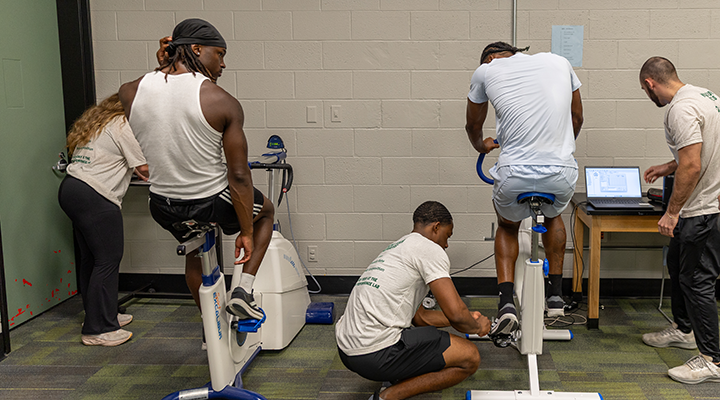
Working directly alongside student-athletes exposes students to the pace, professionalism and expectations associated with competitive athletics.
For USF Track & Field student-athletes, the experience highlighted the impact ESK students had throughout the training process.
“If I had to describe the environment here in one word, it would be intense,” said Ja Mya Roberson, a sophomore sprinter on the USF Track & Field team. “Everyone here pushes your body to limits you wouldn’t even imagine. The students here have made this experience great for me. They explain my data and encourage me to push harder and improve every time. Honestly, I wouldn’t want it any other way.”
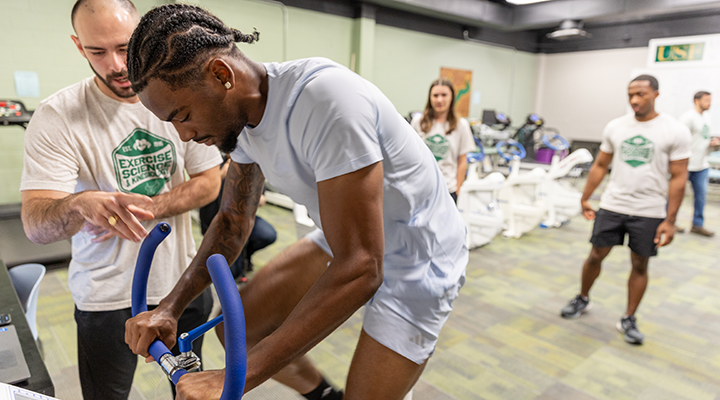
Experiences, such as sprint training, help ESK students build confidence while preparing for future careers in exercise science, kinesiology and athletic performance.
“One of the biggest takeaways I envision for students is for them to develop their self-efficacy within a high-intensity atmosphere such as athletic performance training,” Martinez said. “Working with athletes who are expected to produce and perform exposes students to a unique level of intensity and responsibility typically only found in competitive athletic settings.”