There is a moment most parents hit sometime in late spring. The school year is wrapping up, your child is mentally checked out, and suddenly you are staring at a long summer wondering how to make it count. Not just filling time, but actually doing something meaningful. Something that gives your child an edge.
If you are raising a middle schooler, that pressure feels even stronger. This is the stage where interests start to turn into real skills, and confidence can shape what they pursue in high school and beyond. You want something engaging, but also something that builds real capability.
That is where robotics summer camps start to stand out. Not the kind where kids just watch demonstrations or follow instructions, but programs where they actually build, program, and problem-solve. When done well, robotics camps do more than entertain. They develop how your child thinks.
Why Robotics Summer Camps Matter More Than Ever
Technology is no longer a niche field. It touches nearly every industry, from healthcare to business to creative design. According to the World Economic Forum, skills like analytical thinking, problem-solving, and technology literacy are among the most valuable in today’s workforce. Robotics brings all of these together in one experience. The difference comes down to how students learn these skills. Reading about technology is not enough. Watching someone else build something is not enough. Students need to engage directly with the process.
As Dr. Alexandro Castellanos from the USF College of Engineering explains, “Engineering makes sense when it’s experienced, not just explained.” That idea sits at the core of what makes robotics so powerful. It takes abstract concepts and turns them into something students can see, test, and understand in real time.
Why Middle School Is the Ideal Time to Start
Many families assume high school is the right time to focus on technical skills. In reality, middle school is where the foundation is built. At this age, students are still curious and more willing to take risks. They are less concerned about being perfect and more open to experimenting. That combination creates the ideal environment for real learning.
Dr. Castellanos has seen this play out repeatedly in his work with students. “Middle school is when kids are figuring out what they’re good at. If they don’t get a chance to try STEM until high school, it’s almost too late. They’ve already decided what’s ‘for them’ and what isn’t.” When students are introduced to engineering early, something shifts. “When they get to try engineering early, you can see them light up,” he explains. “They start taking risks, asking questions, and realizing, ‘Hey, I can actually do this.’ Their confidence grows fast once they get to build something real.”
What to Look for in High-Quality Robotics Summer Camps
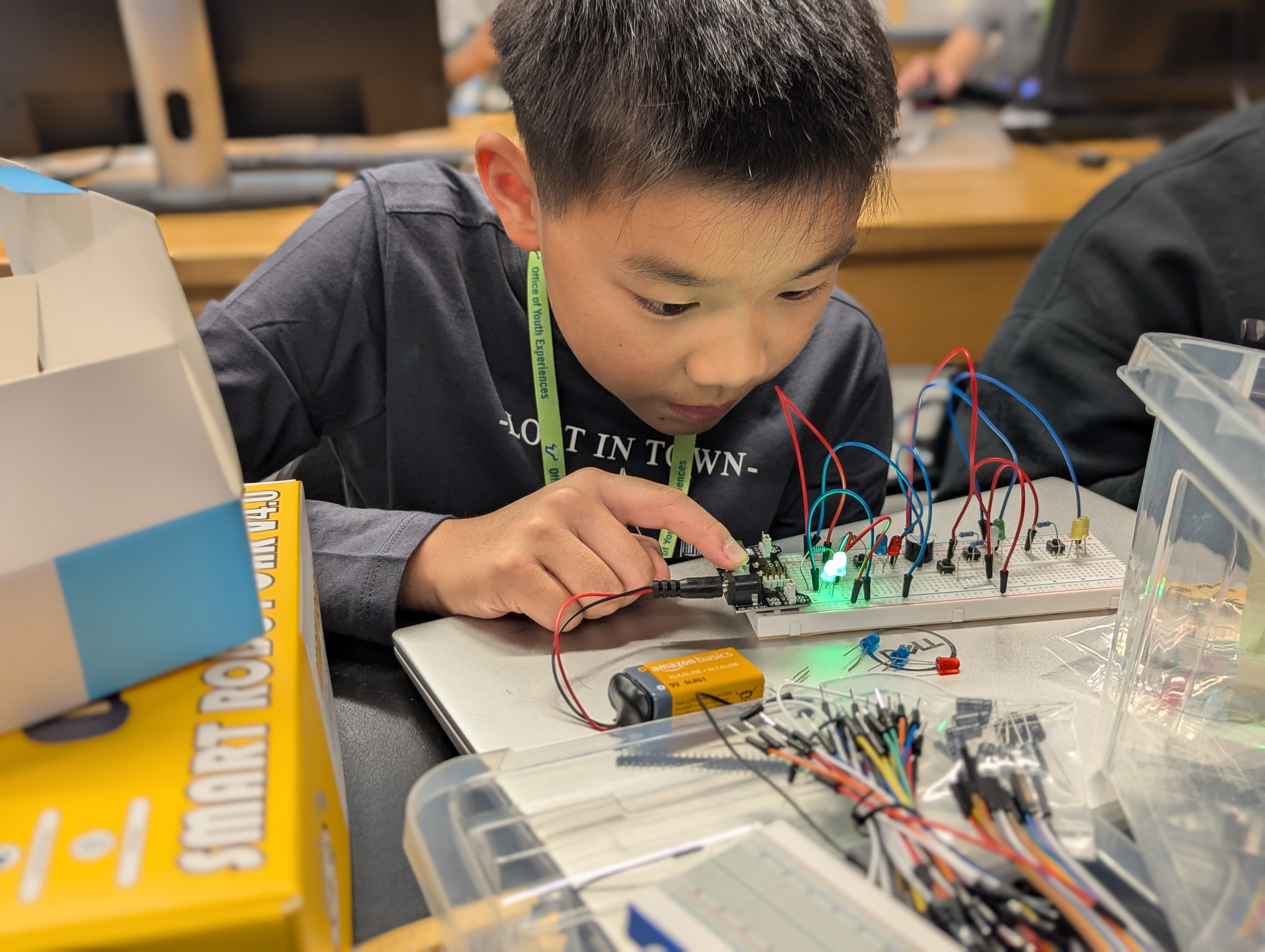
Not all robotics summer camps offer the same level of depth. If you want a program that truly benefits your child, focus on how the experience is structured. Strong programs emphasize hands-on building. Students should be assembling components, working with sensors and actuators, and creating something functional. This is where engineering concepts move from abstract to real.
Programming is another essential piece. Students should be writing and testing code, learning how logic controls physical systems, and figuring out how to debug when things do not work the first time. High-quality programs also incorporate challenge-based learning. Instead of following a fixed set of steps, students are asked to solve problems. They test ideas, make adjustments, and improve their designs through iteration.
Dr. Castellanos puts it simply: “Math and physics finally make sense when kids can see them in action. So many middle schoolers struggle because everything feels abstract, but robotics makes those ideas real. When their code turns into movement and their calculations actually do something, frustration flips into understanding, and their confidence takes off.” The strongest programs also connect learning to real-world applications. Exposure to industry tools or advanced systems helps students see how these skills translate into actual careers.
How Robotics Summer Camps Build a Competitive Advantage
When parents think about a productive summer, they are often thinking about long-term impact. Robotics delivers that in a way that is both practical and engaging. Students develop transferable skills like logical thinking, attention to detail, and systems-based problem-solving. These skills extend far beyond robotics and show up across academic subjects.
They also create tangible outcomes. Instead of vague takeaways, students leave with something they built, programmed, and tested themselves. That experience becomes something they can speak about with confidence. Perhaps most importantly, robotics builds confidence in STEM. There is a specific moment where that shift happens. “The moment the robot moves, the kid’s confidence jumps right along with it,” says Dr. Castellanos.
That moment is small on the surface, but it is powerful. It changes how students see themselves and what they believe they are capable of.
A Real Example: What a Strong Robotics Camp Looks Like
The Middle School Robotics Camp at USF reflects what a well-designed program can offer when it prioritizes both depth and engagement. Students take on the role of engineers from the start. They design and assemble their own Autonomous Mobile Robot using Arduino-based systems, gaining experience with circuits, sensors, and actuators.
Throughout the week, they write and test code using the Arduino Integrated Development Environment while also exploring 3D printing to create custom components. The experience is hands-on and iterative, with challenges that require students to troubleshoot and refine their designs.
What sets this program apart is its connection to real industry technology. Students are introduced to advanced robotics concepts through exposure to industrial systems and tools like ABB RobotStudio, giving them insight into how robotics is used in real engineering environments. By the end of the week, students take home their fully built robot, their robotics kit, and their programming files. This allows them to continue exploring and building beyond the camp experience.
You can learn more about the program here:
USF Middle School Robotics Summer Camp
How to Choose the Right Robotics Summer Camp for Your Child
Choosing the right camp comes down to aligning the experience with your child’s needs and interests. Consider their current experience level. Beginners benefit from structured guidance and foundational learning, while more experienced students may thrive in open-ended, challenge-based environments.
Pay attention to who is leading the program. Camps connected to universities or led by experienced educators and professionals tend to offer stronger academic value. Also think about the learning environment. Smaller groups often lead to better engagement and more individualized support. Finally, consider what your child will take away from the experience. Programs that allow students to continue learning after camp provide far greater long-term value.
The Bigger Picture: Turning Summer Into a Strategic Advantage
Summer does not have to be a trade-off between fun and productivity. The right experience can deliver both. Robotics summer camps create an environment where students are engaged, challenged, and supported at the same time. They build real skills while still feeling exciting and hands-on.
As Dr. Castellanos has observed over time, these early experiences have a lasting impact. “Over the years I’ve noticed something pretty consistent. The college students who really thrive in engineering almost always had some kind of hands-on STEM experience back in middle school.” That early exposure builds something deeper than skill. “When kids get to build and experiment early, they head into high school, and eventually college, already believing, ‘Yeah, I can do this.’ That early confidence makes a huge difference.”
Final Thoughts
If you are looking for a way to make this summer meaningful, robotics summer camps are one of the strongest options available. They combine creativity, technical skill-building, and real-world application in a way that few other programs can match.
The key is choosing a program that emphasizes active learning, problem-solving, and continued growth beyond the classroom.
Middle school is the right time to start. When students are given the chance to build, experiment, and succeed in this environment, the impact goes far beyond a single summer.