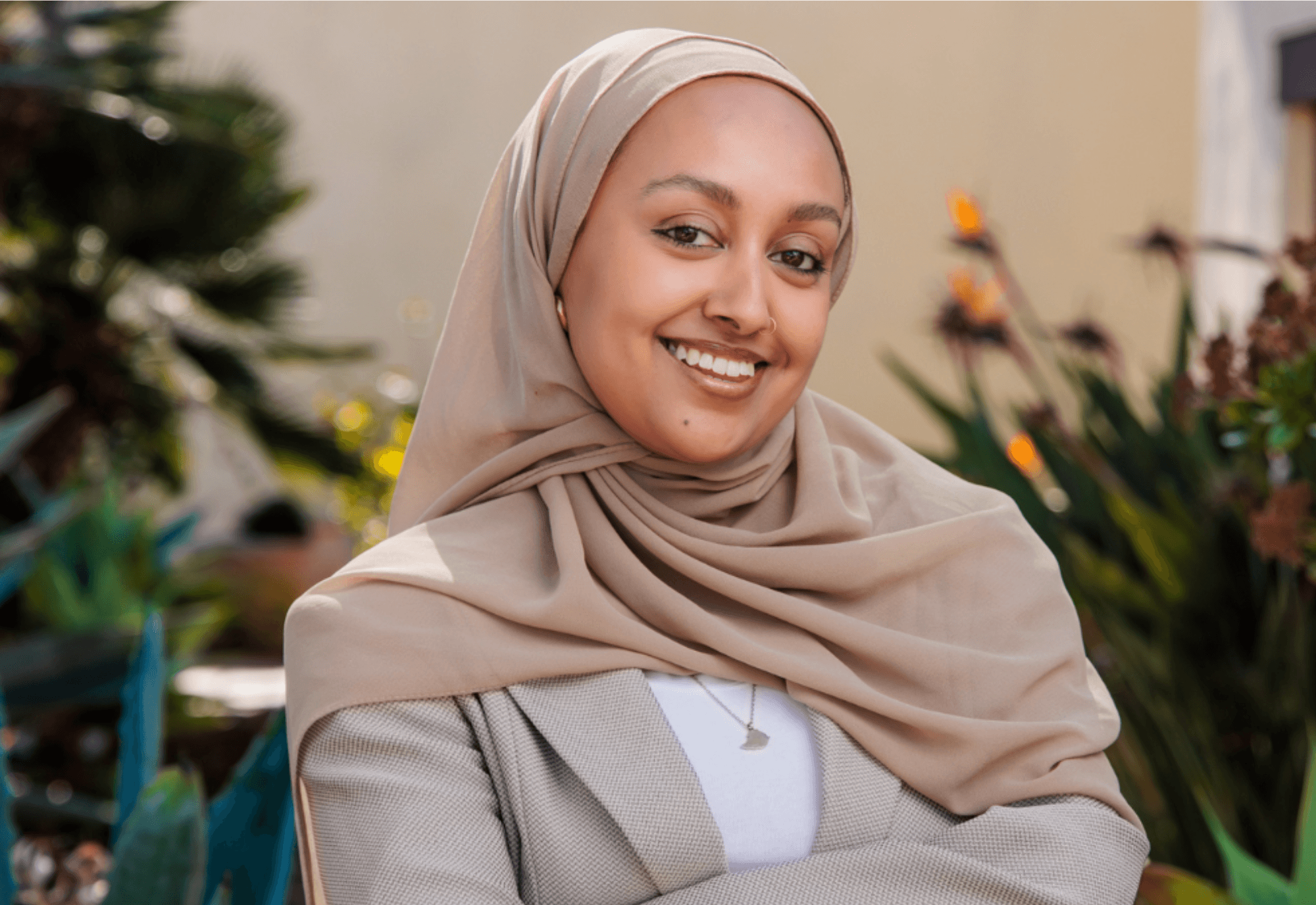
When University of South Florida alum and current National Cancer Institute Fellow Hanan Ibrahim first enrolled in the Honors course Sub-Saharan Africa in Historical and Contemporary Perspective, she did not expect it would lead her to study historical and present-day experiences within African diasporic communities in Asia. The class was a broad interdisciplinary introduction to the study of Sub-Saharan Africa – combating negative stereotypes and tropes about Africa’s history, politics, cultures and emphasizing the rich diversity and complex societies across the continent. But when the class began discussing the African diaspora around the world, Ibrahim was surprised with how little she knew about Afro-Asian people. As they dug deeper, Ibrahim knew she wanted to learn more.
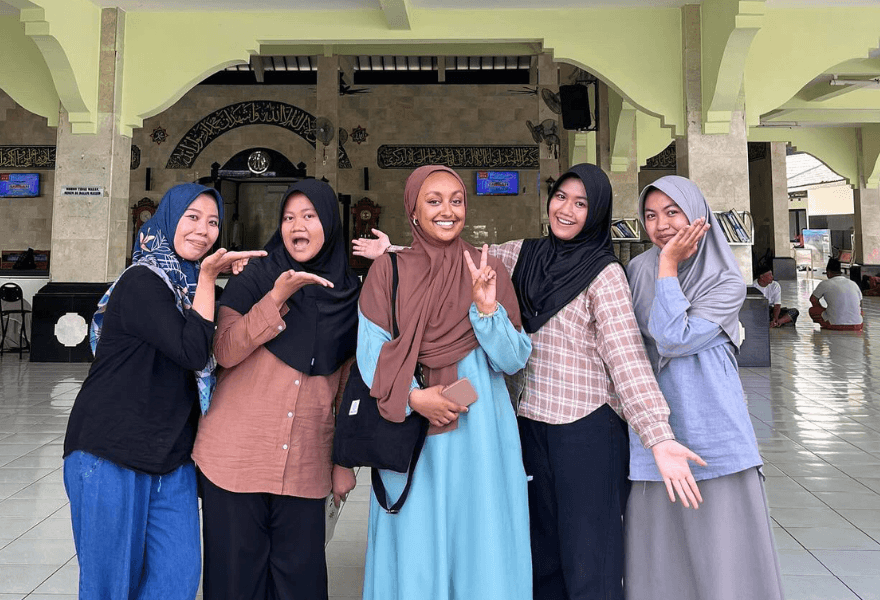
Ibrahim and friends she met in the Sudirman Great Mosque in Bali, Indonesia
She spent the following summer in Indonesia performing HPV research, engaging with
indigenous Afro-Asian people. Coming back to the United States, Ibrahim focused her
Africana Studies capstone research — mentored by Dr. Kersuze Simeon-Jones of the USF
College of Arts and Sciences — on the Siddi ethnic group in India and Afro-Sri Lankans.
She found little literature on these populations and was motivated by their strength,
resilience, and connection, leading her to later apply for the Luce Scholars Program. Ibrahim is now the first Luce Scholar in USF history.
Luce Scholars spend a year in Asia being immersed in culture, language, and development.
Created by the Henry Luce Foundation, the program’s mission is to provide a platform for deep engagement with Asian communities,
strengthening relationships across borders and equipping future leaders with the knowledge
and skills to address global challenges.
The program is competitive, with semifinalists being required to complete two virtual
interviews and an in-person weekend long interview process. The committee looks for
students with the potential to be leaders in their fields and communities. They value
initiative, creativity, maturity, humility, sensitivity, and strength of character.
Once selected, scholars are placed in a community professional role matching their
interests and goals in a country of their choice.
Beyond the Clinical
Ibrahim spent the formative years of her life living in Ethiopia and Kenya. Growing
up abroad opened her worldview to the different realities people face. She noticed
the health disparities that existed in the communities where she grew up, inspiring
her to pursue medicine as a career path.
The spring before starting at USF, Ibrahim participated in a virtual internship with
Duke University’s Health Profession Recruitment and Exposure Program (HPREP) where she increased awareness of health profession opportunities for underrepresented
and minority high school students and completed a case presentation with a group on
maternal mortality in Ethiopia.
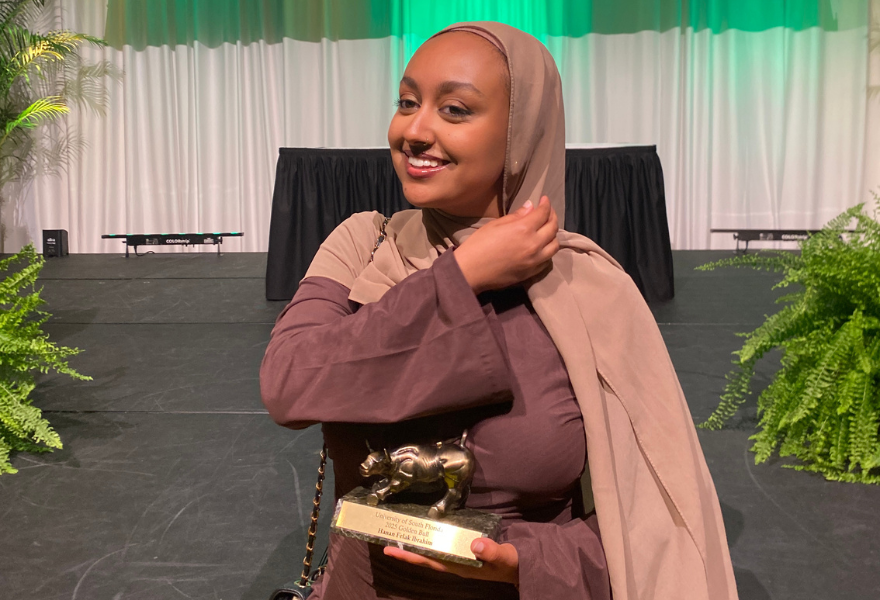
Ibrahim awarded Golden Bull Award at the Spring 2025 Celebration of Leadership Awards Ceremony
She began at USF as a traditional pre-medical student with a major in biomedical sciences,
however, after taking different courses and being inspired by her professor and former
Institute on Black Life director Dr. David Ponton III, Ibrahim added a second major
in Africana studies and felt compelled to pursue opportunities intersecting structural
inequities with health and disease.
As an undergraduate, she worked as a volunteer researcher in an HIV lab, wrote a book
chapter on the Mpox virus, and partnered two other students and Florida Blue to create
an independent, systematic review on addressing disparities in maternal health care
and physician visitation during pregnancy. Her Judy Genshaft Honors College thesis
examined the use of traditional and Western medicine in the treatment of malaria in
East Africa. Dr. Fenda Akiwumi, Ibrahim’s professor from her Honors Sub-Saharan Africa
course, served as thesis advisor.
“The Honors College helped me become a well-rounded student and researcher,” said
Ibrahim. “Through my experiences and taking Honors classes outside from the biomedical
sciences major, I discovered a passion for the social sciences and humanities.”
After graduating in May 2025 with multiple prestigious honors – Magna Cum Laude, the
Golden Bull Award, and the Honors College Dean's Circle of Merit award for service
– Ibrahim moved into a post-baccalaureate research fellowship at the National Cancer
Institute where she now studies HIV assembly and maturation.
Exploring Health Resilience Worldwide
Although Ibrahim was settling into her research fellowship, she couldn’t shake the
drive she felt after seeing so few studies on the Afro-Asian communities she had done
research about in her capstone project. Motivated to learn more and work with these
communities, she applied for the Luce Fellowship.
“The Luce Scholars Program was a perfect avenue for me, as it offers the opportunity
to expand my Africana studies classroom research into immersive fieldwork and engagement,”
said Ibrahim. “Luce gives us a framework, but within that, we really get to define
our own path. The year becomes what we make of it,” said Ibrahim.
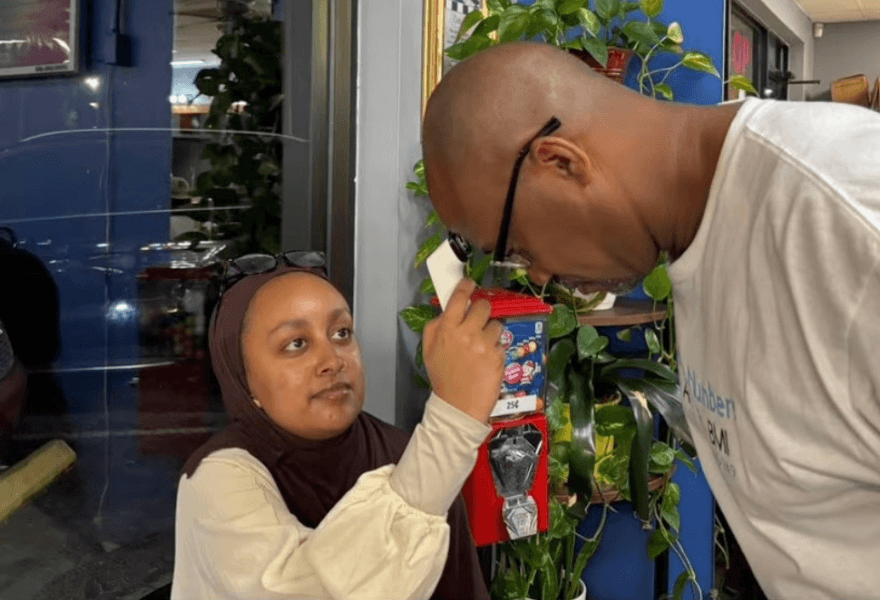
Ibrahim taking vitals while interning with EnVision Resolution
Ibrahim’s ultimate goal is to implement effective health care treatment worldwide.
“I want to design interventions that are scientifically sound, but also culturally
grounded solutions that account for the diverse and intersecting identities of the
people they serve.”
Though her placement for the Luce Scholars Program has yet to be decided, Ibrahim
is hoping to be placed in Sri Lanka, to carry on the work she began with her Africana
Studies capstone at the University of South Florida.
"Winning a Luce Scholarship is a tremendous achievement for Hanan, and I'm confident that the work that the award supports will have global impact. As the first USF Luce Scholar, Hanan stands as an inspiring role model for Honors College students who want to bring high quality health care to underserved populations around the world," said Judy Genshaft Honors College Dean Charles Adams.
Students interested in prestigious fellowship programs like the Luce Scholars Program should reach out to the Office of National Scholars.