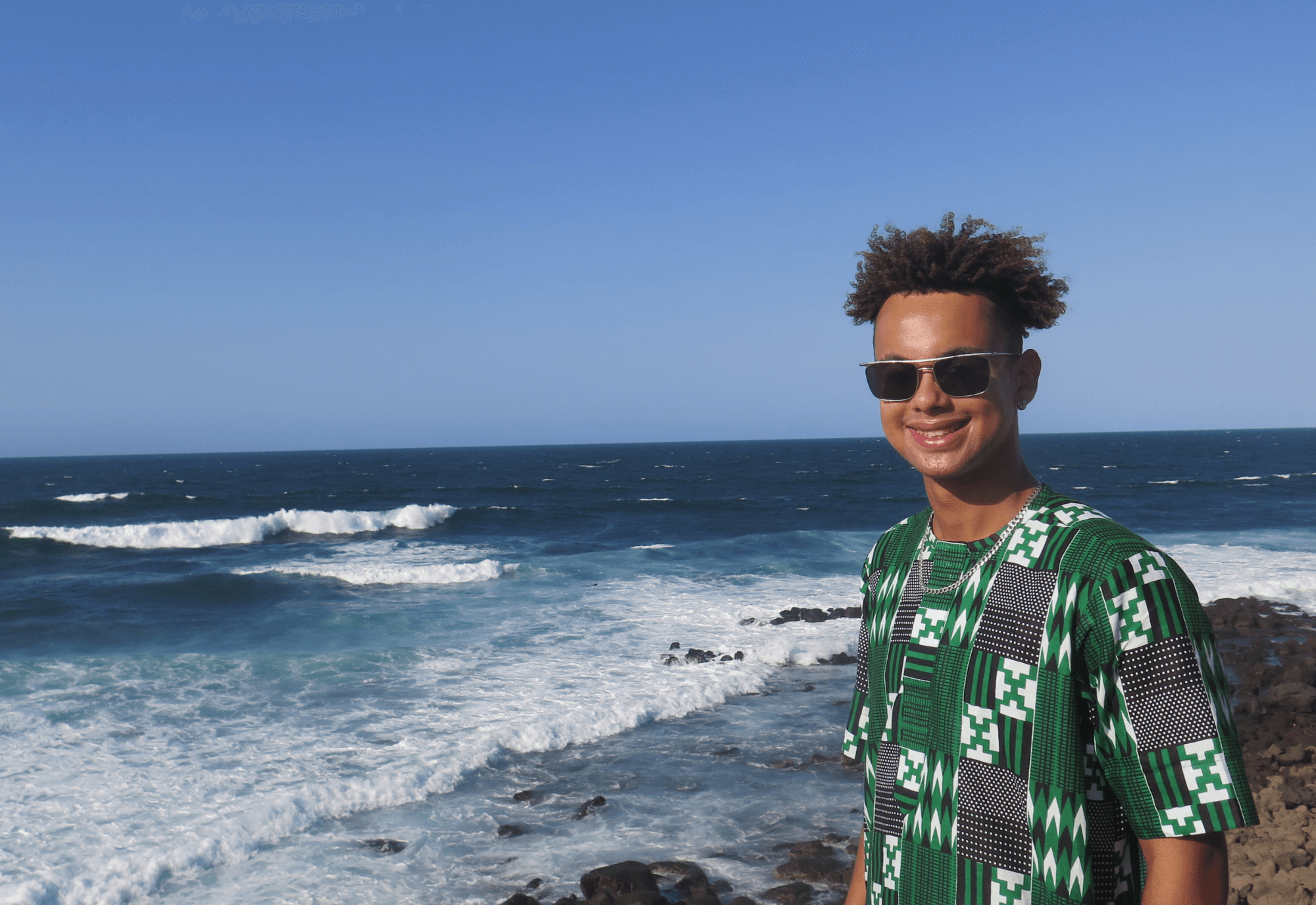
Last semester, I had the opportunity to study abroad in Dakar, Senegal through the Boren Scholarship. The Boren Awards are scholarships and fellowships for U.S. undergraduate and graduate students committed to long-term overseas study and public service. Boren awardees receive funding to study the languages most critical to our nation's security. Recipients also commit to serving in the federal government for a period of time after graduation. I was selected to study French in Senegal as part of Boren’s African Flagship Languages Initiative (AFLI).
The Road to Recipiency
I wouldn’t have been able to experience this fantastic opportunity if it weren't for
the USF Office of National Scholars (ONS) and the specific support they provided, including application guidance and encouragement.
Their support made me feel valued and grateful, which I hope encourages others to
recognize the importance of such assistance. I began working with ONS Assistant Director
Lauren Roberts during the Fall 2024 semester. She helped me hone my central ideas
for my application essays step-by-step through the application process.
After submitting, I did not receive the Boren Scholarship in the first round. I was
chosen as an alternate, with no certainty that I would move up. Yet even after I received
my alternate notification, ONS stood by me, offering support and preparing me to apply
for the next application in case the first didn't work out. However, I was informed
in May 2025 that I would be going to Senegal as a Boren Scholar.
From Gainesville to Dakar
All AFLI students spend the summer before their travel at the University of Florida, building a foundation in their chosen language. During my time at UF, my cohort and I studied French, Wolof — the lingua franca in Senegal — and Senegalese culture to prepare us for our semester abroad with Senegalese host families.
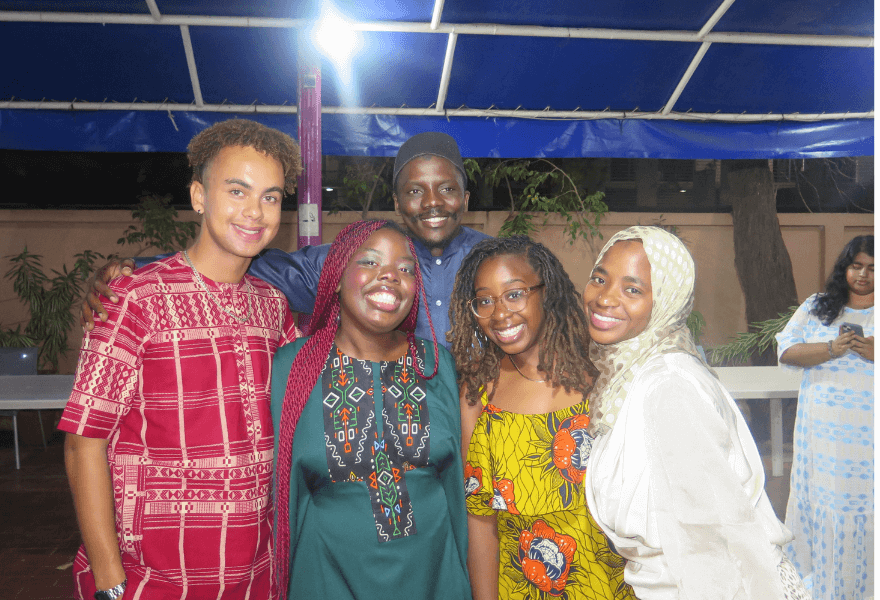
This was my first time in West Africa. I was nervous yet excited about the opportunities
and experiences I would encounter – from my host family to the cuisine to daily life.
I arrived in Senegal in late August. The first thing I remember was the excruciating
heat and nonstop rain, as we arrived during the rainy season's peak. I began to feel
homesick after meeting my new host family. I missed my family, friends, and USF, but
Senegalese hospitality — known as Teranga — made all these feelings disappear in time.
I learned how to eat around the table in Senegalese style. Unlike how we do it in
the U.S., the eating style is more communal; everyone eats from a large dish, while
each person has their own section. I learned to cook Senegalese food and would buy
peanuts from street vendors while walking around Dakar, the capital city of Senegal.
Surfing the Waves of Cultural Exchange
An interesting aspect of my experience was how our cohort learned from and taught
our host families. We all lived with Muslim families, yet no one in our cohort was
Muslim. We were made up of Catholics, Protestants, Hindus, Jews, and atheists. This
diversity led to meaningful exchanges that fostered mutual understanding and personal
growth. It allowed us to teach our host families that none of us in our cohort are
the same, and that the diversity of our country is similar to that of Senegal.
As my neighborhood was a bit farther from our school — the West African Research Center (WARC) — some of us would bargain for taxis every morning, which was always an adventure.
Eventually, as we learned more Wolof and became better hagglers, our prices began
to decrease. We had classes every day, taught entirely in French by Senegalese professors.
Our courses covered French, Wolof, Senegalese history and politics, urbanism, and
more. It was a fun challenge to discuss and debate serious topics in a second language,
with no English allowed.
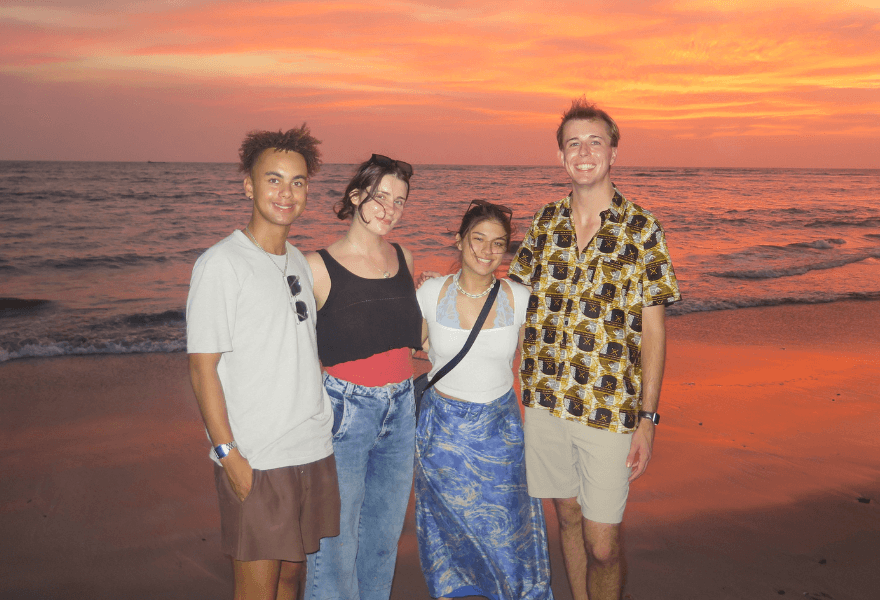
Outside the classroom, I traveled with the others to different regions and places
in Senegal — from staying one weekend in the Lompoul Desert riding camels to swimming
in the mangroves of Sine-Saloum in the south. What I loved about leaving Dakar was
the chance to explore other regions of Senegal and meet people, especially those from
different ethnic groups that aren’t as well represented in the capital.
My favorite part of my semester, though, was learning how to surf. Almost every day
after school, a group of us would rush out of the classroom and haggle for a taxi
to beat the traffic. We learned to surf at a Senegalese surf school with coaches our
age. The others and I went so often that we became friends with our coaches and would
invite them out on the weekends, even hosting a shared birthday dinner for one Boren
Scholar and one of the coaches.
After spending four months in Dakar, I can say that my fondest memories lie with surfing,
the food, but most importantly, the Senegalese people. The Teranga spirit was always
on display and truly embodied what Senegal is.
Continuing Global Exploration
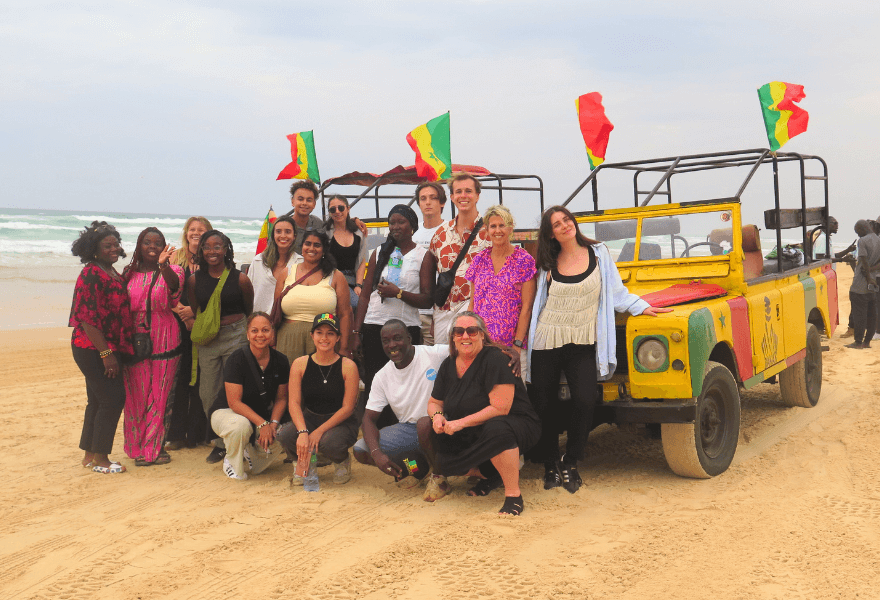
There’s a French phrase that the Senegalese always say, “On est ensemble” — it means
“we are together.” Everywhere we went, through good and bad experiences, people would
always use this phrase, and it stuck with me. When Senegalese would say it, they meant
it through thick and thin, no matter who you are or where you come from, there was
always a lending hand because, in the end, we are together. I can’t thank ONS enough
for helping me have this life-changing experience; they truly embody what “on est
ensemble” means.
Next, I plan to apply for graduate school on the path toward a career in international
relations. You can bet I will be reaching out to ONS for advice and assistance in
selecting programs and potential fellowship programs to apply for.
After graduate school, I am excited to begin my career in international relations,
serving in the federal government. I aim to become a Foreign Service Officer representing
the United States abroad. I know that I’ll be seeing my fellow Borens abroad with
me in the future.