Undergraduate
Alumni Spotlight
Naya Young
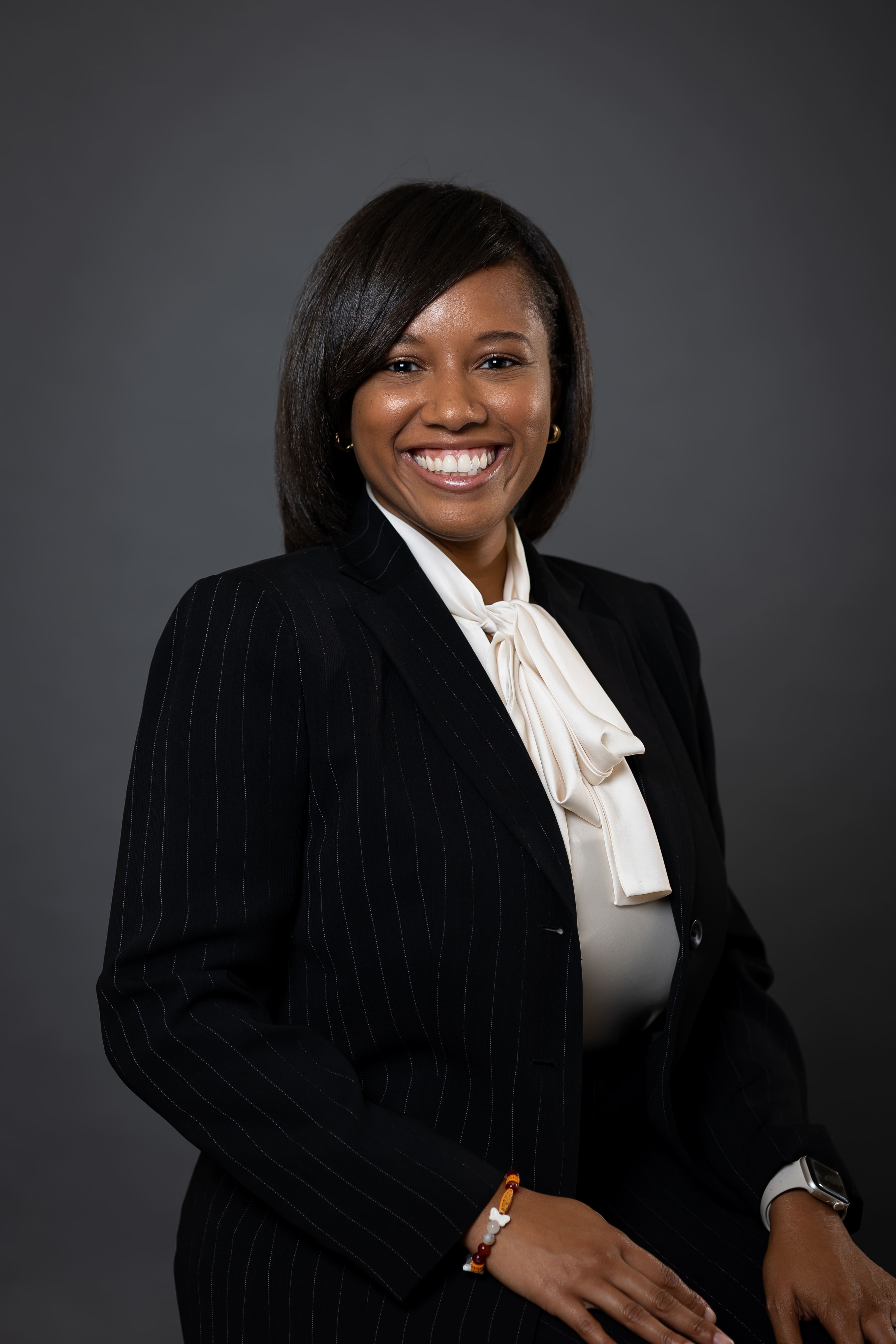
Councilwoman Naya Young is a Communication alum who graduated from our department with her BA degree in Culture and Media Communication and then her master’s in political science from Howard University. Young went on to be elected to Tampa City Council in October 2025, representing District 5. We spoke with Young about her experiences as a Communication major and City Council member.
Q: What led you to run for a position on the Tampa City Council?
My path to Tampa City Council was shaped by my family values and strong tradition of service. My grandmother served as a legislative aide for Senator James Hargrett when I was a child, so I was introduced to civic engagement at a young age. Both of my grandmothers taught me the importance of caring for others, being involved in my community, and using my voice to make a difference. Those lessons inspired my commitment to community and helping others.
Q: What do you enjoy about serving on the City Council, and what are some meaningful things you and the Council have worked on?
What I enjoy most about serving on City Council is being able to connect with people
and help turn community needs into action. I enjoy being out in the community and
meeting the people I serve, listening to them and their ideas. I also enjoy meeting
young people that tell me they look up to me; I never would have imagined that, so
it's a great feeling.
Some of the work I am most proud of has focused on youth opportunities, neighborhood
investment, transportation, and housing. This past summer I advocated to increase
the city's Rising Explorers internship program with additional funding of $175,000.
I also allocated $150,000 toward the Sulphur Springs Neighborhood Acton Plan and advocated
for over $2 million dollars to go towards various neighborhood improvements in Sulphur
Springs as well. As a board member on the Transportation Planning Organization (TPO),
we are working on real solutions to improve our transportation, and the downtown streetcar
extension is progressing.
Q: What led you to study Communication as an undergraduate? What was your experience as a Communication major at USF?
Funny enough, I went to college for nursing because I've always wanted to help people and I believed that was the way to do it. I eventually studied other majors such as sports medicine, photography and journalism. It was actually my mom, a communication major as well, that suggested it to me and I loved it! I loved the classes, my professors and the topics we discussed. I vividly remembering having a class outside one time and I thought to myself, "how cool is this." We often discussed how we communicate with each other, how other cultures communicate with one another, what is being communicated to us through television, radio, art and news. It was all so interesting to me and the skills I learned I still use to this day.
Q: How are you using what you learned as a Communication major in your professional and personal life?
I truly believe that my communication degree has been invaluable in both my professional and personal life. As a City Councilwoman, communication is at the center of everything I do. From listening to residents and working with colleagues to advocating for my community and sharing information clearly and concisely. It's also taught me the importance of listening, understanding different perspectives, building connections with people and how to ask the right questions.
Past Spotlights
Jack Forsyth
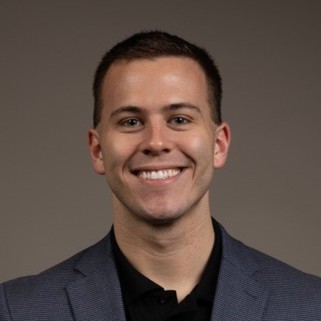
Jack Forsyth is a Communication alum who graduated from our department in 2023 with his BA degree, and has since gone on to build a career in nonprofit development and community engagement. Forsyth has worked for nonprofits in the Tampa Bay area, including Metropolitan Ministries, Feeding Tampa Bay, and Equality Florida. He’s taking the next step and joining New York Cares, the largest volunteer organization in New York City, as a Major Gifts officer, and spoke with us about his career in the nonprofit sector as someone with a background in Communication.
Q: Tell us about yourself, including what led you to study at USF.
I am originally from Michigan but moved as a kid to Tampa when I was 12. I transferred to USF after coming home from FSU during the pandemic and it was the best decision I made! Being able to stay local and plug into the Tampa community through my time at USF was very beneficial for me. Especially through the Communication Capstone, I was able to blend my studies at USF with important work in the Tampa area.
Q: What motivated you to pursue a career in nonprofit development? What did you do in your positions at Metropolitan Ministries, Feeding Tampa Bay, and Equality Florida? What will you be doing in your new role as a Major Gifts Officer with New York Cares?
I've always had a heart for service and it didn't really click for me that one could make a career out of working for a nonprofit until I landed at USF. I continued to volunteer in the local area and just continued to learn more about the field. I also minored in leadership studies and took a nonprofit leadership course alongside my comms courses and learned so much which ultimately helped lead me to this field. I started as a volunteer services intern at Met Min working alongside the volunteer team which led me to my role in community engagement and volunteer management at Feeding Tampa Bay. It was there where I really understood what development and fundraising was and I was fascinated. A development coordinator position opened up at Feeding Tampa Bay and I was hired and then I found my current role with Equality Florida as the Tampa Bay Development Leader. Now, I'll be stepping it up even more by being a Major Gifts Officer for the largest volunteer organization in New York City, New York Cares, where I will be working with high net worth individuals to help fund the organization.
Q: What was your experience like as a Communication major at USF? How have the skills and concepts you learned been helpful in working in the nonprofit sector?
I loved it! The professors were so helpful and hands on and I learned so much from them. The classes were unique, like Interview Communication, Ethnography, and Team Dynamics, which made my time there super interesting and engaging. It's been helpful working in the nonprofit sector because I work alongside all sorts of people -- from donors, clients, board members, volunteers, etc. -- and being able to adapt to everyone's own unique way of communicating and showing up in the world has been crucial. My job is a relationship manager so it's important I understand humans on a deeper level and communication at USF allowed me to understand how to make folks feel seen, listened to, and of course, how to communicate to these different groups.
Q: What advice would you give to students studying Communication today?
Don't put too much pressure on yourself. Find what you like and just get really good at that. And if you don't know what you like, live your questions. Try it out. Fail. Do it again. See what you enjoy and what you don't. Life is all one big experiment and everything you do will ultimately lead you to your next thing. This world and job market is ever changing so it's important to not be too hard on yourself and just know with hard work and solid communication skills, it will work out. Take what you learn as a comms major and apply it to everything. Employers want socially adept people and communication is the best major to hone in on those soft skills.
Dyma AbuOleim
Q: Tell us about yourself, including what led you to study at USF.
I came to the University of South Florida in 1998 from West Palm Beach, Florida—back
when social media didn’t exist and technology played a much smaller role in our daily
lives. When I toured the campus, I was immediately drawn to its energy. It had the
excitement of a big city but still felt like a welcoming hometown. The people were
kind and the diversity truly stood out to me. For the first time, I saw a large and
visible Muslim community. Having been the only Muslim student in my high school of
almost a thousand students, that experience was incredibly meaningful.
College, for me, became a place to explore my identity, connect with people from all
backgrounds, and be surrounded by those who were genuinely curious about learning
from one another. Another thing I loved about USF was how inclusive it felt, you didn’t
have to belong to a particular group or organization to feel a sense of belonging.
It was a place where everyone could find their community. I originally thought I would
study Mass Communication, but I soon discovered the Communication Department and fell
in love with interpersonal and organizational communication; how people connect, collaborate,
and build understanding across differences. That foundation has shaped so much of
who I am and how I approach my work today.
Q: What motivated you to help found 200 Muslim Women Who Care (MWWC)?
I was grateful to be a founding member of the 100 Women Who Care Southshore and deeply
appreciated the spirit of generosity it encouraged. After several years of involvement,
I felt inspired to start 200 Muslim Women Who Care in 2017. While the giving circle
model was a powerful one, I saw an opportunity to enhance the process by creating
more structure and transparency so that the funds raised truly aligned with the values
of the members contributing.
At the time, I noticed how many generous Muslim women in our broader community were
eager to make an impact but didn’t always have an accessible, trusted outlet to do
so collectively. Many lived far from the Southshore area, and while they embraced
the idea of collective giving, they also valued a system with clear checks and balances.
With that in mind, I reached out to my friend Farah Modi-Khan and fellow USF alum,
to ask her if she would join me to empower our networks of women—and together, 200
Muslim Women Who Care was formed. One of my proudest moments was after our very first
meeting in February 2017, when over 100 Muslim women joined. That incredible turnout
affirmed what we already knew: our community is full of women who care deeply about
helping others, both as an expression of their faith and their commitment to service.
It was also a beautiful reminder of the strength in our diversity; Farah and I come
from different cultural backgrounds, but when we came together with a shared purpose,
we were able to spark something truly meaningful. 200 Muslim Women Who Care’s mission
is to collectively support local nonprofits in building safer, healthier and stronger
communities for everyone. Through collective giving, our members have raised funds
for more than 100 Tampa Bay nonprofits. In 2024, we also launched our sister chapter
in Dallas, Texas, to support local nonprofits and the Dallas-Fort Worth community.
We support organizations that address a range of issues including environmental protection,
human trafficking, safe housing, healthcare equality and more! In addition to financial
support, we also raise awareness for charities, organize volunteer work and provide
educational outreach across Tampa Bay. Some examples of our educational events include
providing a free Stewards of Children training to the entire staff of the Children’s
Board of Hillsborough County. This training educates organizations to take effective
action to protect the children and communities they serve by training their group
to understand the issue of child sexual abuse, identify unsafe situations and practices,
and react responsibly in the best interest of the children in their community. This
evidence informed program was developed by our nonprofit partner, Darkness to Light.
Another example of our work is the free educational programs that we offer to the
community. Most recently, we hosted an interactive lecture at USF called Voices at
Risk where we brought in the distinguished Nadine Strossen, former ACLU President,
to discuss issues related to freedom of speech. From silencing in the press and media,
to doxxing at work, scrutiny over academic curriculum, and even voter rights suppression,
we addressed it all so that we can raise awareness together.
Q: What was your experience like as a Communication major at USF? How have the skills and concepts you learned been helpful as you co-founded and continued to build MWWC?
My experience as a Communication major at USF was truly transformative. I had incredible
professors who made the subject come alive—Dr. Loyd Pettegrew, my mentor to this day,
had a profound impact on how I approach leadership and organizational communication.
I also fondly remember Dr. Navita James, whose class on communication and culture
was unforgettable. Coincidentally, I recently saw her across the room at a nonprofit
event hosted by the Hillsborough Organization for Progress & Equality, and I still
hope to one day thank her in person for the lessons she taught.
Courses like Public Speaking and Persuasion taught me that at the heart of every interaction—whether
in business, community work, or daily life—it all comes back to relationships and
understanding. That foundation has guided me throughout my journey with 200 Muslim
Women Who Care.
Today, I work with hundreds of women from diverse backgrounds and lead an exceptional
board of professionals—doctors, accountants, educators, and entrepreneurs—each bringing
a unique perspective and skill set. My Communication degree helps me bridge those
perspectives so we can work collaboratively and effectively toward shared goals. The
lessons I learned at USF about listening with empathy, embracing different viewpoints,
and creating spaces for meaningful dialogue are principles I practice every day. Whether
I’m leading a meeting, facilitating partnerships, or ensuring our 500+ members across
both chapters stay aligned, I find myself drawing on the same organizational communication
techniques I learned years ago in Dr. Pettegrew’s class. USF taught me that communication
isn’t just about speaking, it’s about connecting, understanding, and inspiring others
to work together for something greater than themselves.
Q: What advice would you give to students studying Communication today?
I believe everyone should take at least a few communication classes no matter their
major or career path. At the end of the day, we’re all human beings trying to work
and live in community with one another, and the better you learn to listen and talk
to people, the richer your life becomes. We’re seeing even in psychology today a shift
away from the “self-care” motto of isolation toward a return to more collective and
holistic perspectives (something long emphasized in many Eastern philosophies). True
happiness, purpose, and fulfillment come from connection: talking with one another,
building community together, and working side by side on projects that serve humanity.
I’ve learned that no challenge is too complex to overcome when we approach it together,
with empathy, understanding, and communication. Every meaningful change starts with
a conversation, and that’s what makes the study of communication so powerful and timeless.