2025-2026 Annual Report
Annual Report AY 2025-2026 with geographic shapes with images

In the College of Behavioral and Community Sciences, promoting well-being is at the heart of everything we do. Through behavioral research, community partnerships and evidence-based solutions, we work to address the challenges individuals and families face every day. By examining the systems, policies and environments that shape our communities, we strive to create meaningful change that supports healthier, safer and more connected lives. Together, we are advancing knowledge, strengthening communities and promoting well-being for all.
Points of Pride
1294 degrees awarded (780 undergraduate, 485 master’s, 29 doctoral)
95.5% of students graduated without excess credit hours
92.2% of first-year students continued full-time in their second year
83.3% of full-time students graduated within four years
$30M in annual contracts and grant funding
DID YOU KNOW?
Five programs in the College of Behavioral and Community Sciences are top ranked.
U.S. News & World Report names two CBCS programs among the Top 20 Best Graduate Schools, with two in the top 40 and one in the top 100 among public and private institutions. They are as follows: Audiology (18), Criminology (18), Clinical Rehabilitation and Mental Health Counseling (27), Speech-Language Pathology (40), and Social Work (83). Audiology and Clinical Rehabilitation and Mental Health Counseling are ranked No. 1 in Florida by USNWR.
A new scholarship program, named in honor of our dean, supports students whose careers are built on compassion.
The Serovich Scholars program, named in honor of Dean Julie Serovich, was launched last year and will support students whose careers are built on compassion. The first cohort of recipients includes an impressive group of volunteers, researchers and leaders who are driven to uplift underserved communities.
The College of Behavioral and Community Sciences is home to nine AAAS fellows.
CBCS is now home to nine fellows of the American Association for the Advancement of Science (AAAS), one of the world’s largest general scientific societies, with Michael Lynch most recently joining the ranks in 2025.
Our Work
Advancing knowledge
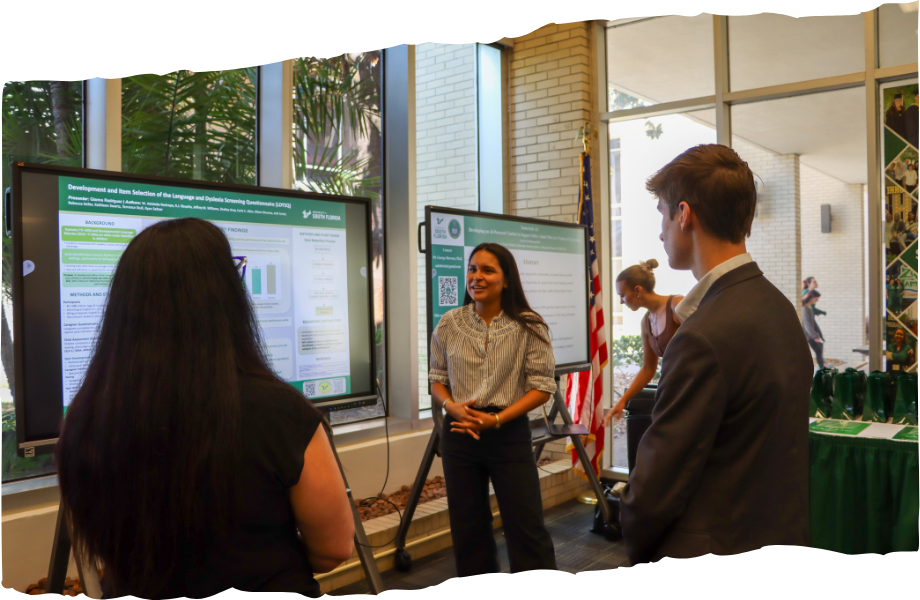
CBCS faculty are tackling some of society’s most pressing challenges through research that ranges from an expansive clinical trial aimed at delaying the onset of dementia to evaluating a culturally tailored caregiver education program, examining the connection between positivity and heart health, conducting behavioral health system gap analysis and identifying critical gaps in business cybersecurity practices.
In addition, a new center dedicated to advancing scientific understanding of the complex relationship between substance use and mental health — the Darryl E. Rouson Center for Substance Use and Mental Health Research — was established by the USF Board of Trustees in September 2025.
Innovating for a better future
Researchers are harnessing technology to improve lives. Examples of this work includes developing a system that delivers personalized speech therapy outside of traditional clinical settings, creating an AI-driven forecasting model that has been associated with a 20% reduction in crime and designing a tool that analyzes facial movements to help clinicians identify PTSD in children and adolescents.
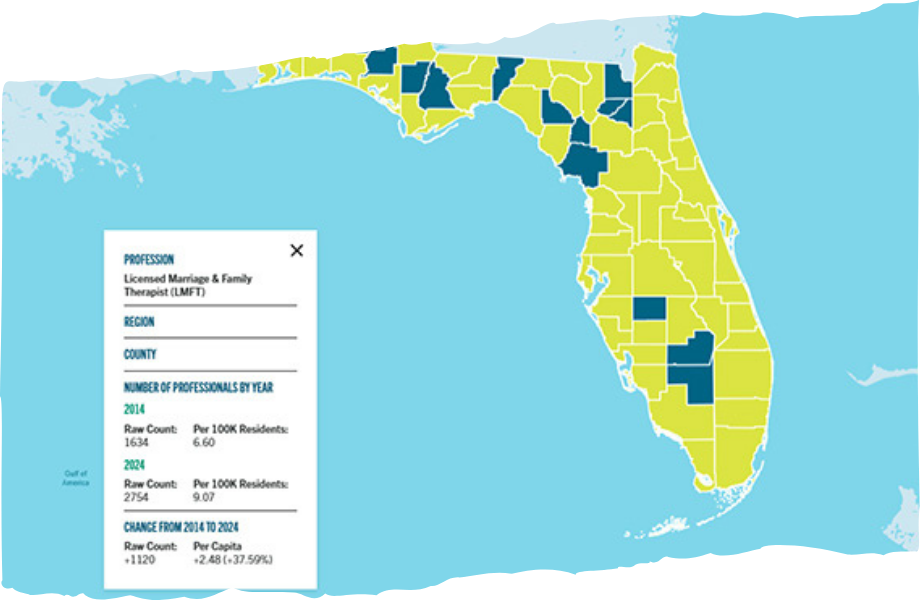
The Florida Center for Behavioral Health Workforce launched the state’s first interactive dashboard that shows current and projected behavioral health workforce supply and demand. By making data easily accessible, policymakers, organizations and community leaders have the information needed to plan systems, evaluate programs and investments, and inform policy decisions.
Leading conversations that matter
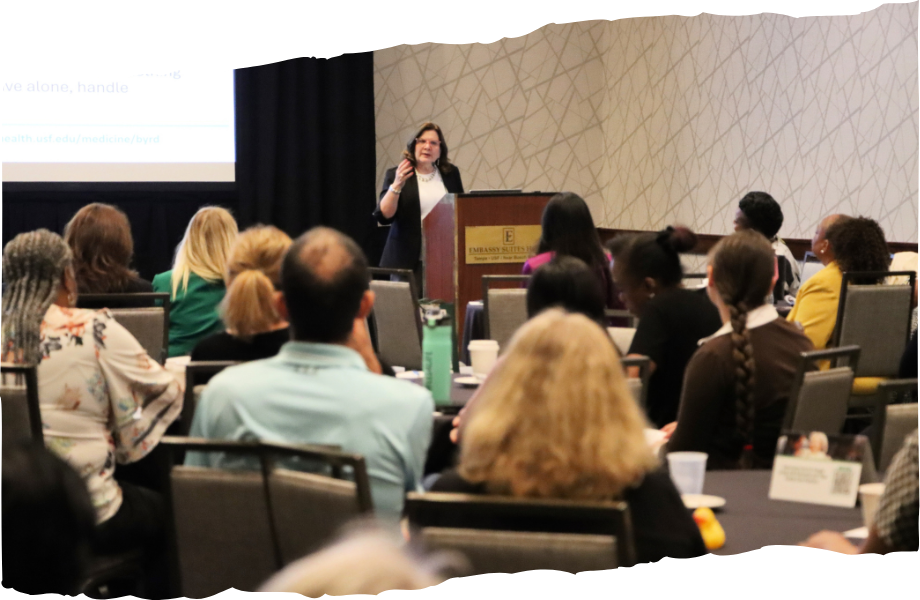
Community impact is a hallmark of the USF College of Behavioral and Community Sciences. Through its centers, institutes and programs, CBCS hosts dozens of events and conferences each year that expand knowledge, foster collaboration and strengthen communities.
This year, those efforts included a conference focused on improving care services and support for dementia patients and caregivers, a global initiative to help educators better support children with autism, a conference on social and emotional development, a colloquium to explore strategies for growing a sustainable behavioral health workforce, a training institute on medications and mental health services used to treat drug and alcohol addiction, a conference on peer support within the practices of mental and community health, and a performance in which students shared their lived experiences with mental illness and substance use disorder as part of an effort to reduce stigma.
Making a local and global impact
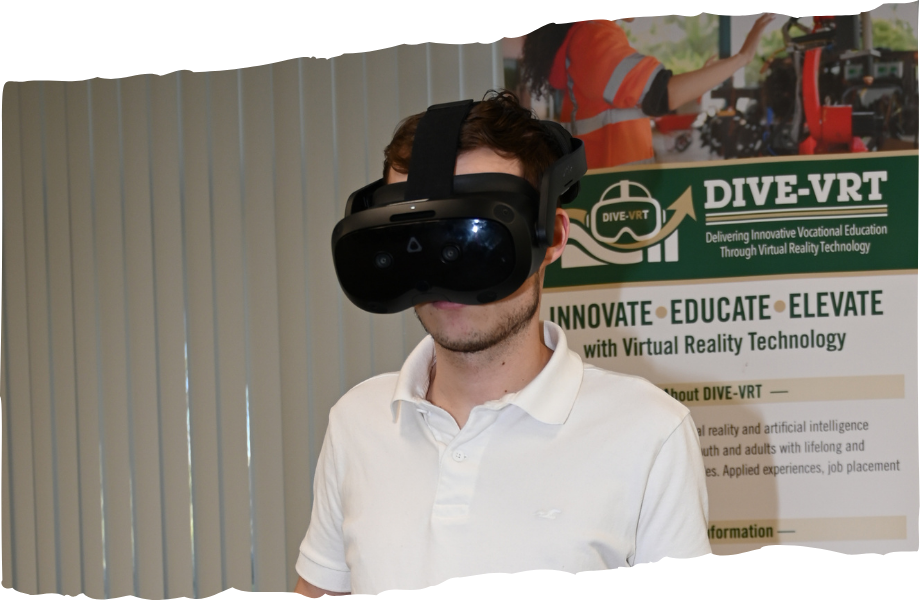
CBCS also continues to create opportunities that transform lives. A groundbreaking program that uses virtual reality to train young adults with disabilities for high-demand careers celebrated the graduation of its inaugural cohort, opening doors once thought out of reach. Meanwhile, another initiative that trains teachers and school-based board-certified behavior analysts to support students with severe emotional and behavioral disorders began recruiting.
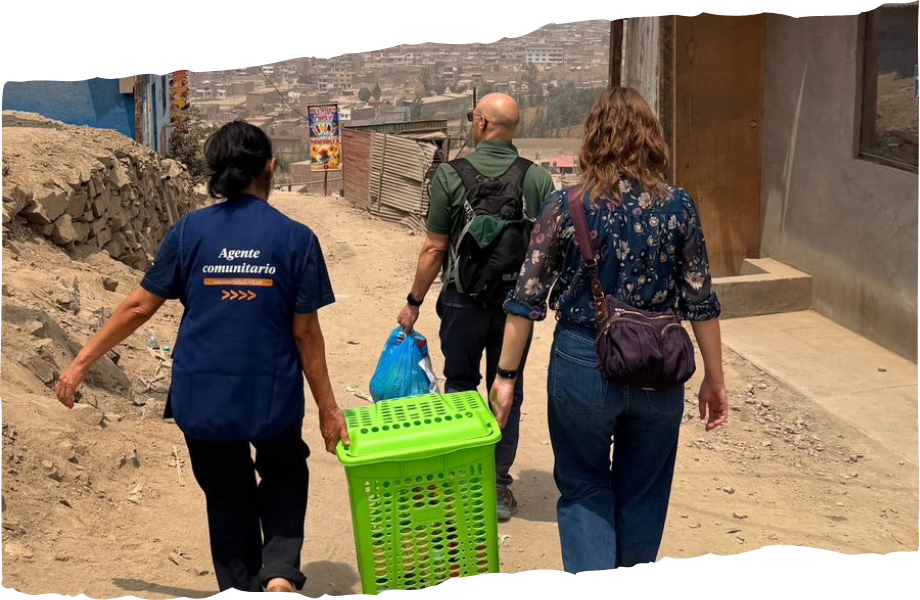
Beyond Florida, researchers are building international partnerships to improve mental health outcomes for older adults, integrate traditional health beliefs into health services in Peru and collaborating with students and faculty in the Philippines.
Creating pathways to success
CBCS continues to expand opportunities for students through innovative academic programs. One new offering is the Bachelor of Science in Computer Science and Criminology, a collaboration with the USF Bellini College of Artificial Intelligence, Cybersecurity and Computing. The program will launch in August 2026 and will prepare students to address the complex challenges of modern criminology.
Students are also seizing opportunities beyond the classroom. This year, they earned prestigious fellowships in audiology and global mental health, advocated on Capitol Hill for strategies to improve care for individuals experiencing homelessness, conducted impactful research, and participated in community projects and programs such as the Florida Center for Behavioral Health Workforce's NextGen Mentoring Program, which prepares students for behavioral health-focused graduate study.
At CBCS, every breakthrough, partnership and service created this year reflects our unwavering commitment to solving complex challenges and building a better future for individuals, families and communities at home and around the world. The momentum we have built together will continue to drive meaningful change for years to come.
Dean Julie Serovich, PhD