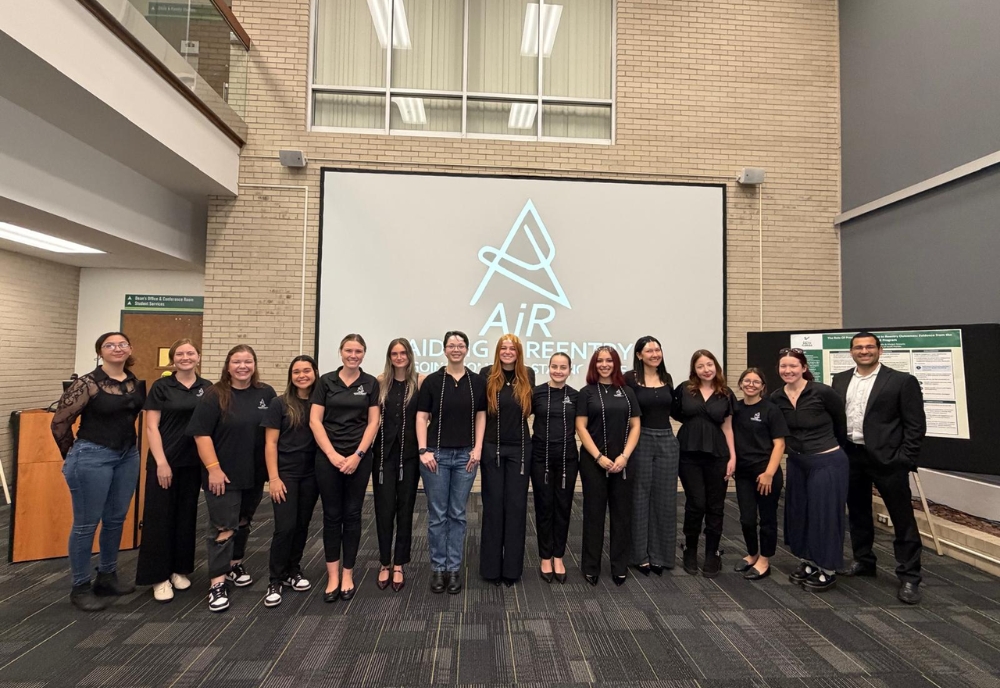
The Aiding in Reentry (AiR) team gathered in the MHC atrium on Friday, May 1, for an end-of-semester celebration recognizing the program’s achievements and continued growth. The event brought together undergraduate and graduate students, faculty and supporters from the Department of Criminology to reflect on the impact of the initiative and celebrate another successful semester.
AiR is an employment-focused prison reentry program that provides incarcerated individuals with practical tools and support as they prepare for release while also offering USF students meaningful, hands-on experience in the field of criminal justice. Currently operating in two state prisons, the program is led by faculty and graduate students who facilitate a 13-week course addressing common barriers to successful reentry, including financial management, emotional regulation, transportation, housing and employment. Participants complete the program with a personalized reentry plan, professional resume and certificate of completion.
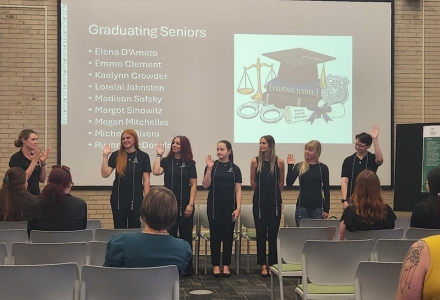
Department of Criminology graduates receive commencement cords in recognition of their outstanding service in the AiR program.
At the same time, AiR serves as an undergraduate learning experience, giving students a deeper understanding of the challenges individuals face after incarceration. Through the course, students take on the role of case managers, working directly with incarcerated participants to develop individualized reentry plans and resumes. This experience allows students to build practical and research-based skills while making meaningful contributions to the community and preparing for future careers in criminal justice and related fields.
Since launching as a pilot program in summer 2024, AiR has served more than 400 incarcerated individuals across six cohorts, with a seventh cohort set to begin in the fall. More than 250 USF students have also participated, gaining community-engaged and research-driven experience that strengthens both their academic and professional development.
Beyond direct service, AiR also functions as a long-term research initiative. With participant consent, the program includes ongoing follow-up after release to better understand reentry outcomes and identify strategies for improving support systems. This component gives students valuable opportunities to participate in applied research with direct real-world impact.
The continued success of AiR is driven by the dedication of faculty leaders, including Chae Jaynes, PhD, associate professor; Mateus Santos, PhD, associate professor; and Amber Oderinde, MS, assistant instructor and undergraduate coordinator, whose work continues to expand opportunities for students and incarcerated individuals alike.