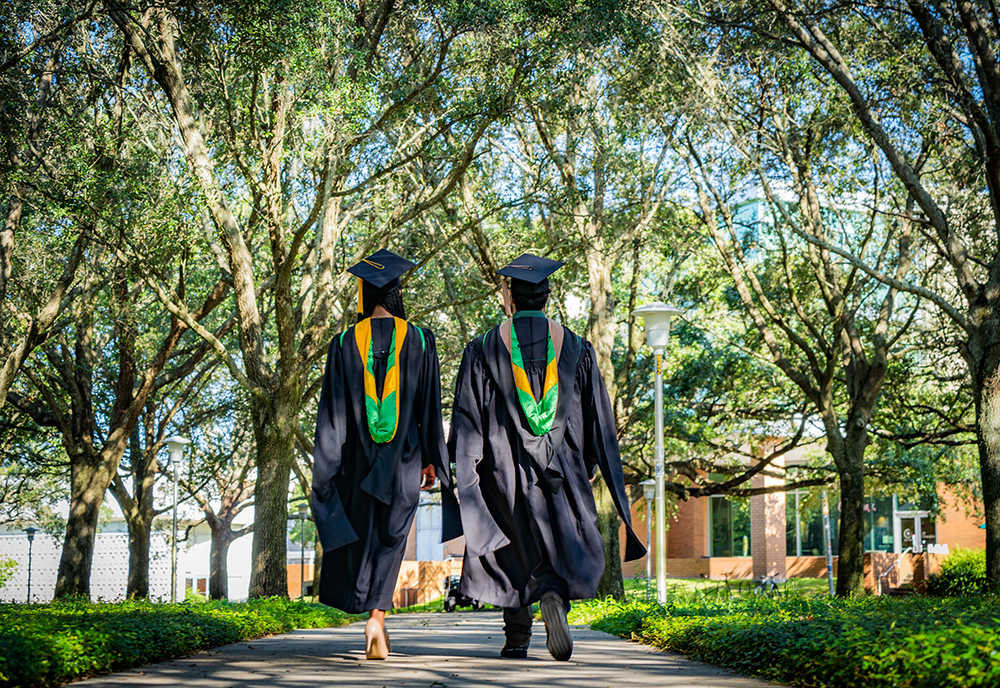
The University of South Florida's Summer 2026 commencement ceremonies will be held Saturday, August 8, in the Yuengling Center on the Tampa campus. We are proud to recognize a few outstanding students from the College of Behavioral and Community Sciences.
Hailey Sheppard
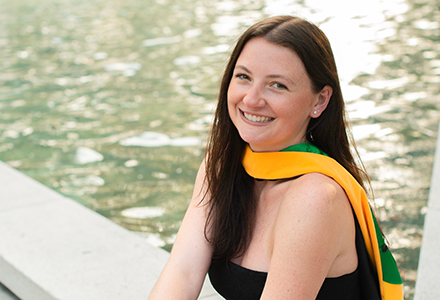
For Hailey Sheppard, communication is at the heart of what makes life meaningful — and helping people rebuild it is what drew her to speech-language pathology.
"Speech-language pathologists play such an important role in a person's life, helping them to rehabilitate or build communication modalities to build relationships with others and gain a better quality of life," Sheppard said.
USF's clinical opportunities in speech-language pathology initially brought Sheppard to the program, but she said the relationships she built with classmates and faculty ultimately defined her graduate experience. "I have made amazing friends in my program and we have supported each other through school and personal experiences outside of the program," she said.
Sheppard faced a significant personal challenge during her final semester at USF. After experiencing severe migraines for the past year, an MRI scan revealed a tumor on her pineal gland, along with a diagnosis of migraines with aura, a recurring headache preceded or accompanied by temporary neurological symptoms such as visual disturbances, tingling sensations or speech difficulty.
She completed her final semester remotely, with professors accommodating her limited tolerance for screens. "There is no way I would be able to push through this like I am without the support of my family and friends and the kindness of my professors," Sheppard said.
Beyond that support system, she found comfort in dance after learning she had a tumor. "Just moving my body made my mind and my body feel happier despite everything going on," she said. "It also helped me learn to never take anything for granted, but especially your health."
Sheppard completed her full-time externships at Moffitt Cancer Center and Johns Hopkins All Children's Hospital, where she said she grew both as a clinician and as a person. Those experiences left her with a passion for working with both children and adults. After graduation, she will move back to Jacksonville and begin her clinical fellowship year as a pediatric speech-language pathologist at North Florida Therapy Associates.
Lucy Gates
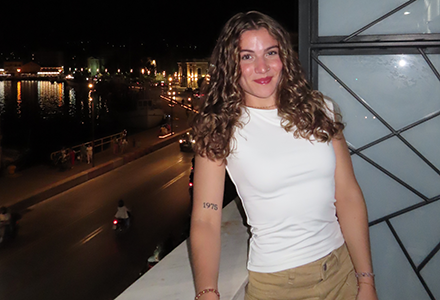
Watching her older sister struggle with depression and anxiety — and later navigating her own diagnosis of major depressive disorder — set Lucy Gates on a path toward behavioral healthcare.
"It was from that experience that I really developed a passion for supporting people in times of crisis," Gates said. "My hope is for people who experience mental health issues similar to what my sister and I faced to have a better understanding of their illness, are better equipped to manage it, and have access to resources that will prevent further psychological or physical harm to themselves or their loved ones. And most importantly, I would like to help people understand that their mental health issues do not define them."
Gates expected to follow in her parents' footsteps and enroll at Florida State University. But after being accepted to USF with a Director's Award scholarship, the choice became clear. She started as a psychology major before learning that USF offered one of the few dedicated behavioral healthcare programs in Florida.
"I came to USF having no idea what I wanted to do professionally, and I am leaving so confident in my plans." — Lucy Gates
While earning her bachelor's degree, Gates had the opportunity to study abroad with the USF Greece Mental Health, Substance Use, Trauma and Recovery Program, a 21-day trip spanning five cities and islands. Through visits to health service organizations, Gates and her classmates learned about the housing, psychological, academic and career services available to unaccompanied minors seeking asylum and had the chance to speak with some of the children through a translator.
"Mental health does not exist in a bubble, so it amazed me how these organizations were able to take a holistic approach to helping these children who had very unique needs," she said. "I will take the lessons of cultural sensitivity, compassion and resilience with me not only to my future career, but to my personal life as well."
As part of her Behavioral Healthcare Field Experience course, Gates completed a field placement with AMIkids Pinellas, a day-treatment and education facility for youth in the foster care system who also face behavioral or delinquency issues. Shadowing a licensed clinical social worker and care coordinator, she said she learned about the challenges these youth face as a result of child welfare and juvenile justice involvement and the coordination it takes to provide their care.
The internship reshaped her plans for the future. Gates will begin a Master of Social Work program this fall, with hopes of working with children involved in the child welfare or juvenile justice systems and eventually earning her clinical licensure.
"Going into the internship, I had a completely inaccurate view of what the social work profession does and realized it has a much wider scope," she said.
Those experiences gave Gates more than practical skills — they gave her confidence in her path ahead. "I came to USF having no idea what I wanted to do professionally, and I am leaving so confident in my plans."
Jocelyn Jarvis
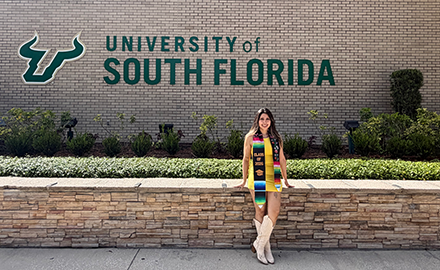
Jocelyn Jarvis has always been drawn to a deceptively simple question: why do some people have better opportunities to live healthy lives than others?
"That curiosity eventually became a passion for studying health disparities and developing research that can help improve the well-being of underserved communities," Jarvis said. "I wanted a career where I could combine research with real-world impact, and studying behavioral and community sciences gave me that opportunity."
Jarvis found that the most rewarding part of her time wasn't her own accomplishments but mentoring undergraduate students.
"Watching students develop confidence in research, discover new interests and grow into independent thinkers has been incredibly fulfilling," she said. "Some of my favorite moments have been seeing students present their first poster, get accepted into medical school or realize they were capable of more than they thought."
She points to faculty mentors Linda Callejas, PhD, and Marilyn Stern, PhD, as major influences on her development as a researcher — with Callejas shaping how she approaches community-based research and qualitative methods, and Stern guiding her in research design and translating science into practice.
"Together, they have shaped me into both the researcher and professional I hope to become," Jarvis said.
Jarvis's dissertation examined food insecurity among college students — the first research project she led independently from start to finish, including developing research questions, designing the survey, and collecting and analyzing data. Her work focused on the psychological and social factors that influence whether students disclose food insecurity and seek out available resources.
"While food insecurity on college campuses is increasingly recognized, many students who need help never seek assistance," she said. "I hope this work helps universities create more supportive environments where students feel comfortable seeking help."
Jarvis will join Pennington Biomedical Research Center at Louisiana State University as a postdoctoral fellow through the NIH-funded T32 Training in Obesity Research program, expanding her research to examine food insecurity's relationship with childhood obesity and family health.
"There won't be one day when you suddenly wake up and feel like you've 'made it' or that you finally know everything," she said. "It's a process of trial and error, learning from mistakes, asking questions and continuing to grow."
Alison Brooke Boyd
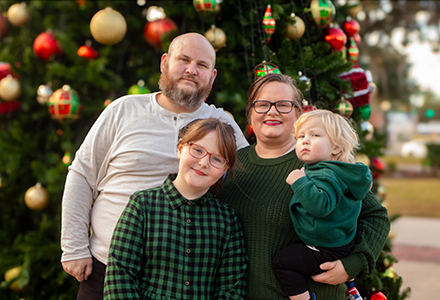
After nearly a decade of practicing law as a child welfare attorney, Alison Brooke Boyd realized her law degree alone wasn't enough to fully advocate for the children and families she represents.
"With my graduate degree in child and adolescent behavioral health, I am able to more confidently recommend appropriate services and interventions to strengthen families and ensure child well-being while involved with the dependency system," Boyd said.
Boyd searched for years for a graduate program that would support both her professional work as a child welfare attorney and her personal role as a foster parent, while offering flexibility to continue in both. USF's program was the only one in the state that met all her goals.
Boyd said her work and her home life inform each other in ways that keep her grounded. "Cases aren't just numbers on a sheet to me; I see how these stories unfold in real time," she said. "I can never forget who I am advocating for and why I do what I do, because I'm putting them to bed every night."
She credits her faculty mentor, Jessica Rice, PhD, with providing the guidance and support that helped her reach graduation.
"I see daily in my work as a child welfare attorney and in my home as a foster parent how this program of study has better abled me to serve vulnerable children and families." — Brooke Boyd
For now, Boyd plans to continue in her current roles as a child welfare attorney and foster parent. Down the road, she hopes to find a nonprofit offering wraparound support to children and teens in foster care, providing educational, social and therapeutic stability.
Despite everything she's accomplished, Boyd deflected the credit entirely. "People often hear what I do and think I'm something special. I'm truly nothing special. Anyone can do what I do," she said. "The truly special people are the children I work with and love in my home. They are the real superheroes."
Julianna Moura
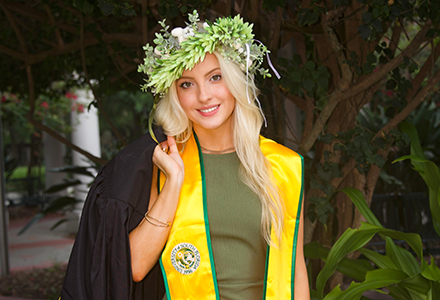
When Julianna Moura lost her grandmother to Alzheimer's disease, she saw how urgently better treatments are needed. That experience sparked a passion for research that led her to pursue a graduate degree in applied aging studies with a focus on psychiatry and behavioral neuroscience.
During her graduate studies, Moura contributed to clinical research involving individuals living with severe mental illness who had exhausted many available treatment options. She said few experiences have been as meaningful as watching patients find relief.
"I met people who had spent years searching for relief, often after trying countless medications without success," she said. "Through clinical research, I had the privilege of watching some of those same patients regain hope and enjoy life again. There is nothing more rewarding than witnessing that transformation."
Moura's research was presented at the International Conference on Psychedelic Research in the Netherlands, sharing interviews with mothers who experienced postpartum depression during a clinical trial evaluating psilocybin treatment. "Listening to women describe feeling present with their children again, reconnecting with their families and rediscovering joy after living through postpartum depression was incredibly meaningful," she said.
For Moura, those conversations reinforced the human impact behind scientific research. "Research often focuses on numbers and clinical outcomes, but hearing these personal stories reminded me why I love working in this field."
She also contributed to a study published in the journal Alzheimer's & Dementia that explored using artificial intelligence and speech analysis to detect Alzheimer's disease earlier. Moura hopes the research could one day expand access to screening and give families more time to plan. Together, the two projects reflect the type of research she hopes to continue throughout her career.
Looking ahead, Moura plans to continue building a career in clinical research, particularly in psychiatry and neuroscience. "I hope to spend my career contributing to discoveries that make a real difference in people's lives and being part of work that's bigger than myself," she said.
Thomas Foth
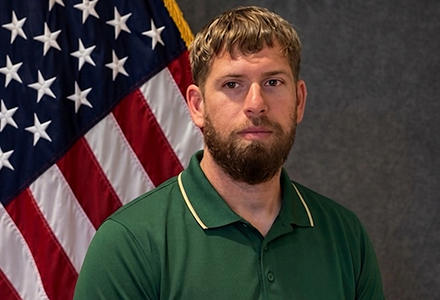
Six years of service in the U.S. Army, two prior technology degrees and a family touched by identity theft all pointed Thomas Foth toward one goal: using his skills with computers to continue protecting people, even after his time in uniform ended.
"I want to contribute every way I can to the battle against cybercriminals," Foth said.
A professor from his bachelor's program at Keiser University encouraged Foth to consider USF, which led him to the university's Master of Science in Cybercrime with a digital forensics concentration. As a Florida native, he said USF's reputation made the decision easy.
Foth said the knowledge he gained from his professors, particularly Thomas Hyslip, PhD, helped inspire a research project focused on how digital forensics could be applied within Florida's adoption and foster care system to help protect children from exploitation. He plans to expand the research into a proposal for the Florida Legislature to consider.
"I want to contribute every way I can to the battle against cybercriminals." — Thomas Foth
Foth chose the program's online format for the flexibility it offered, allowing him to continue working as an IT field technician for the School District of Manatee County and spend time with his wife and children while pursuing his degree. He began this chapter of his education a little over two years after leaving the Army, where he served as an Air Defense Artillery soldier.
"Such a job in the military does not provide an easy transition into the civilian world," he said. It took time, determination and commitment to begin his academic journey without knowing where to start. "Slowly over time and continuously working through the process, achieving degree after degree and job after job, I achieved what I never thought would have been possible for myself."
Victoria Culhane
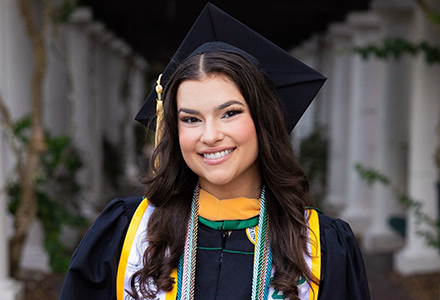
Victoria Culhane knows firsthand what it means to have someone go above and beyond to invest in a young person's future — an experience that inspired her to build a career doing the same for others.
"I would not be who I am or where I am today if it were not for the people who went beyond expectations to invest in me," Culhane said. "Through those adversities, I found strength in my struggles, which ultimately led me to my passion and purpose: being that person for youth. Every child deserves not only to survive, but to have the opportunity to thrive."
Throughout her Master of Social Work journey, Culhane said she learned that growth comes not from avoiding setbacks, but from embracing them with the support of mentors.
"I am leaving this program a proud Bull and a stronger social worker, leader and person because of the faculty, mentors and peers who invested in and shaped me along the way," she said.
Inspired by the support she once received, Culhane founded Brighter Times, a nonprofit organization she plans to relaunch to help close funding gaps in school social work. Through initiatives such as Sponsor a Senior, which covers the cost of milestone celebrations, and the GO Program, which removes barriers to school attendance, the organization aims to help more students succeed.
"By financially empowering school social workers, we hope to improve student and family outcomes while creating greater opportunities for students to thrive," she said.
This fall, Culhane will begin her career as a full-time school social worker at Schmidt Elementary School. She hopes to work at the district level before pursuing leadership and education policy roles, including superintendent or school board member. Beyond social work, Culhane has also used her platform to advocate for young people. Crowned Miss Tampa in 2022, she said the experience reinforced the importance of using her story to inspire others.
"In order to go further, you must have the gumption to be audacious in asking for more while doing so with authenticity and humility," she said.