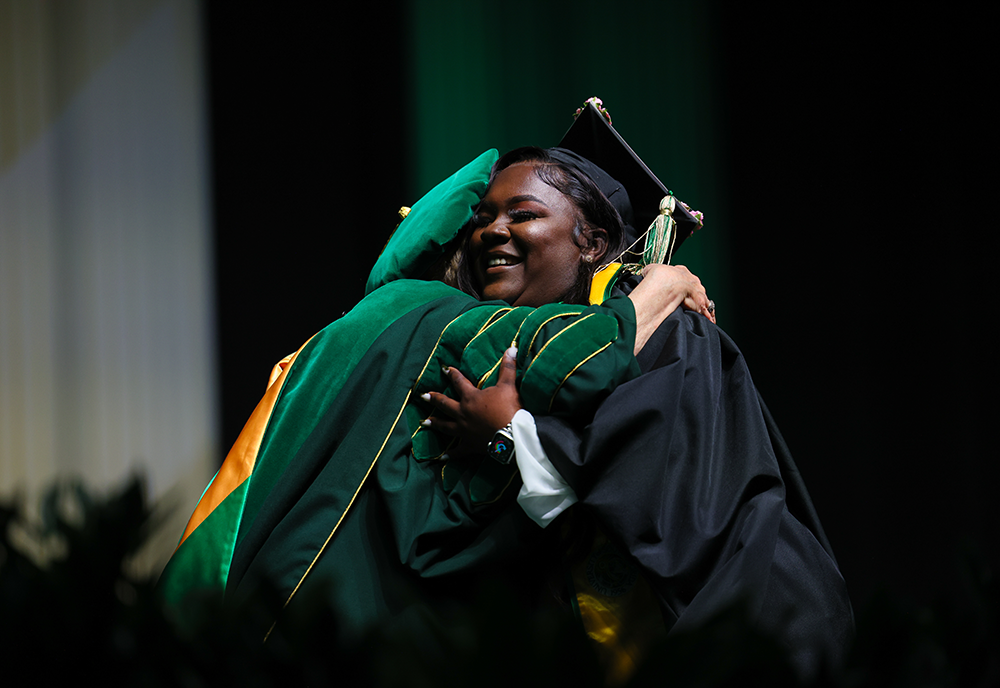
As they prepare to begin the next chapter of their careers, graduates from the University of South Florida's applied behavior analysis program are reflecting on the faculty members whose mentorship, encouragement and expertise helped shape their success.
Zachary Crutchfield
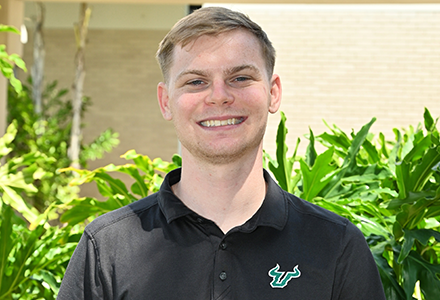
Long before Zac Crutchfield knew the science behind behavior analysis, he was already putting its principles into practice.
As a basketball coach for Special Olympics and supervisor of his hometown's therapeutic recreation program for individuals with disabilities, Crutchfield found himself using strategies that would later become the foundation of his academic career.
"Without knowing it, I was employing behavior analytic principles to teach basketball and to support the flow of recreation events," Crutchfield said.
During his second year at Auburn University, Crutchfield began exploring career options with a psychology degree. A conversation with one of his professors introduced him to the field of behavior analysis. "My research into the best ABA graduate programs led me to USF's program," he said.
"All of the faculty in the program are wonderful and have tremendously shaped who I have become as a student, practitioner and person." — Zac Crutchfield
Crutchfield will graduate with a Master of Science in Applied Behavior Analysis (ABA). He credits the program's faculty for creating a supportive learning environment and says his experience was especially shaped by the mentorship of his thesis advisor, Catia Cividini-Motta, PhD, BCBA-D, associate director of the ABA program.
"All of the faculty in the program are wonderful and have tremendously shaped who I have become as a student, practitioner and person," Crutchfield said. "Especially Dr. Cividini-Motta has been instrumental to my development as a budding scientist-practitioner. I realized how hard-working and passionate she is about behavior analysis. She is an outstanding model for what success looks like in this field."
Following graduation, Crutchfield will remain at USF to pursue a doctorate in ABA under the mentorship of Cividini-Motta. His research interests include automatically reinforced behavior, the assessment and treatment of severe challenging behavior, and functional analysis methodology. He also looks forward to expanding his teaching experience.
"Zachary consistently demonstrates exceptional academic achievement, professionalism and collegiality," said Cividini-Motta. "We are incredibly proud of his accomplishments in the master's program and are confident that he will excel in our doctoral program and achieve great success in his future academic career."
Reflecting on his graduate experience, Crutchfield encourages incoming students to focus on more than academic performance. "Success isn't just getting good grades," he said. "It is also making connections with faculty and peers, establishing a strong understanding of radical behaviorism, and learning to have fun with the process of developing yourself as a scientist-practitioner."
Madeline Risse
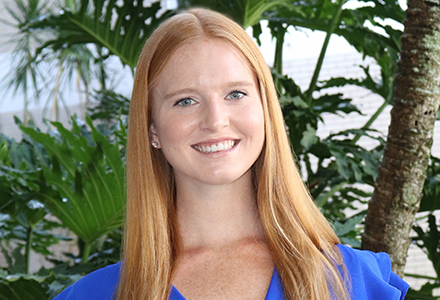
For Madeline Risse, a career in education always seemed inevitable. What began as teaching in the public school system has evolved into a career dedicated to preparing future scholars and advancing research in behavior analysis.
Risse's experience as a special education teacher for elementary students with severe emotional and behavioral disorders sparked her interest in behavior analysis. Working directly with students and experiencing the challenges teachers face firsthand shaped the research agenda she now carries into a tenure-track faculty position in higher education.
"I grew extremely interested in the science of behavior when I learned how much my behavior mattered, and that fostering a positive classroom environment was as important as the lessons I prepared," Risse said.
That passion led her to enroll in the University of South Florida's doctoral program in applied behavior analysis. Risse chose USF because of its opportunities for school-based collaboration and its strong emphasis on preparing doctoral students for careers teaching behavior analysis.
Risse successfully defended her dissertation this summer and credited her faculty advisor, Kwang-Sun Cho Blair, PhD, BCBA-D, for the instrumental role she played throughout her doctoral journey.
"Advising Maddie has been one of the genuine pleasures of my career," Blair said. "She turned hard-won classroom experience into research on a persistent challenge in our field: staff training that does not last. She is thoughtful, persistent, and the kind of doctoral student who makes everyone in the lab better. She will be an outstanding teacher, scholar and leader."
What stands out most, Risse said, is Blair's unwavering kindness and commitment to her students. After Risse lost her home during Hurricane Milton in 2024, Blair coordinated university support to assist with her family's recovery and provided meals during the difficult period.
"Her holistic approach to mentorship, including preparing food for each lab meeting and hosting gatherings to celebrate milestones, has been such a gift throughout my time at USF." — Madeline Risse
"She supported me personally and academically every step of the way," Risse said. "Her holistic approach to mentorship, including preparing food for each lab meeting and hosting gatherings to celebrate milestones, has been such a gift throughout my time at USF."
Risse also expressed appreciation for the applied behavior analysis program's staff and faculty. "I'll miss the team of dedicated staff, particularly Tracy-Ann Gilbert Smith, and the opportunity to collaborate with esteemed faculty whose expertise spans so many disciplines," she said.
Risse will receive her doctorate in applied behavior analysis and will join Monmouth University as a tenure-track assistant professor. "I am thrilled to have the opportunity to extend my line of research focusing on optimization of training technologies and to continue teaching aspiring educators and behavioral practitioners," she said.
Looking back on her experience, Risse encourages future students to embrace opportunities for growth. "In a field as fruitful as behavior analysis, opportunities are endless, so let your passion lead the way," she said.
Emma Walker
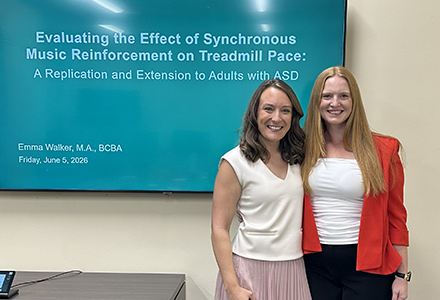
Emma Walker and Madeline Risse
For Emma Walker, choosing a doctoral program in applied behavior analysis was about finding the right mentor and preparing for a career in academia.
Interested in applying behavior analytic principles to health and wellness, including medical compliance and physical activity, Walker sought a faculty mentor whose research aligned with those interests. She found that opportunity at USF under the mentorship of Raymond Miltenberger, PhD, BCBA-D, director of the applied behavior analysis program.
"Dr. Miltenberger was at the top of my list," Walker said.
Equally important was finding a program that emphasized teaching and mentorship alongside research. "I was also looking for a program that focused on developing teaching and mentorship skills for a future in academia," Walker said.
That decision led to four years of research, teaching, and professional development. Throughout the program, Miltenberger played a pivotal role in shaping Walker's research and teaching skills.
"He has provided numerous opportunities to develop my own line of research. He has also guided me through teaching and mentorship during my four years at USF." — Emma Walker
"Dr. Miltenberger has been a huge part of my success at USF," Walker said. "He has provided numerous opportunities to develop my own line of research. He has also guided me through teaching and mentorship during my four years at USF."
Looking back on her doctoral experience, Walker said the program provided exactly
the preparation she had hoped for.
"I learned a lot about the type of instructor, mentor and researcher I want to be,"
Walker said. "I developed skills related to managing a large workload, including teaching,
research, mentorship and service. I built professional relationships with other doctoral
students and faculty in our field. I feel as though I am walking away with the exact
experiences I came here for."
Following graduation, Walker will begin a postdoctoral fellowship at the State University of New York Downstate Health Sciences University in Brooklyn. She will teach and mentor online master's students in behavior analysis while helping grow the program.
"Emma was a fantastic doctoral student and productive researcher," Miltenberger said. "She conducted outstanding research with me, served as a project director on a series of studies and helped mentor other students in my lab. She was a pleasure to work with."
Reflecting on her graduate experience, Walker said, "I walk away from this program without regretting any of the countless hours I spent dedicated to research opportunities, studying and supporting students. You will take away exactly what you put into a graduate program."
Julia Restivo

In 2024, Julia Restivo found herself at a crossroads. Working as a registered behavior technician, she was experiencing burnout and questioning whether pursuing a graduate degree in applied behavior analysis was the right path. She knew she wanted to continue supporting students with developmental and learning disabilities in school settings but wasn't sure how.
A conversation with her supervisor changed her perspective. "Her words, 'How will the field ever improve if the people who care don't stick around?' have stayed with me every day of the program and continues to guide my practice and outlook," Restivo said.
As she began researching graduate programs, Restivo established two criteria: an online format and a first-time BCBA examination pass rate of at least 80%. Her search led her to the University of South Florida's online Master of Arts in Applied Behavior Analysis program.
"I loved the scientist-practitioner approach of USF's program," Restivo said. "I also met with Dr. Anthony Concepcion before applying and really enjoyed our conversation."
Throughout the program, Restivo said several faculty members played an important role in her development, including Brianna Laureano, PhD, BCBA-D, Emma Walker, and Madeline Risse. "Dr. L is amazing and so knowledgeable about ABA," Restivo said of Laureano. "I enjoyed her classes and her interactive teaching style."
I miss having a class with her, but I know I could email her and she would meet with me whenever I needed" — Julia Restivo
Restivo said Laureano always made time to answer questions and discuss potential career paths. "I miss having a class with her, but I know I could email her and she would meet with me whenever I needed," she said.
Walker helped Restivo build a strong foundation in behavior analysis. "Emma helped me integrate into the program and was paramount in my development as a behavior analyst and my understanding core concepts," Restivo said.
She also credited Risse with providing consistent encouragement throughout the program. "Madeline has been a core part of my experience here," Restivo said. "She is so supportive, and her feedback is constructive and informative."
Restivo will graduate with a Master of Arts in Applied Behavior Analysis after earning the highest cumulative grades recorded in the history of the online program. While proud of the academic accomplishment, she said her greatest achievement was learning to balance graduate school with her personal well-being.
"I can do so much more than I thought," Restivo said. "In undergrad, I struggled with balancing school, a social life and my physical and mental health. Going into graduate school, I knew I had to make my health a priority."
Anthony Concepcion, PhD, BCBA-D, online program chair, said Restivo distinguished herself through her intellectual curiosity and commitment to learning.
"Julia stands out as one of the most intellectually engaged students I have had the privilege of teaching," Concepcion said. "She consistently pushes her peers and instructors to think more deeply, drawing on a depth of understanding that goes far beyond the assigned materials. I have no doubt she will make a significant mark in this field, and I look forward to following her career after graduation."
After graduation, Restivo plans to work as a board-certified behavior analyst in a clinical setting before deciding whether to pursue a doctorate.
Emely Cabrera Falcon
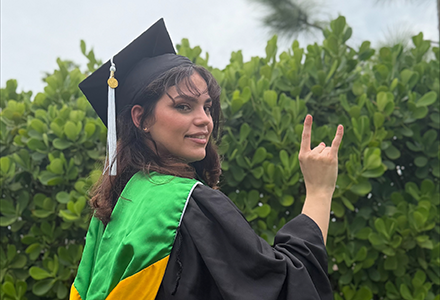
When Emely Cabrera Falcon moved from Cuba to the United States four years ago, she was searching for new opportunities and a better future. The transition brought challenges she never anticipated, but those experiences ultimately shaped her path to a career in applied behavior analysis.
"Moving to the US at 25 felt like being born again," Cabrera Falcon said. "I had to adjust to building a life away from most of my family, with my father and younger sister still living in Cuba."
After earning a bachelor's degree in English, German and Spanish translation in Cuba, Cabrera Falcon had to adapt to a new educational system, unfamiliar technology and a different culture. Completing graduate school in her second language added another layer of difficulty.
"Those experiences taught me resilience, adaptability and the importance of never giving up on a goal," she said.
It wasn't until she arrived in the United States that Cabrera Falcon discovered applied behavior analysis. As she learned more about the field and its impact on individuals with autism and their families, she realized she had found a profession that combined two of her greatest passions: teaching and helping others.
Cabrera Falcon began working as a registered behavior technician three years ago. Wanting to better understand the science behind the practice, she enrolled in USF's online Master of Arts in Applied Behavior Analysis program.
"The online format allowed me to continue working full time while pursuing graduate school, making it possible to apply what I was learning directly to my work with clients," she said.
“My journey has shown me that dreams are achievable through hard work, resilience, and disposition to keep learning, regardless of the obstacles along the way.” — Emely Cabrera Falcon
One of Cabrera Falcon's favorite courses was ABA Basic Principles, which she said transformed the way she understands human behavior.
"It gave me a more practical, compassionate and solution-oriented perspective that continues to influence both my professional practice and my personal life," Cabrera Falcon said. "Basic Principles didn't just teach me behavior analysis; it changed the way I see the world."
Cabrera Falcon credited faculty members Laureano and Concepcion, with making a lasting impact on her academic journey and inspiring the kind of educator she hopes to become.
"Emely represents what can happen when courage, determination and opportunity come together. She came to the United States only a few years ago with ambitious goals, learned English to an exceptional level of fluency, and excelled in one of the most rigorous graduate programs in applied behavior analysis, earning an A+ in every course she completed," Concepcion said. "These accomplishments are extraordinary, and I am incredibly proud to have served as her professor. I look forward to seeing all that she accomplishes throughout her career."
"Beyond teaching behavior analysis, they demonstrated that great professors educate with knowledge, kindness, encouragement and genuine investment in their students," Cabrera Falcon said. "Seeing professionals with backgrounds and values I could relate to succeeding in academia gave me confidence that my own dream is possible."
After graduation, Cabrera Falcon plans to continue developing as a behavior analyst while gaining experience as a clinician. She hopes to eventually pursue doctoral studies and teach at the university level, preparing future behavior analysts while contributing to the field that changed her life.
"When we invest in becoming knowledgeable, caring and well-prepared professionals, we create the conditions for both the people we serve and ourselves to grow, learn and thrive," she said. "The individuals and families we are preparing to serve deserve professionals who are committed to continuous learning, compassion and excellence. They deserve our best, and when we give it, we have the privilege of seeing them grow, learn and reach their own potential."