Faculty, students and alumni from the University of South Florida’s (USF) Applied Behavior Analysis (ABA) program made a strong showing at the Florida Association for Behavior Analysis’ (FABA) 46th Annual Conference, contributing to nearly a quarter of the conference’s presentations and earning recognition for student research.
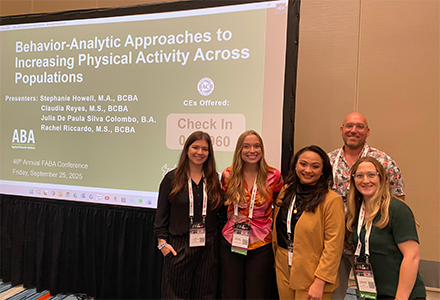
Bryon Miller, PhD, along with students, presented at the FABA conference in Orlando.
The conference, held Sept. 23-26 in Orlando, featured 90 symposia, panels, poster sessions and invited presentations. Of those, 21 included at least one USF student or faculty member serving as a presenter, chair or panelist — about 23% of the conference program.
In total, 29 USF students participated in the conference. Four presented posters, where Aracelis Manosalvas, an alumna of the Master of Science in Applied Behavior Analysis program, received the Most Impactful and Innovative Poster award for her research, “Using Instructive Feedback to Increase Second Language Verbal Skills in a Child with ASD.”
ABA faculty held prominent roles throughout the conference, participating as presenters, panelists and session chairs. Raymond Miltenberger, PhD, BCBA-D, director of the ABA program, served on a panel addressing ways to reduce drowning deaths among young children with autism.
Jennifer Zarcone, PhD, BCBA-D, associate professor, served as a discussant for two symposia and participated in a panel on building research cultures within ABA service organizations. Kevin Murdock, an adjunct faculty member, joined the panel, as well.
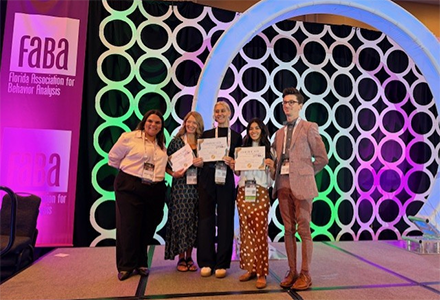
Aracelis Manosalvas (second from right) received the Most Impactful and Innovative Poster award at the Florida Association for Behavior Analysis’ 46th Annual Conference.
Kwang-Sun Blair, PhD, BCBA-D; Catia Cividini-Motta, PhD, BCBA-D; Kimberly Crosland, PhD, BCBA-D; and Bryon Miller, PhD, BCBA-D, also presented, chaired sessions or served as discussants.
Faculty and students further expanded their involvement in the profession through leadership appointments. Zarcone was named a member-at-large of FABA, while Anthony Concepcion, PhD, BCBA-D, and Paige Talhelm, PhD, BCBA-D, were named members-at-large of the Bay Area Association for Behavior Analysis, a local FABA chapter. Prerana Atreya, a doctoral student, was named community representative and student outreach officer for the local chapter.
The conference also provided an opportunity for members of the USF ABA community to reconnect. Faculty members, students, alumni and fieldwork supervisors attended an alumni event that drew approximately ninety people, including about forty alumni.
View the complete list of all presentations by the faculty and students. The program’s presence at FABA reflects the trajectory of growth as it celebrates the 20th anniversary of its program this fall.
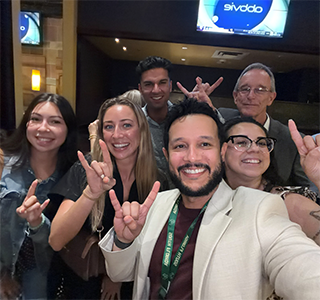
Online MA alumni Alexis Stahl, Madisyn Haney, and Ali Malekpour, Anthony Concepcion, online MA alumna Angelis Contreras, and Raymond Miltenberger at the ABA reunion event.

Ray Miltenberger with alumni and current graduate students of the program at the ABA reunion event.
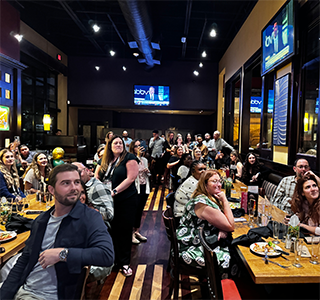
The ABA reunion event had about 90 attendees and full USF and ABA pride were on display. The event provided a great opportunity to reconnect.
Two decades of growth
When the program began in 2006, it offered an in-person master’s degree. Miltenberger joined USF as program director alongside Blair and Crosland, forming the program’s original faculty team.
As the field of applied behavior analysis evolved and demand for trained behavior analysts increased, the program expanded to serve students pursuing a range of professional and academic goals. In 2013, the program added a doctoral degree. The following year, after offering undergraduate courses, an undergraduate minor was introduced. In 2016, the program expanded again with an online Master of Arts in Applied Behavior Analysis and an online registered behavior technician (RBT) training course.
The RBT training course has also achieved national recognition, recording the second-highest pass rate in the country in 2023, according to the Behavior Analyst Certification Board. Revenue from the RBT course helps fund student travel to professional conferences.
Today, the ABA program offers multiple pathways into the field of applied behavior analysis. From entry-level training to advanced graduate education and preparation for academic careers, each pathway is designed to equip students with the knowledge and experience needed for the next stage of their professional development.
Doctoral students develop teaching experience and build research portfolios to prepare for academic positions and help train future generations of behavior analysts, while the master’s programs prepare students through academic instruction and supervised fieldwork for board certified behavior analyst certification. Students who complete the RBT course can pursue entry-level positions and gain experience in the field.
Preparing students for a growing field
The program’s two master’s degrees share rigorous behavior-analytic coursework and professional expectations but offer different training models and experiences.
The online Master of Arts program is an intensive, professionally focused degree that students complete over five consecutive semesters. Evening courses allow students to remain employed in clinical practice while completing graduate coursework and supervised fieldwork. Rather than a thesis, students complete clinical capstone work and direct research projects.
The in-person Master of Science program, by contrast, includes a thesis experience that can lead to research publication, providing students with opportunities to develop their research skills alongside their clinical and academic training.
Demand for the online Master of Arts program has grown each year since it began. In the most recent admission cycle for fall 2026, the program admitted approximately 10% of applicants, reflecting its selectiveness. The online structure allows students to apply what they learn in class directly to their daily work with clients, connecting academic concepts with practical experience throughout the program.
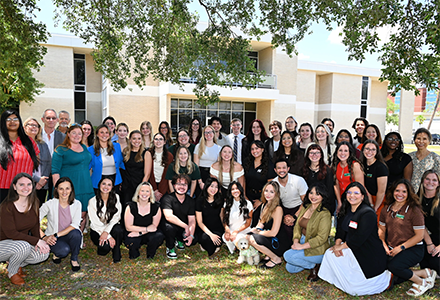
Faculty and students of the Applied Behavior Analysis program during the program's Spring poster session.
“We want our graduates to meet that demand as ethical, thoughtful and highly prepared practitioners who can improve service quality and become leaders in the field,” said Concepcion, online Master of Arts in Applied Behavior Analysis program chair. “I believe USF is helping define what excellent online graduate education in applied behavior analysis should look like.”
National demand for board certified behavior analysts and doctoral-level board certified behavior analysts has also continued to grow. That demand emphasizes the importance of preparing practitioners who can provide effective, ethical services and contribute to the profession’s continued development. The program seeks to develop practitioners who can improve service quality, take on leadership roles and contribute to research, while also preparing future faculty members to educate the next generation of behavior analysts.
Building on 20 years of success
As the program marks its 20th anniversary, its growth has brought recognition beyond the university. Earlier this year, the program received the Enduring Programmatic Contributions to Behavior Analysis award from the Society for the Advancement of Behavior Analysis, recognizing the program’s longstanding contributions to the profession.
For Miltenberger, that recognition reflects the collective work of the program’s faculty and the quality of the education it provides. Its continued success, he said, depends on maintaining that quality while supporting students at every stage of their development.
“My vision for the future is to maintain the quality of our programs to continue serving students at all levels so they can be successful in the workforce and be successful in their pursuit of graduate degrees,” Miltenberger said. “Through our continued success in training students who are effective and ethical professionals, our success in training future faculty members and our success as productive researchers, I hope to see our national reputation as a quality behavior analysis program continue to grow.”
He said the program’s 20th anniversary and its recent professional recognition offer an opportunity to build on that foundation.
“This award speaks volumes about the success of our faculty and the quality of our program, and my goal is to maintain and build on this success in the future,” Miltenberger said.