What began as a classroom design experiment at the University of South Florida could help reshape marine habitat restoration far beyond Tampa Bay. Through the Oyster Restoration Brick project, Judy Genshaft Honors College students and faculty are using 3D-printed clay structures to create habitats for native oysters along seawalls, with hopes of sharing the design for conservation efforts elsewhere.
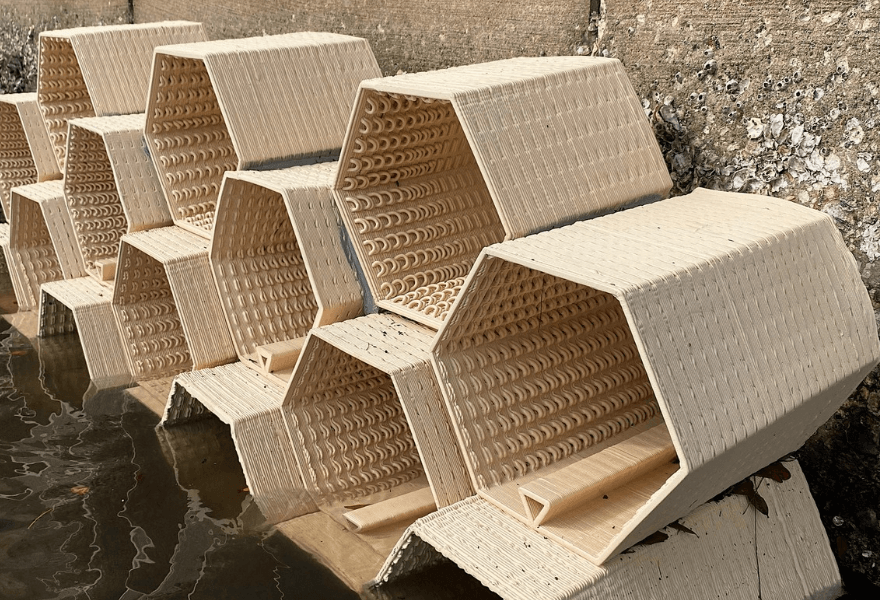
The Oyster Restoration Brick (ORB) project brings together students, faculty, and community partners with a shared goal: restoring native oyster populations by providing habitat along Tampa Bay seawalls. A dwindling oyster population sparked Dr. William Ellis at USF St. Petersburg and Tina Piracci at USF’s Judy Genshaft Honors College to begin the ORB project — an effort to encourage oyster reproduction on otherwise inhospitable seawalls using 3D-printed clay hexa-log structures.
"With clay 3D printing, we're able to replace these habitats and increase the surface area, create loops and interstices, and even implement a propagation strategy," said Piracci. “That way we can move some of the oyster larvae that are developed into spat into other areas as transplant sites. And we're trying to find creative ways to implement these throughout Pinellas County and St. Petersburg.”
The project began in 2022 in one of Piracci’s Honors classes, Art and the Environment. Through student collaboration, the hexa-log design was born and has since been iterated and improved upon in each Art and the Environment course Piracci teaches.
Her classes bring together students from a wide range of majors, from biomedical sciences to computer engineering. Students collaborate to bring diverse disciplinary perspectives into one effective design.
“I think the Honors College is exactly that place where you get to play,” Piracci said. “It's a sandbox, pick up different toys, experiment, and see what you like.”
Piracci and her students encountered limitations to their design, creating opportunities for further innovation.
"It was really a design challenge to try to come up with something that could stack in front of the seawall, that could be within 18 inches of the seawall for permitting purposes, and something that could do wave attenuation, while also having a removable propagation brick,” she said.
The ORB project has now benefited from years of live testing in the water at USF St. Petersburg’s Bayboro Harbor, along with robust data collection.
Thinking Big
Piracci and her students aren’t aiming to keep this project to themselves — they want to share it with the world.
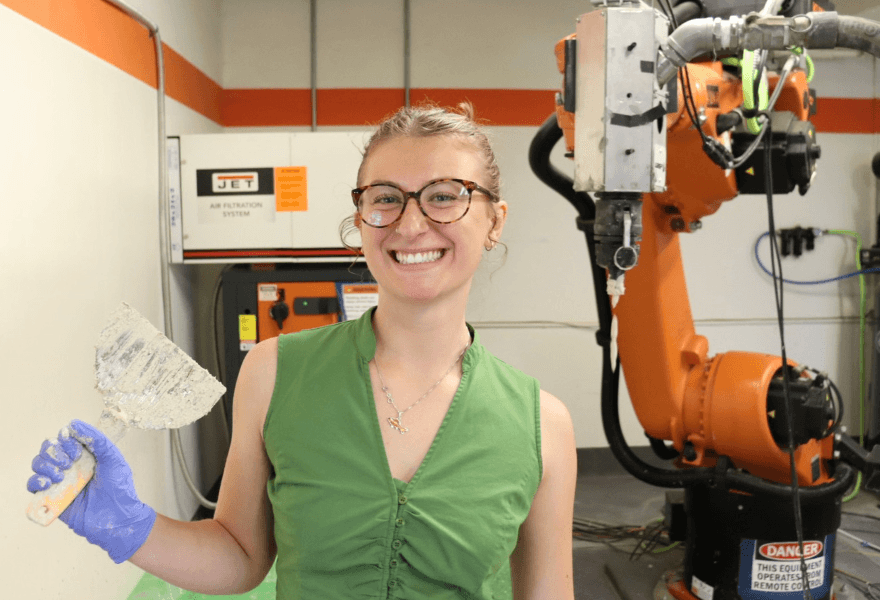
“The design of the project was meant to be something that eventually we can make open source. When it comes to reef restoration and any kind of environmental advocacy, that’s stuff that we shouldn't be keeping to ourselves,” Piracci said.
Student research assistants, including Honors alumna Lily Boyer, have shared the design and project data at conferences such as the 39th Annual Conference on Beach Preservation Technology in St. Augustine, Florida, where organizations including the U.S. Environmental Protection Agency and the Army Corps of Engineers were in attendance.
Boyer, now co-founder of the not-for-profit Habitat Laboratory (Hab Lab), describes ORB as a “special” project because of its potential to expand to ecosystems around the world and help protect wildlife populations beyond oysters.
"Whenever you're creating a scalable project, it's kind of like a seed,” Boyer said. “We're creating the seeds that we can spread out and let them grow across the US and even internationally."
Brick by Brick
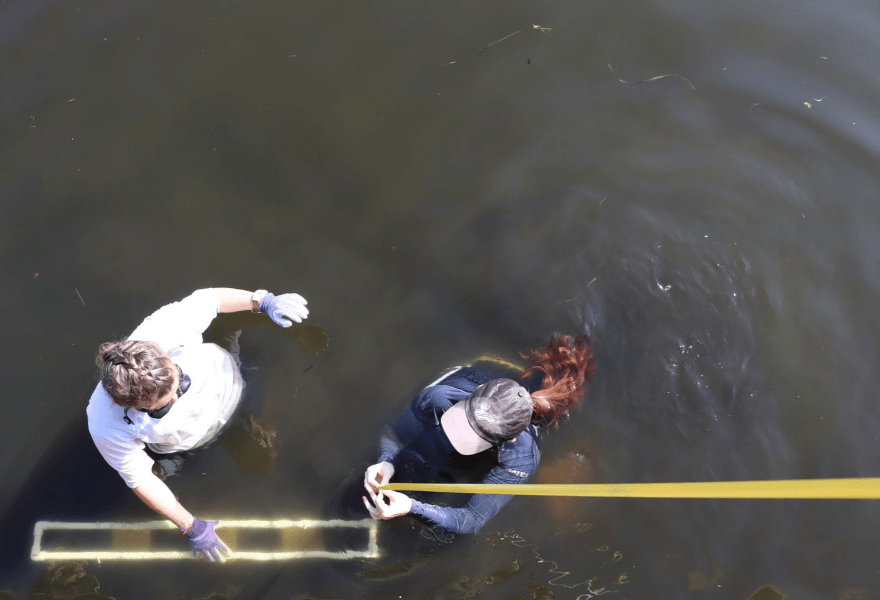
Students in Piracci’s classes have the option to stay involved after their classes end through becoming research assistants and studio tech interns. Now, with the creation of the Hab Lab as a non-profit, alumni too can stay involved beyond their four years at USF.
“It's really difficult every semester to see different students graduate,” Piracci said. "But that's exactly why, Lily and I and others, we're making the Habitat Laboratory a nonprofit. So that way we can have this bridge between the college, the community, students, and alumni.”
Through the Hab Lab, the team hopes to keep the project growing beyond the classroom, giving future students and community partners a way to contribute to oyster restoration.
Honors alum and former tech studio intern Naja Daye said her experience with the project showed her how students can find meaningful ways to contribute to environmental work. Through projects like ORB, students gain hands-on experience while helping develop solutions that could extend beyond USF.
“Just start. There are a lot of people that love and care about the environment that might not know the best place to get started,” Daye said. “You meet other people that care about the environment, and you can find ways to get involved in tangible ways to have an effect.”