How do you build a canoe out of concrete — and then race it? For members of the University of South Florida’s American Society of Civil Engineers chapter, it’s a hands-on engineering challenge that combines design, chemistry, mathematics, teamwork, and a lot of trial and error.
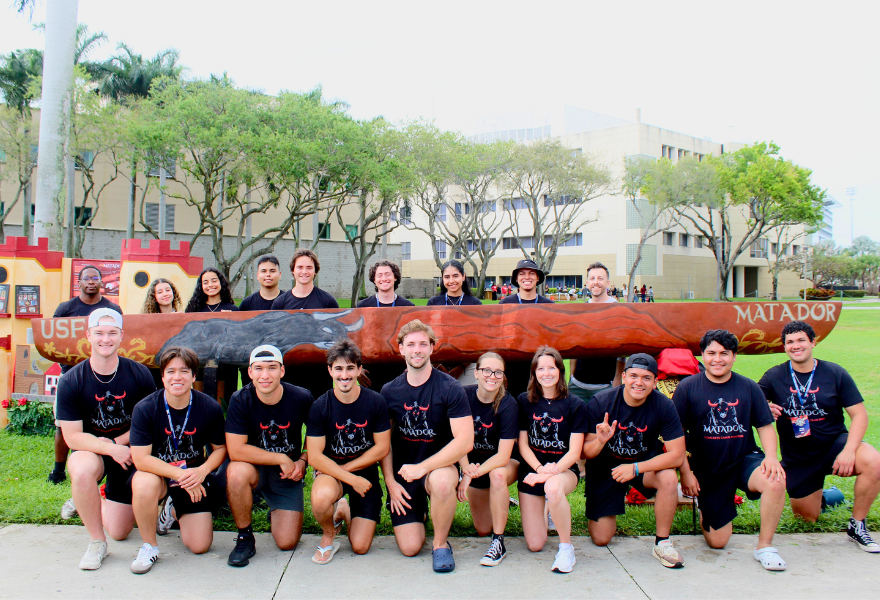
Concrete Canoe is a national competition that challenges students to apply engineering, chemistry, mathematics, and design principles to create a canoe that is strong enough to float and efficient enough to race.
After the Concrete Canoe program at USF lost support and volunteers during the COVID-19 pandemic, students Henry Shedd and Daniel Marola saw an opportunity to bring it back.
Since then, the team has faced the growing pains of rebuilding a student organization, including temporarily losing its on-campus workshop space, struggling to find transportation for the canoe, and re-learning the intricacies of the competition.
Now, with more streamlined processes, a growing team, and renewed support, USF’s Concrete Canoe team is setting its sights on making it to the national competition.
Canoeing Up the Ranks
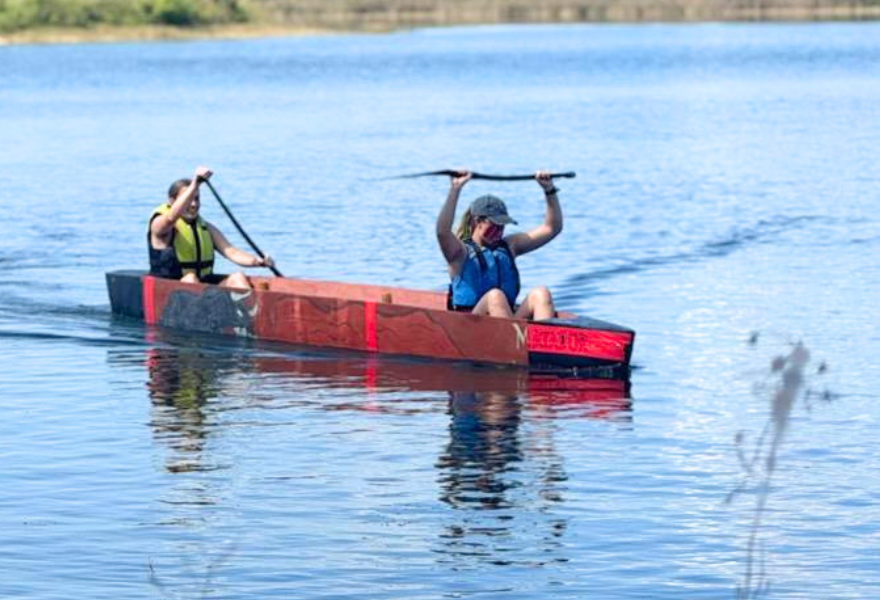
At the March 2026 regional competition hosted by Florida Atlantic University, USF’s concrete canoe placed in the top four across seven competition events. The team earned second place in the women’s and men’s sprint races, third in the coed sprint and women’s slalom, fourth in the men’s slalom, third in project proposal, and fourth in technical presentation.
The team hopes to build on those results by expanding its volunteer base, securing resources, and strengthening on-campus support.
The project includes several specialized teams, including hull design, construction, and mix design. Honors student and National Merit Scholar Saira Ali, who serves as Mix Team Captain, said the experience has taught her the importance of clear communication and adapting when plans change.
“You have to get feedback from everybody else on the team who's taken those concrete classes, and they know more about what they're doing,” Ali said. “We need to collaborate and listen to each other.”
That collaboration extends beyond civil engineering. Students from a variety of academic backgrounds are encouraged to contribute, bringing different perspectives to a shared engineering challenge.
For 2025-26 co-project manager Marola, leading students from different majors required him to think about how to approach each person and their perspective.
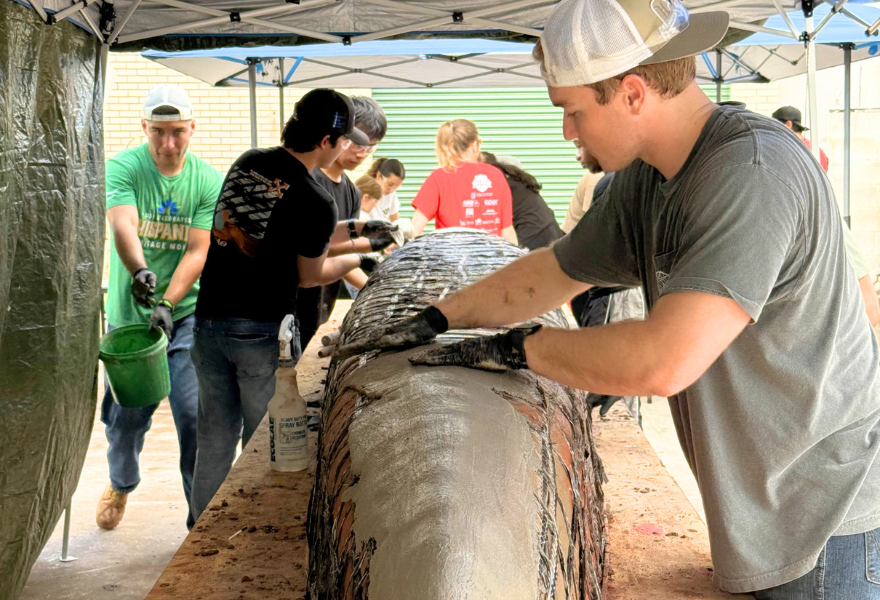
“There's more people with many different majors, and you see a lot of different points of view,” he said. “Not everyone is a civil engineer.”
2025-26 co-project manager Shedd said working with students outside of civil engineering has helped him learn how to communicate technical concepts with people who may not have the same background.
“[You learn] good collaboration with people who don't speak typical engineering lingo, so it helps to learn communication,” Shedd said.
The Concrete Canoe experience also gives students the chance to participate in a nationally recognized engineering competition — something Marola said can stand out to employers regardless of a student's major.
“The concrete competition is very well known nationally, not only by civil engineers,” Marola said. “It doesn't matter what you're studying. It's a really nice opportunity.”
Mixing in New Ideas
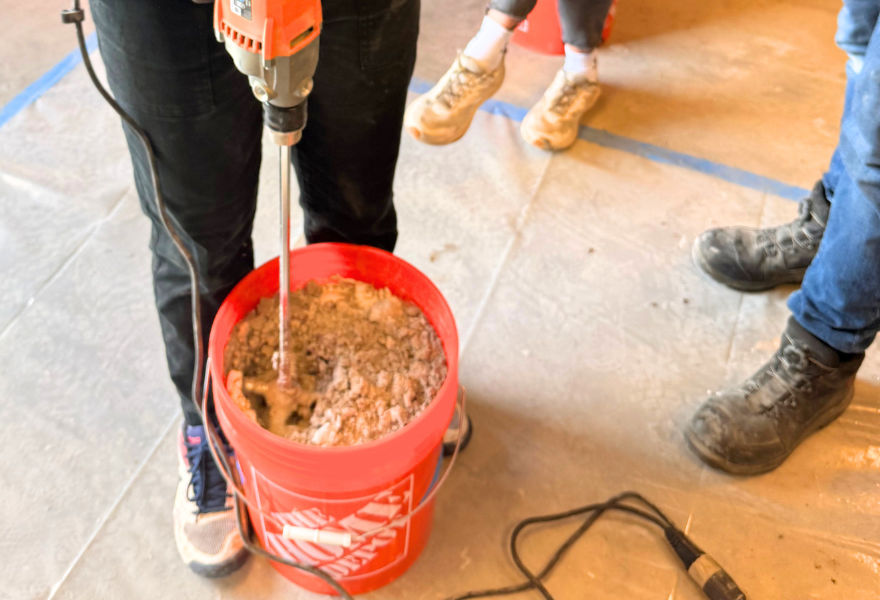
As the team prepares for the 2027 competition, members are focused on refining their processes and adapting to competition guidelines. Ali is entering her second year as Mix Team Captain, and her team is testing new materials to improve the canoe’s performance.
Working alongside 2026-27 project managers Avery Peters and Bryan Gonzalez, the mix team is building on the concrete formula used in the 2026 competition while exploring ways to improve its strength.
“We are continuing to test new ideas for our concrete, building off of the strong mix that we ended up using for our canoe at the 2026 competition,” Ali said. “In particular, we are exploring sand as an aggregate to improve tensile/bending strength, as well as actually trying to make our mix a little more dense and strong.”