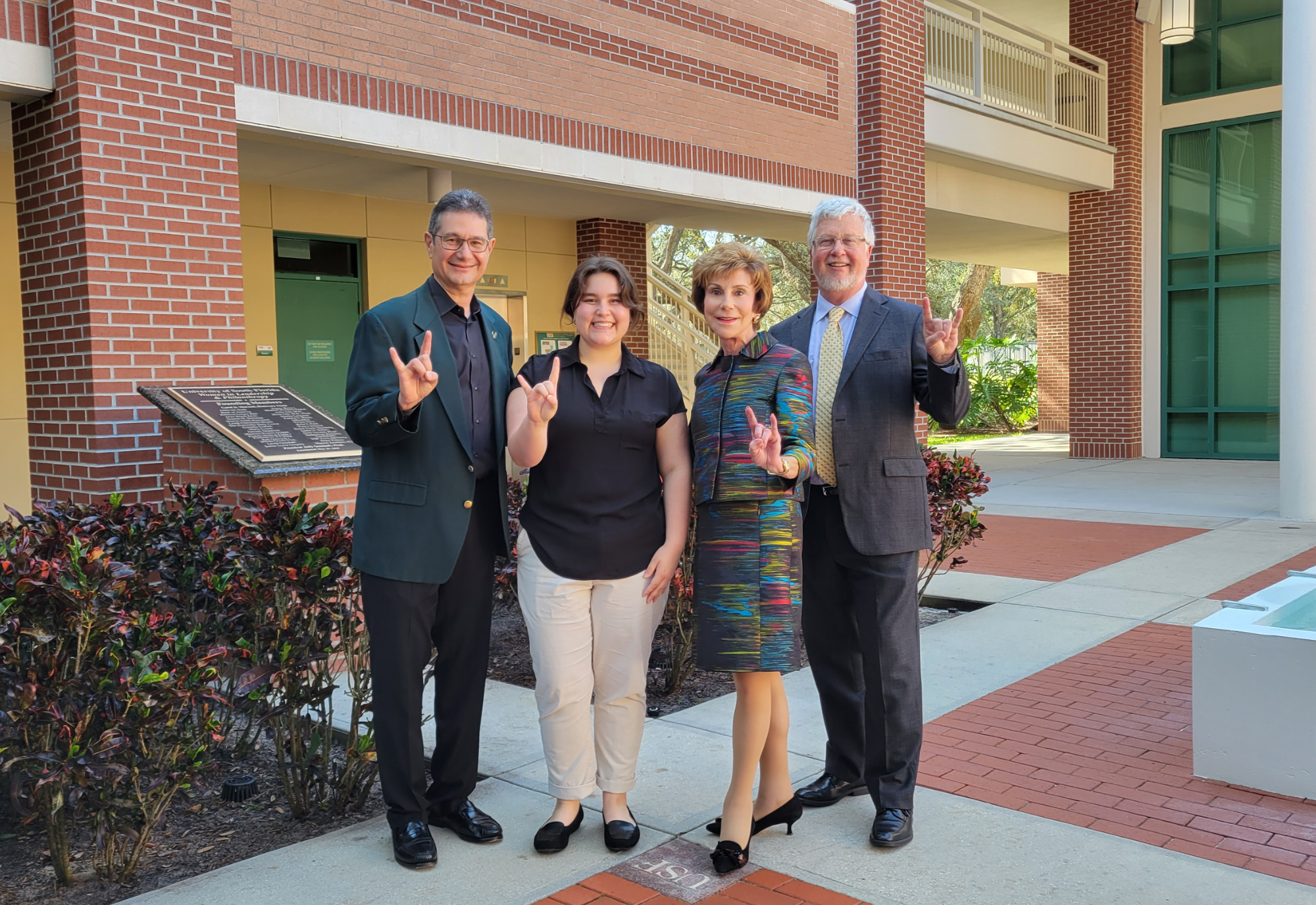
As a marine biology student at the University of South Florida St. Petersburg and the Judy Genshaft Honors College, Reni Poston Hymel made the most of her undergraduate experience. She maximized opportunities through the Honors College to gain exposure to fieldwork and real-world research, took a chance on study abroad in the Bahamas, and even explored out-of-state research opportunities to redefine her career interests.
Now a full-time marine biologist at the Florida Fish and Wildlife Conservation Commission, Poston-Hymel is continuing the work she began as a student — protecting local marine environments and educating the public about conservation.
What first inspired your interest in marine biology and ocean conservation, and how did your time in Honors help shape that passion?
I grew up on the coast and spent much of my childhood swimming, snorkeling, and canoeing. I always loved being in the water and seeing the amazing wildlife it had to offer. My love of the ocean — along with my concern for environmental issues and enjoyment of science — led me to pursue marine biology as a career. During my first year as an Honors student, I took two natural sciences Honors courses with Dr. Teresa Greely. The first course included field trips to the Clam Bayou Marine Education Center, where I had the opportunity to practice field sampling with seine nets and sediment cores. The second course was my study abroad on Andros Island in the Bahamas where I learned about the island’s culture, geography, and terrestrial and oceanic ecosystems while snorkeling and hiking. These courses allowed me to gain hands-on experience in the water while learning about marine biology, and they connected me with Dr. Greely, who would later become the chair for my Honors thesis.
You participated in several hands-on research and internship opportunities during college. Which experience had the biggest impact on your career path, and why?
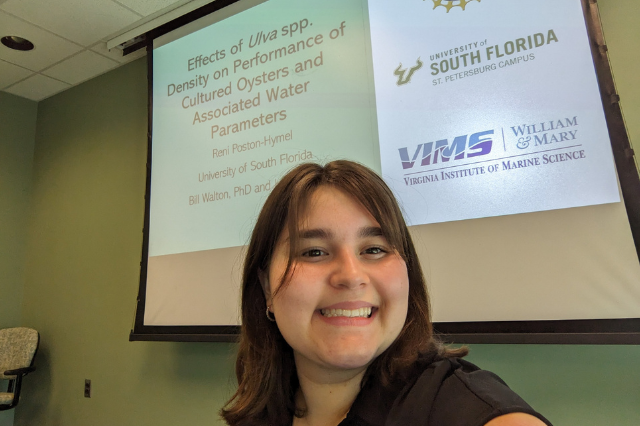
My Research Experience for Undergraduates (REU) at the Virginia Institute of Marine Science was an incredibly deep learning experience for me. I experienced a firsthand preview of graduate school as I completed a research project that included fieldwork, lab work, and scientific reading and writing. I learned so much about oysters and aquaculture during my project, which helped set me up for my current job where I work with oysters. More importantly, I learned about myself and what systems work (and don’t work) for me when completing research projects. The REU also included many workshops that helped prepare me for my research project and learn about graduate school and marine science careers. I also learned how much I enjoy the process of science communication when preparing for my final presentation for this internship.
From studying abroad in the Bahamas to working with National Oceanic and Atmospheric Administration and Florida Fish and Wildlife Conservation Commission, you’ve had a wide range of field experiences. What has been the most memorable moment of your journey so far?
I don’t have a single most memorable moment, but my favorite moments are seeing cool animals unexpectedly. The earliest instance of this I can remember is when a large southern stingray swam right by me during my Bahamas study abroad. At work now, it’s amazing to work with other biologists who find it fun to pause and watch when we see dolphins and sea turtles from the boat or show each other burrfish and sea stars while diving.
Your Honors thesis focused on ocean literacy and non-formal education. Why do you think science communication and public outreach are important in marine science?
Good science communication is a key part of collaboration within the scientific community, bringing science into important marine policymaking, and helping the public learn more about the world they live in. Because people and the ocean are profoundly connected, it is important that people can understand how the ocean impacts them and vice versa. I’ve come across people in Florida who know little about the marine life they’ve been swimming and boating with for decades; people who live far inland may not realize how much the ocean affects them, such as the biomedical resources and knowledge obtained from marine life. By educating people through public outreach initiatives, scientists can encourage people to make decisions that support ocean stewardship, like buying sustainable seafood, leaving no trace at the beach, and learning about policies that impact marine ecosystems — both from a greater appreciation for the ocean and from an understanding that they depend on the ocean.
What’s one piece of advice you would give Honors students who want to gain research and fieldwork experience?
Use the resources you have available to you. There are so many staff and faculty members at the University of South Florida and the Judy Genshaft Honors College who want to help students find opportunities to gain experience. Lauren Roberts, assistant director of the Office of National Scholars, first introduced me to REUs during my study abroad, and she was a tremendous help to me during the application process. I also worked with my Honors and major academic advisors to prioritize classes that incorporated fieldwork and research methods. Other students are also a fantastic resource for learning about volunteer and internship opportunities, and there are many workshops and information sessions held by different campus organizations that can help you find opportunities.