Programs
A Summer in London
PROGRAM INTRODUCTION
Program Leader: Benjamin Scott Young, PhD
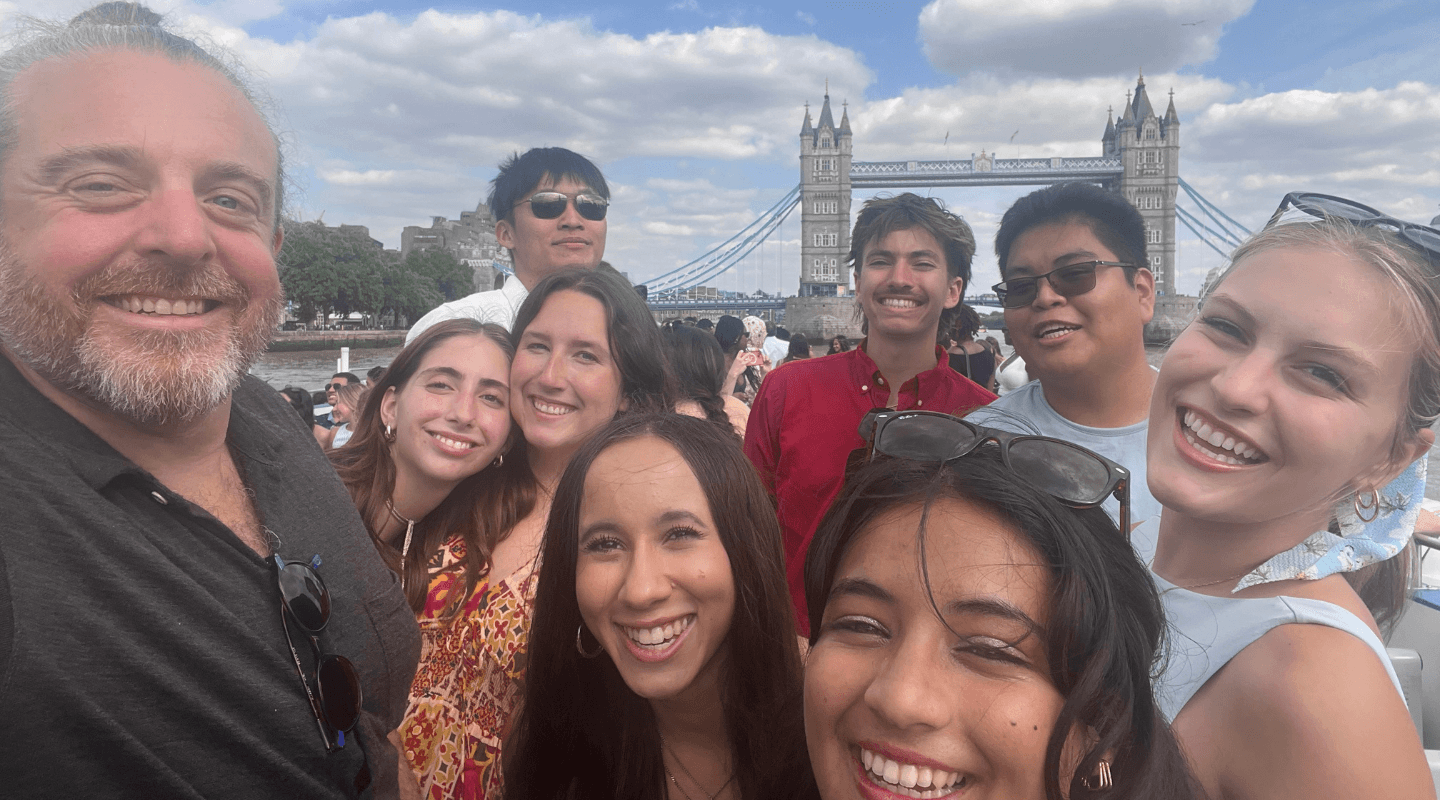
Spend a month living at the heart of one of the great world cities. London is history and invention at street level — Parliament and the West End, Borough Market and the South Bank, Camden and Brixton, Notting Hill and the Tower of London, a thousand-year skyline and a hundred neighborhoods waiting to be explored. You live in the middle of it, explore on your free three-day weekends, and come home with the kind of summer that changes how you see your studies and your future.
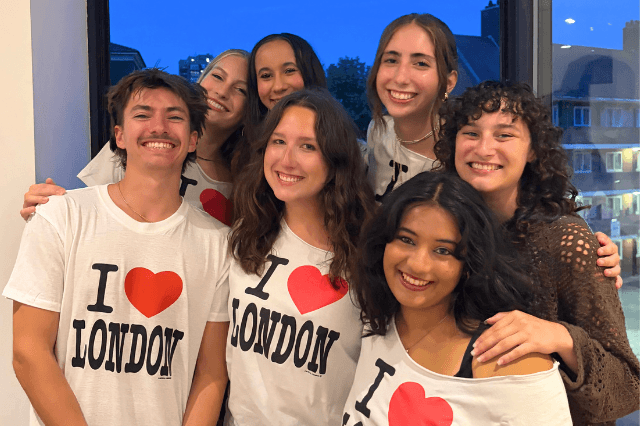
A Summer in London is the Judy Genshaft Honors College’s home within USF in London: four weeks, six credits, and a city that is your classroom. You live in central London, learn alongside USF students and faculty from across the university, and find how learning happens in motion — on foot, in conversation, in the parks, and in the everyday discoveries of making a new city your own.
Coursework
You’ll earn six credits in two courses — one in the morning, one in the afternoon, Monday through Thursday — with Fridays and weekends open for independent exploration and travel. One is an Honors course led by Dr. Benjamin Scott Young, where all but a few days are spent in the field, walking the streets, exploring the galleries and gardens and iconic institutions of English culture.
As an Honors student, you choose one of two Honors courses. Each Honors seminar offered on the A Summer in London program may satisfy either of the following Honors graduation requirements: IDH 4200 Geographical Perspectives or IDH 4950 Honors Capstone.
The Art of the Moment: Cultivating Discernment through Attention, Improvisation, and Integration (IDH 4200 or IDH 4950)
In London, as in life, there exists an abundance of possibility beyond any plan. Steering it well, moment by moment, charts both the course of a journey and the course of a life. The person who can read a situation generously, who can perceive uncertainty and change as the source of opportunity — in real time — and act on it, is positioned to navigate well and catch hold of life’s abundance along the way. This course cultivates this art of meeting the moment.
Every real situation holds more than we expect of it — more possible directions, more skills it can call on, more felt textures for making sense of what the moment is asking. A cultivated discernment brings that range into view and finds the better paths within it. Drawing on performance studies, cognitive science, theory of interpretation, virtue ethics, and the philosophy of experience, this interdisciplinary course develops the capacity to read and respond to dynamic situations with skill and creativity. Through a practical deployment of these interdisciplinary resources, students practice attention in the moment by reading situations, improvisation by acting within that reading, and integration by weaving events into a more capacious and generative story as the day unfolds into something real — and becomes the ground of what comes next. From this ground of first-person experience, we work our way out to see these skills at work in the wider community. In an extended discussion with The Right Honourable Henry McLeish, former First Minister of Scotland and former Member of Parliament at Westminster, we extend these insights of practice into the art of governing, in real time, at the scale of a nation.
For four weeks, London is our studio. Students live and work together as a cohort across one of the world’s most culturally diverse and dynamic cities. Emergent opportunities, productive disruptions, and novel alternatives are everywhere in the daily life of a world capital, and provide the lived occasions of our practice. Shared experiences across the city anchor the inquiry: visits such as the British Museum exploring the nature of perception, the Tate Modern to exhibit the cultivation of shared meaning, a live performance at Shakespeare’s Globe to discover what it teaches about improvisation off the stage, and a sound-walk installation in Regent’s Park to surface the felt texture of experience.
Most excursions, though, are designed and led by the students themselves: working in small groups, you choose the destination, plan the journey, and lead your cohort through it. This work of curating experiences is the heart of the course — the place where attention, improvisation, and integration are practiced in real time. When you discover a more interesting exhibit on the way to the gallery you intended, when the tube is unexpectedly closed and the abundance of alternatives for the afternoon appear, or when making small adjustments with others along the way makes an afternoon richer than any plan could have — each change offers an opportunity for you to cultivate the skills of attention, improvisation, and integration in real time.
Our method of cultivating attention is to read any live situation along three facets at once — the narrative that gives it direction, the skills it calls on, and the felt texture by which its alternatives are weighed. Held in view together, with enough clarity to act on and learn from, these three facets form a single practice we call the Experience Prism. Reflecting together after each experience consolidates and integrates memory and skill into something that stays in the formation of a life. With practice, the disruption of plans becomes a welcome source of insight into the actual opportunities the world is offering. By making adjustments in real time with attention and reflection, again and again across four weeks, you deepen a durable fluency for navigating dynamic situations well.
The same fluency that shapes an afternoon in London shapes a career and a life. The real opportunities that shape a life are not general. They are specific — a particular graduate program, a mentor, an opening that could never have been planned for — and they arrive in real time, asking to be recognized and acted on. The discernment that turns a closed tube line into a better afternoon is the same capacity that recognizes such an opening and takes it up while it is still there, which is the only moment an opportunity can be taken. This is how expertise itself works — a practiced eye reads a situation as a pattern and acts. Students leave London with a fluency through change that keeps working and deepening in every room, every conversation, and every decision over the long arc of a life.
The Experience of Health: Cultivating Trust through Attention, Attunement, and Care (IDH 4200 or IDH 4950)
To be healthy is to be at home in the world — underway among others, with a body and a surrounding world that meet you, so that life moves and you move with it. Illness is a kind of exile from that ease: the familiar turns effortful, and a world once ready-to-hand has to be negotiated step by step. Healing is a becoming-at-home again, and a person becomes at home only in the company of others who make room for them. The one who can make another feel safe enough to return — who builds the conditions of trust in the moment — does the central work of care. This course cultivates that work in London: the practice of hospitality through which health is invited and trust is built.
Health is always particular: this person, in this body, with this history and these hopes — a life that can be lived well in many ways and can be knocked off course in as many. To meet it well is to perceive that specificity and to help sustain a meaningful form of life from where the person actually stands. Drawing on the phenomenology of health, the health humanities, hermeneutics, virtue ethics, and cognitive science, this interdisciplinary course develops the capacity to build trust and create the conditions of healing. Through a practical deployment of these interdisciplinary resources, students practice attention by reading the person and the situation, attunement by feeling how things are showing up and what is at stake, and care by acting to make a space in which another can be at home — the hospitality through which someone alienated by illness is invited back into their life.
For four weeks, London is our studio. Students make their way from being newcomers in one of the world’s great cities to making the city a new home, learning in their own bodies what it is to be a stranger and what it feels like to become at home again in the world. We work outside the clinic in the world where the lived meaning of health is actually experienced, where the conditions and consequences of trust can be felt directly — in the architecture of a room, the engineering of a tube stop, the welcome of a table, the atmosphere of an unfamiliar neighborhood. We follow the experience of health and care across the city, in visits such as:
- The Wellcome Collection and its exhibits on medicine and the body
- The Florence Nightingale Museum and the founding vision of modern nursing
- The Freud Museum and the consulting room as a space of speech and trust
- The Museum of the Home and the long history of being at home
- The Bethlem Museum of the Mind and the history of the clinic
- The Foundling Museum, where ‘hospital’ once meant the hospitality shown to children taken in.
Curating your own experience is the heart of the course: exploring experience in the first person, you investigate what it is to invite trust and offer hospitality, and how that applies to the art of health and healing. When a host makes you feel expected, when a shared meal turns strangers into companions, or when a small gesture lets someone who felt out of place finally settle in — each is an occasion to study how hospitality is built, and to practice building it yourself. To see how the vulnerability and intimacy of illness, healing, and trust translate from the domain of personal skill and disposition to the character of a community, we sit down with The Right Honourable Henry McLeish, former First Minister of Scotland and former Member of Parliament at Westminster and now chair of the Scottish Brain Health and Dementia Research Strategy Oversight Board, to consider what it takes to build trust in health at the scale of a nation.
Students learn a three-part practice of attention, the Experience Prism, that brings any living moment into view with enough salience to act on and learn from — the story a person is living, the skills and habits that carry it, and the felt texture through which what matters is disclosed. The same prism that reads one’s own experience opens a bridge to another’s: where a life has become impeded, where the world has stopped meeting the body, and where an opening for trust is waiting to be met. Collaborative reflection after each experience consolidates these readings into discernment and skill that stay in the formation of a life. With practice, the ordinary thresholds of a day — an arrival, a meal, a conversation with a stranger — become occasions to feel how trust is made. By building the conditions of hospitality in real time with attention and reflection, again and again across four weeks, you deepen a durable fluency in inviting others home and to extend this insight into the arts of health and healing.
The same fluency that helps a newcomer feel at home in London makes a patient feel safe in a clinic. The encounters that decide whether care heals are specific — this person, this fear, this body in this room — and they arrive in real time, asking to be met. The hospitality that turns an unfamiliar city into a place one can settle is the same capacity that lets a frightened patient trust the person in front of them and return, by degrees, to their own life. This is how the deepest expertise in the health professions works: a practiced attention reads the person as well as the problem, and builds in the moment the trust that care depends on. It is a way of practicing that can be learned, and learning it early is what marks the clinician who is sought out and trusted. Students leave London with a fluency in trust that keeps working and deepening in every room, every conversation, and every person they will one day be asked to care for.
This course is open to honors students of any major — to anyone drawn to building trust, practicing hospitality, and understanding the nature of home and health. It is shaped with particular care for students preparing for the health professions — medicine, nursing, mental health, public health, social work, pharmacy, and the allied health professions — where trust is the daily ground on which the work is practiced.
Both Honors courses cultivate practical skills for navigating life and profession — skills that can only be developed in the field, through active, daily engagement with the world. London is that field: you take the lead in small groups, make your way through the life of the city, and reflect together on what each day teaches, building a fluency that keeps working long after the summer ends.
The other course is chosen from USF in London’s wider offerings, taught by USF faculty from across the university on topics such as:
- Film and Culture through Harry Potter
- International Management
- Cross Cultural Psychology
- Critical Issues in Public Health
- British Politics, Culture, and Life
The wider USF in London course list changes from year to year, so check this year’s options in the current USF in London program brochure through USF Global Learning.
The London Experience
You live in central London, in furnished flats, and study at the program’s academic center in Bloomsbury — the academic and cultural heart of the city, a short walk from the British Museum and the University of London. An Oyster card carries you across the city by Tube and bus, and a two-day London Pass opens more than 80 landmarks, from the Tower of London to Westminster Abbey and St. Paul’s Cathedral.
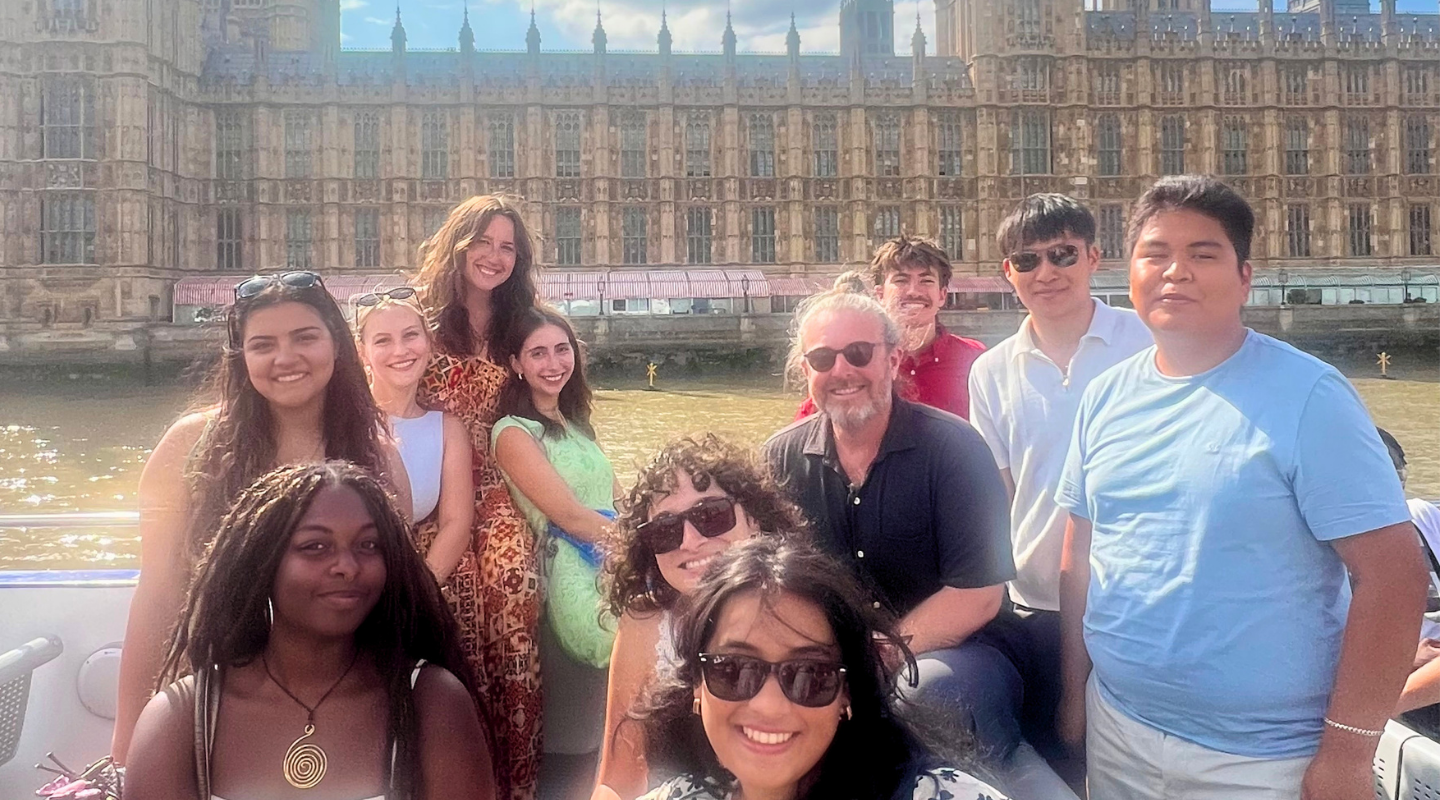
The program is hosted with Anglo Educational Services (AES), USF’s London partner, with airport transfers, on-site orientation, a dedicated program manager, and around-the-clock support. A welcome dinner opens the program, a farewell afternoon tea aboard a River Thames cruise closes it, and a free weekend midway lets you travel farther afield. Beyond the guided excursions, the city is yours to explore — on foot, in small groups, and at your own pace.
In a rare small-group conversation, you sit down with The Right Honourable Henry McLeish, former First Minister of Scotland, on leadership and public health amid real-world complexity.
Program Details
Program Dates
Summer B 2027
- Applications Open: July 1, 2026
- Travel dates: June 28 - July 28, 2027
- Classes: Monday–Thursday, mornings and afternoons; some excursions on Fridays
Program Cost
- 2027 Program Cost: TBD + USF tuition and fees
- 2026 Program Cost: $6,177.00 + USF tuition and fees
-
Included: housing, Oyster card, two-day London Pass, airport transfers, welcome dinner, and the farewell Thames tea cruise
- Meals: most meals are not included; the flats have fully equipped kitchens with grocery stores nearby
Accessibility
This program involves significant walking in urban terrain. More broadly, England has many unevenly paved sidewalks and hills.
Ready to Apply?
Applications open now through October 15, 2026. Priority deadline September 25, 2026.
Questions? Contact Dr. Benjamin Young.
Note: Honors students should be sure to apply through the Honors A Summer in London application to ensure you are eligible for Honors scholarship and are enrolled in one of the above Honors courses.
What Students Have to Say
"I highly recommend being a part of the USF London for a hands-on experience! Our Honors professor promoted interacting with nature, museums, and a variety of fun activities such as attending a Shakespeare play in The Globe Theatre." – Mridula Singh
MORE ABOUT THE TRIP
Want to learn more? Listen as Honors students Cynthia Nelson and Jordon Myrick share details about the USF in London study abroad program.